 English
  日本語
日本語  Deutsch


The NeeDoh Nice Cube has become a favorite among people who enjoy sensory toys, desk toys, and stress-relief gadgets. Its simple cube shape, soft squeeze feel, and satisfying squish make it stand out from ordinary fidget toys.
You can absolutely 3D print a cube-inspired toy that looks similar in shape and can provide a fun tactile experience. But if you are hoping to recreate the exact soft, slow-rising, ultra-squishy feel of the original, 3D printing has some limits. The material, internal structure, and manufacturing method all affect the final result.
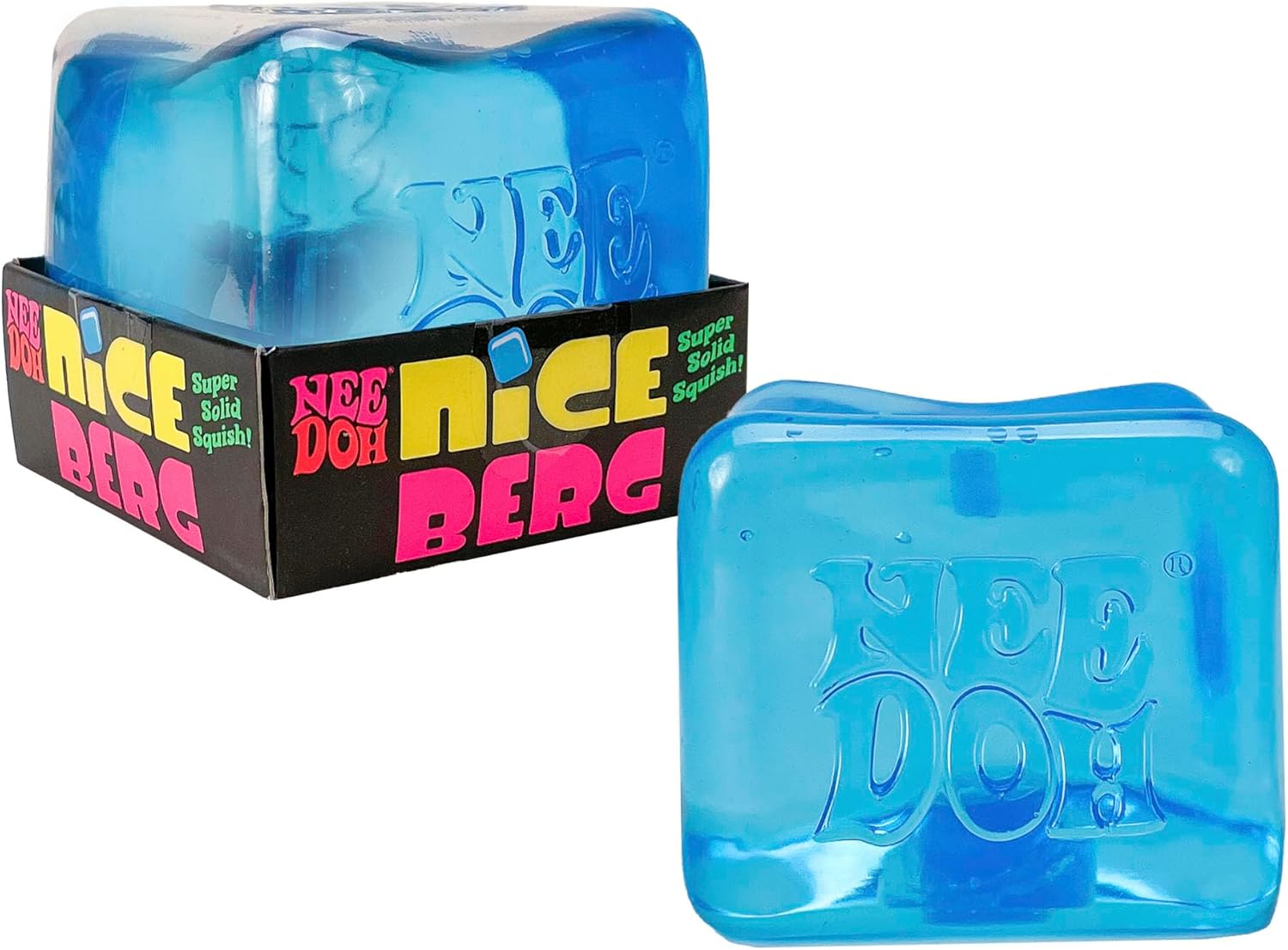
Image Source: NeeDoh
What Is a NeeDoh Nice Cube?
The NeeDoh Nice Cube is a cube-shaped sensory toy designed for squeezing, squishing, and fidgeting. It is popular because it feels simple, playful, and calming. Unlike a rigid cube or a typical hard plastic toy, it is made to be compressed in the hand and slowly return to its original shape.
That soft, stretchy, satisfying behavior is a big part of its appeal. People often use toys like this for stress relief, focus, sensory stimulation, or just to keep their hands busy. The cube shape also gives it a clean, modern look that feels different from many other fidget toys on the market.
Its popularity is part of a larger trend. More people are looking for sensory products that combine comfort, novelty, and fun design. That makes toys like the NeeDoh Nice Cube interesting not only to consumers but also to designers, product developers, and 3D printing enthusiasts who want to experiment with similar ideas.
Can You Actually 3D Print a NeeDoh Nice Cube?
Yes, you can 3D print a cube-shaped fidget toy inspired by the NeeDoh Nice Cube. But if the question is whether you can make an exact one-to-one copy of the original feel, the answer is usually no.
A 3D printer can create the outer form, size, surface details, and even some flexible behavior depending on the material used. That means you can design a cube that looks similar and is pleasant to hold or squeeze. For concept models, prototypes, educational samples, or custom toy designs, 3D printing is a very practical option.
However, the original toy likely relies on a manufacturing process and material composition that are hard to match with standard 3D printing technologies. Most 3D printed parts are built layer by layer, which gives them different mechanical properties from molded consumer toys. Even when you use flexible materials, the result may feel firmer, more textured, or less evenly soft than the original.
So, 3D printing is great for creating a NeeDoh-inspired cube fidget, but not always for perfectly duplicating the original experience.
What Makes the Original So Hard to Copy?
The biggest challenge is the feel.
A good squeeze toy is not just soft. It needs the right balance of elasticity, resistance, rebound, and surface texture. When you squeeze it, it should compress smoothly. When you release it, it should return slowly and satisfyingly. That sensation is difficult to recreate with many 3D printing methods.
There are a few reasons for this:
First, the material itself matters. Many commercial squeeze toys use materials that behave more like molded elastomers than printed plastics. These materials stretch and recover in a very controlled way. Standard 3D printing filaments, such as PLA or ABS, are not designed for that kind of soft deformation.
Second, the internal structure matters. A toy may have a uniform shell, a specific wall thickness, or even a filled interior that affects how it compresses. In 3D printing, infill pattern, shell thickness, and print orientation all influence flexibility. That makes consistency harder to achieve.
Third, the surface finish matters. The original toy often has a smooth, polished, pleasant-touch surface. A 3D printed part may show layer lines or a more matte, technical finish unless it is post-processed carefully.
Finally, the size and geometry matter. A cube that is too small may feel too stiff. A cube that is too large may lose the satisfying hand feel. Even small design changes can completely alter the squeeze experience.
That is why copying the original is difficult. But it is also why 3D printing is useful: you can test, modify, and improve the design much faster than with traditional manufacturing.
Best 3D Printing Materials for a Cube-Inspired Version
TPU is one of the most common choices for flexible 3D printing. It is soft, rubber-like, and durable enough for repeated handling. For a cube-inspired fidget toy, TPU can provide a nice balance between flexibility and structure.
TPU is useful when you want a toy that bends and compresses without immediately deforming permanently. It is also widely available and works well for prototypes. Depending on the hardness rating and print settings, TPU can be made softer or firmer.
That said, TPU still has limits. It may not feel as silky or slow-rising as a molded squeeze toy, and printing it well can require careful tuning. But for many creators, it is one of the best starting points.
Elastic resin is another interesting option, especially for SLA or similar resin-based printing processes. It is designed to produce soft, rubber-like parts with greater detail than many filament-based flexible prints.
This can be a strong choice if you want a smoother surface and a more refined look. Elastic resin can be useful for product mockups, sensory prototypes, and small custom parts where appearance matters as much as function.
The downside is that resin prints can be more delicate, and not every elastic resin behaves exactly the same. Some are softer, while others are more tear-resistant. Proper post-processing is also important.
Flexible resin sits between standard resin and elastic resin in terms of behavior. It may offer enough softness for a toy-like prototype while preserving decent detail and surface quality.
This type of material is often used when the goal is to demonstrate shape, feel, and concept rather than to mass-produce a final consumer toy. It can work well for a cube-inspired sample that needs a softer touch than hard plastic but does not need to match a commercial squeeze toy exactly.
3D Printing Other Fidget Toys at 3DSPRO
Even if an exact NeeDoh Nice Cube replica is not the best fit for 3D printing, there are many other fidget toys that can be created successfully. In fact, 3D printing is a great way to explore custom sensory products, desk toys, novelty objects, and functional prototypes.
Some examples of 3D printable fidget toy ideas include:
• simple squeeze cubes with customized geometry
• interlocking desk toys
• spinning or rolling fidget shapes
• articulated toys with movement
• sensory objects with textured surfaces
• brand-themed promotional fidget items
• custom toy prototypes for product testing
At 3DSPRO, we can help bring these ideas to life through material selection, print optimization, and professional production support. That makes it easier to test different shapes, textures, and sizes before moving into larger-scale development.
It is especially useful for creators, brands, and product teams who want to explore how a toy feels before committing to tooling or mass production. A 3D printed prototype can quickly answer questions like: Is the shape comfortable? Does it sit well in the hand? Is the surface texture right? Does the material feel too stiff or too soft?
That is where 3D printing offers real value. It gives you a fast, flexible way to test ideas without waiting for an expensive manufacturing setup. If your goal is to create a new sensory product or improve an existing one, a printed prototype can help you make better design decisions early.
 1
1


COMMENTS
- Be the first to share your thoughts!