 English
  日本語
日本語  Deutsch


3D printed parts can look impressive straight off the printer, but they are rarely perfect enough to use as a final cosmetic product without finishing. Even when a part is printed successfully, its surface may still contain layer lines, pores, pits, tiny voids, and other imperfections that become more obvious once the part is polished. That is why polishing is often seen as an important post-processing step, but also one with clear limits.
Many customers expect polishing to turn a 3D printed part into something that looks like an injection-molded or mass-produced component. In reality, polishing can greatly improve appearance, but it cannot completely remove every defect. The final result depends on the printing process, material, geometry, and the original quality of the surface. For parts with pores or pits, polishing may reduce roughness and improve the touch, but it may not produce a fully uniform or mirror-like finish.
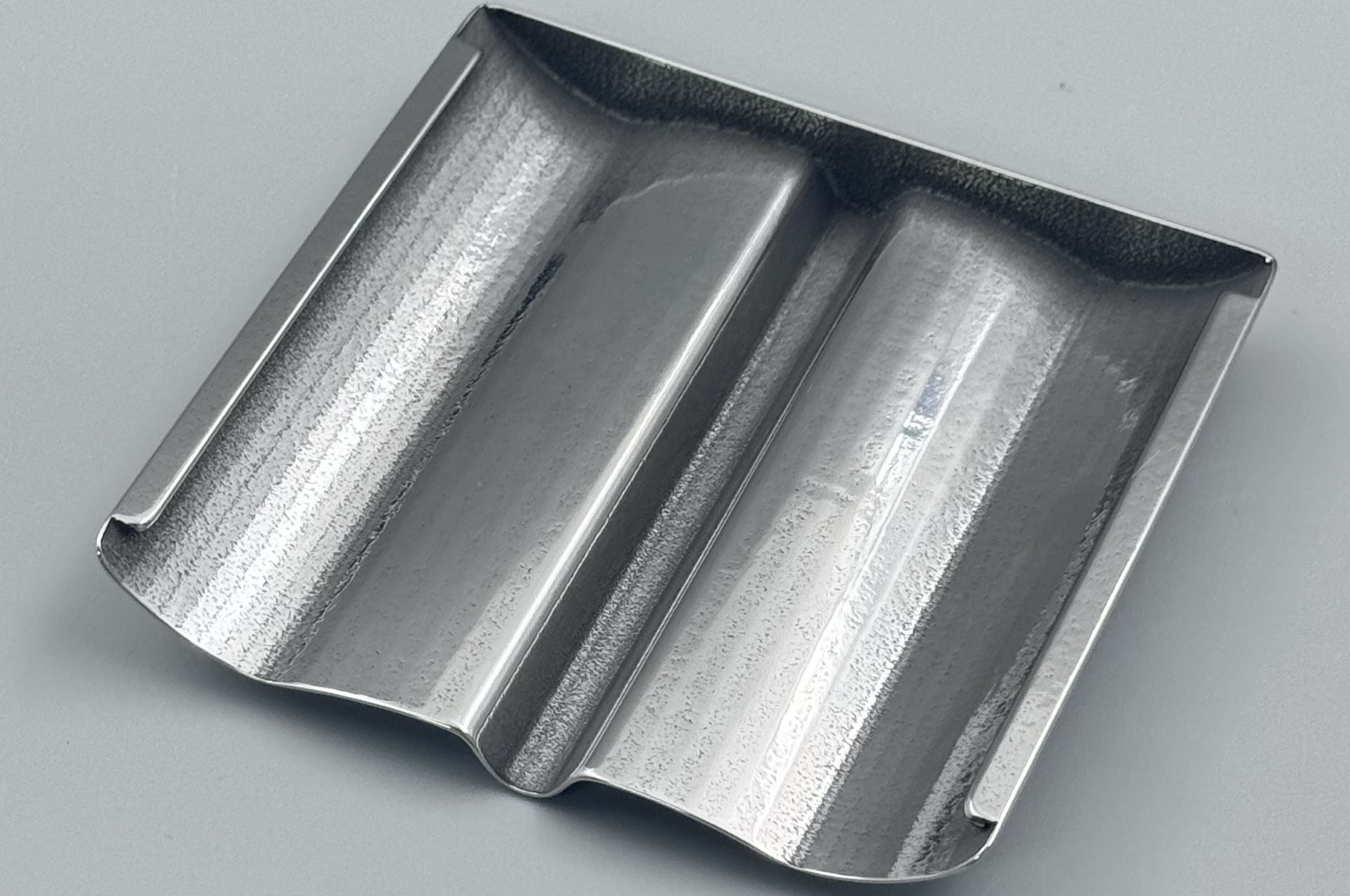
Image Source: Copyright © 3DSPRO Limited. All rights reserved.
Why 3D Printed Parts Do Not Start with a Perfect Surface
Unlike mass-production parts made by molding or precision machining, 3D printed parts are built layer by layer. That layered construction is the main reason surface imperfections are so common. Each layer can leave visible lines, step marks, or tiny transitions that affect smoothness. In some processes, the surface may also contain micro-voids or texture from support removal, sanding, or cleaning.
Material choice also matters. Some resins, plastics, and metal powders naturally produce smoother surfaces than others, but no printing method creates a flawless surface every time. Even when the part looks acceptable at first glance, closer inspection often reveals small pits, pores, or uneven areas. These flaws are not always a sign of poor printing; they are often an unavoidable result of the manufacturing process itself.
That means polishing does not start from a perfect base. It is working on a surface that already contains structural texture and small defects. The better the starting surface, the better the polishing outcome. But when the surface has deep imperfections, the final finish will still show signs of the original print.
What Polishing Can Improve and What It Cannot Fix
Polishing is very effective at improving the overall look and feel of 3D printed parts. It can smooth out light roughness, reduce visible layer lines, and make the surface more pleasant to touch. It can also help the part look more refined and professional, especially for display items, consumer-facing prototypes, and decorative components.
However, polishing has limits. It mainly works on the outermost surface. If a pore or pit is deep, polishing may only round the edge of the defect rather than remove it completely. In some cases, aggressive polishing may even make small defects more noticeable by changing the way light reflects off the surface. This is especially true for glossy or semi-gloss finishes, where every tiny inconsistency stands out more clearly.
Polishing also cannot fix internal quality issues inside the material. If the part has hidden voids, weak areas, or inconsistent density, those problems remain even after the outside looks smoother. In other words, polishing improves appearance, but it does not change the fundamental structure of the part.
Why Pores and Pits Limit the Final Finish
Pores and pits are some of the biggest obstacles to a high-end polished finish. A pore is a tiny opening or void in the surface, while a pit is a small depression or hollow. Both interrupt the smoothness of the outer layer and create shadows, texture, and uneven reflection.
When polishing begins, the surface around a pore or pit may become smoother, but the defect itself can remain visible. This is because polishing removes material evenly across the surface, while pores and pits are often deeper than the surrounding texture. If a defect is too deep, removing it completely would require removing too much material from the whole part, which can affect dimensions, wall thickness, or structural integrity.
This is why a part with many pores or pits may never achieve a truly flawless appearance. It may still look much better after finishing, but the result will usually be “improved” rather than “perfect.” For customers who expect a high-gloss, production-grade surface, this distinction is important. The deeper the surface defects, the harder it is to reach a premium finish.
Why 3D Printed Parts Cannot Always Match Mass-Production Polishing
A polished 3D printed part should not be judged by the same standard as a mass-produced part unless both the process and the finishing requirements are carefully matched. Injection molding, die casting, and CNC machining often start with a more consistent base surface, which makes final polishing easier and more predictable.
3D printed parts are different. Their surfaces often vary from one area to another, even within the same part. Curved sections, overhangs, thin walls, and fine details can all respond differently to polishing. Some areas may become very smooth, while others still show texture or defects. This makes it difficult to replicate the uniform polish quality of a mass-produced product.
Another factor is repeatability. In mass production, the process is optimized for consistency. In 3D printing, the same file can still produce parts with slightly different surface conditions depending on printer settings, orientation, support placement, and material batch. That means even if one sample finishes well, another batch may not look exactly the same after polishing.
For this reason, polishing 3D printed parts should be viewed as a finishing enhancement, not a guarantee of mass-production appearance.
The Challenge of Partial Polishing and Protected Areas
Sometimes, customers do not want the whole part polished. They may ask for certain areas to remain untouched because of fit, texture, marking, or functional reasons. This creates an additional challenge: the technician must polish only selected areas while protecting the rest of the part.
Partial polishing requires much more manual work. Workers must control pressure, direction, and polishing time very carefully to avoid damaging protected surfaces. They may need to mask off certain areas, work around edges, and finish tight spaces by hand. This is slower than full-surface polishing and usually requires more skill and attention.
Because of this extra labor, partial polishing often increases cost. It is not just a matter of “polish less.” It often means “control more.” The more complex the protected areas are, the more time is needed to achieve the requested result. For customers, this is an important factor to consider when budgeting for finishing.
How to Set Realistic Expectations Before Finishing Begins
The best polishing results start with clear communication. Before finishing begins, customers should confirm the target appearance, the acceptable level of surface defects, and which areas need to be protected. It is also helpful to define whether the goal is a smooth functional surface, a neat visual finish, or a high-gloss cosmetic result.
Realistic expectations matter because not every 3D printed part can become visually identical to a molded product. If the part contains pores, pits, or other imperfections, polishing may improve the surface substantially without eliminating all traces of the print. Understanding this early helps prevent disappointment later.
Customers should also consider whether the design itself is suitable for polishing. Parts with deep grooves, thin walls, sharp corners, or highly detailed textures may be harder to finish cleanly. In some cases, a different material, print orientation, or post-processing method may be a better choice than polishing alone.
A good finishing plan usually balances appearance, function, and cost.
Polishing Service at 3DSPRO
At 3DSPRO, polishing is part of a broader finishing workflow designed to improve the look and performance of 3D printed parts. We understand that every part has different surface conditions, and that pores, pits, and other imperfections can affect the final result. Our team evaluates the part’s material, geometry, and finishing requirements before recommending the most suitable approach.
For parts that require selective finishing, we can handle manual polishing with attention to protected areas and special surface requirements. Because this work is more labor-intensive, the cost may be higher than standard full-surface polishing. However, this approach helps customers achieve the desired result more accurately when certain regions must remain untouched.
Polishing can make a 3D printed part look significantly better, but it has natural limits. At 3DSPRO, we help customers understand those limits clearly and choose the right finishing solution for their application. The result is a more realistic expectation, a better surface outcome, and a smoother path from prototype to finished part.
 0
0


COMMENTS
- Be the first to share your thoughts!