 English
  日本語
日本語  Deutsch


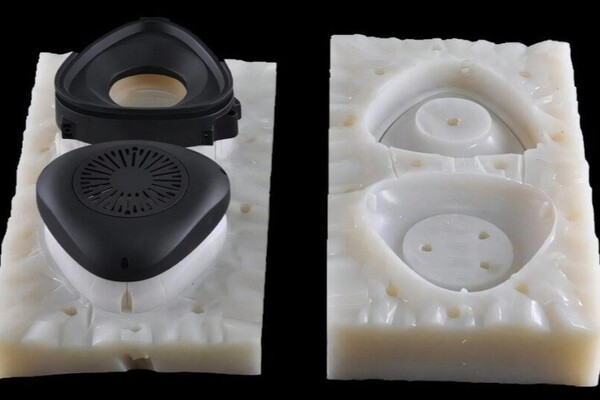
Vacuum casting is a practical way to turn a 3D printed master pattern into multiple high-quality duplicate parts. In this workflow, the 3D print is used to create the mold master, and the final parts are cast in a silicone mold using urethane or polyurethane-based resins, making the process especially useful when a project needs production-like appearance and low-volume output without the cost and lead time of hard tooling.
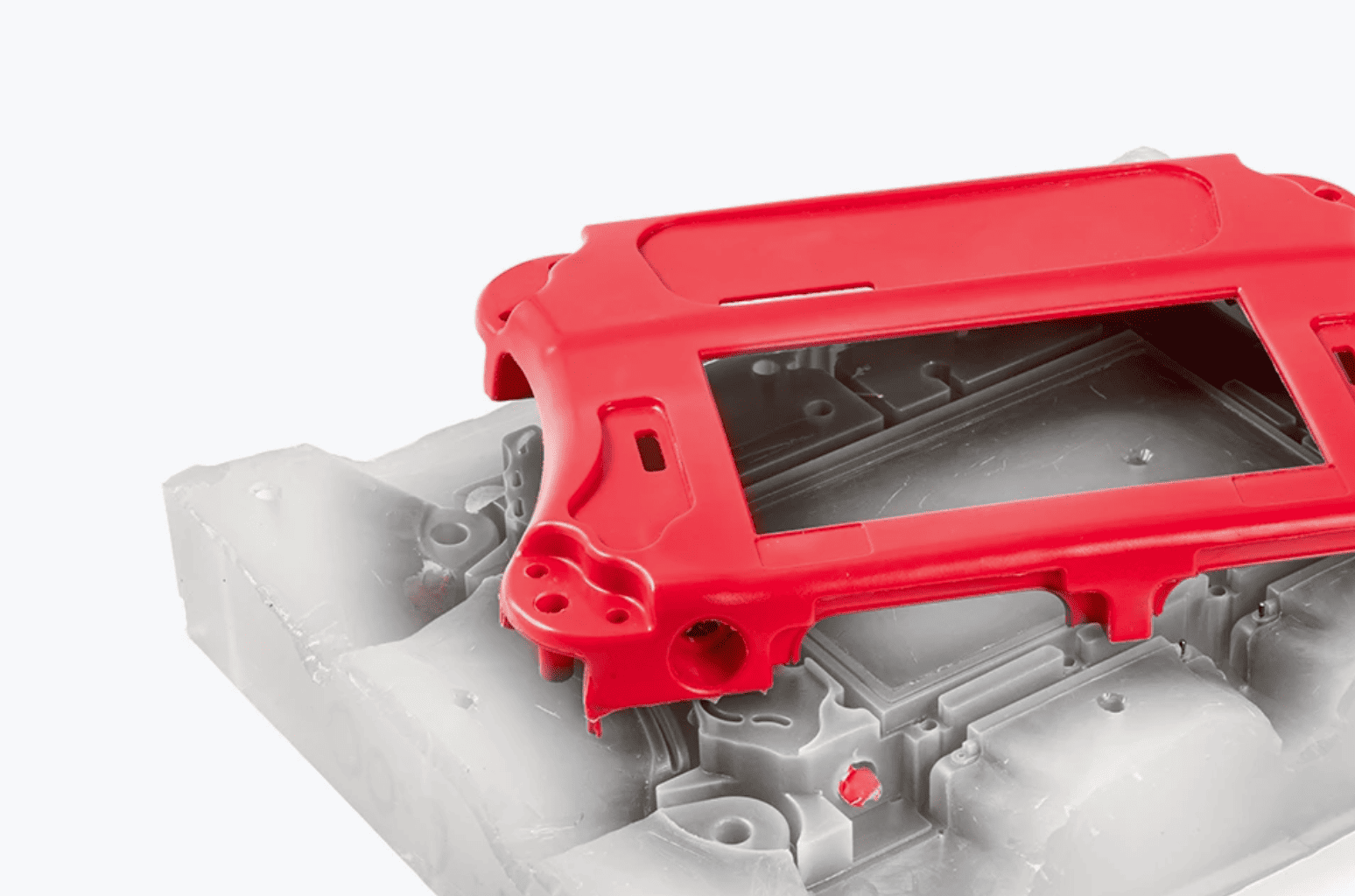
Image Source: Materialise
Why Vacuum Casting Is a Good Match for 3D Printed Parts
Vacuum casting is a strong match for 3D printed parts because 3D printing can produce the master model quickly and with detailed geometry, while vacuum casting can reproduce that geometry in a repeatable way. Vacuum casting is a process that uses a master model, silicone mold halves, and urethane resin cured under vacuum to reduce bubbles and achieve a highly accurate reproduction.
The real advantage is workflow speed. Traditional tooling takes time and money, but rapid tooling methods that incorporate 3D printing can validate design and material choices before moving to mass production. Rapid tooling helps companies iterate quickly, produce custom or limited-series parts, and bridge the gap between prototyping and production.
Another reason this pairing works so well is surface quality. A 3D printed master can be post-processed to improve the finish before mold making, and the final cast part will reflect that master’s quality. 3D printing can be used to make casting molds, and the surface detail of the printed part matters because flaws can transfer into the mold and then into the cast part. Therefore, SLA 3D printing is particularly suitable for tooling because it offers accurate, watertight parts with a smooth surface finish and fine detail.
Common Materials Used in Vacuum Casting
The most common family of materials used in vacuum casting is polyurethane, often referred to as urethane casting material. Urethane casting materials generally fall into two main durometer classes: rigid polyurethanes, measured in Shore D, and rubber-like polyurethanes, measured in Shore A. They also offer clear versions and custom-matched options.
Rigid polyurethane materials are used when the part needs stiffness, impact resistance, or a more production-like structural feel. ABS-like FR, general-purpose, glass-filled nylon-like, polypropylene-like, and polycarbonate-like urethanes, with hardness and performance levels designed to imitate different engineering plastics. These are useful for housings, brackets, supports, and other parts that need dimensional stability and a more solid feel.
Rubber-like polyurethane materials are used when flexibility matters. These materials are useful for grips, gaskets, seals, buttons, and parts that need elongation and resilience rather than stiffness. These soft materials can be colored and finished to match specifications.
Clear polyurethane is another important option. The surface finish affects the final look: matte can create a frosted appearance, while high-gloss can increase clarity, making clear casting materials suitable for lenses, light-guiding parts, display samples, and visual prototypes where appearance is important.
How to Choose the Right Vacuum Casting Material
The right material starts with the part’s function. If the part is structural or must feel rigid, a Shore D polyurethane is usually the better match. If the part needs to flex, compress, or recover shape, a Shore A rubber-like resin is more appropriate.
Appearance is the next factor. If the part needs to look like a production housing or sample enclosure, rigid opaque materials are common. If the project requires transparency, translucency, or a frosted-clear effect, a clear polyurethane may be the best choice. Because finish changes the final appearance of clear cast parts, it is smart to think about gloss level at the same time as the base resin.
Mechanical performance matters as well. ABS-like, polypropylene-like, nylon-like, and polycarbonate-like materials show that vacuum casting can simulate several common thermoplastics, but no single cast resin matches every property of every production polymer. The decision should be based on what the part must do in testing or in limited-use service, such as impact resistance, abrasion resistance, flexibility, or heat performance.
The production goal also changes the choice. For concept models, appearance may matter more than strength. For validation parts, dimensional consistency and usability may come first. For bridge production, the best material is the one that gets closest to the final product’s look and feel while staying economical enough for a limited run.
Typical Applications of Vacuum Casting for 3D Printed Parts
Vacuum casting is widely used for low-volume, high-quality plastic parts. It is a flexible method for producing parts in low to medium volumes, especially for functional prototypes, design validation, and short-run production.
In consumer electronics, vacuum casting is often used for housings, covers, buttons, and display samples. These parts need to look polished and feel close to the final product, even before mass production begins. Because vacuum casting can reproduce fine detail and support clear or color-matched materials, it is a strong choice for this kind of product development work.
In automotive and transportation projects, the process is useful for trim pieces, interior components, concept parts, and fit-check samples. Those parts often need a realistic surface finish and enough durability for testing or presentation, but not necessarily full production-scale tooling. Vacuum casting’s low-volume nature fits that stage of development well.
Industrial and mechanical parts are another common category. Mechanical components, housings, brackets, and structural supports are good matches for rigid urethane castings. These applications benefit from the process because the cast parts can be close enough to production geometry to support assembly verification, design checks, and limited-use deployment.
Vacuum casting is also useful for presentation and marketing samples and is a practical way to prepare samples for trade shows, investor meetings, photography, and customer demonstrations.
When to Choose Vacuum Casting for 3D Printed Parts
Vacuum casting is worth choosing when you need small quantities quickly, and the parts must look close to final production quality. If the project is still moving through design iteration, a 3D printed master and silicone mold can be a much smarter investment than hard tooling.
It is also a good choice when material variety matters. Vacuum casting can produce rigid, flexible, clear, colored, and rubber-like parts, so one process can cover several prototype goals without changing the broader workflow. That flexibility makes it especially useful for companies that need to test different product versions, evaluate user feedback, or produce a limited run before committing to mass production.
The best time to use this workflow is when 3D printing alone is not enough, and injection molding is still too much. In that middle space, vacuum casting gives teams a balanced solution: fast enough for development, detailed enough for presentation, and flexible enough for short-run manufacturing. That is why it remains one of the most practical manufacturing bridges for 3D printed parts.
 0
0


COMMENTS
- Be the first to share your thoughts!