 English
  日本語
日本語  Deutsch


3D printing has become one of the most valuable tools in jewelry design, especially when it comes to rapid prototyping. In a field where precision, appearance, and customization matter, jewelers need a way to test ideas quickly without wasting time or materials. That is exactly why 3D printing has become so important.
Instead of relying only on slow, manual prototype-making methods, jewelers can now turn digital designs into physical samples in a much shorter time. 3D printing helps them move faster from concept to finished piece, while also improving communication, lowering costs, and reducing the risk of costly mistakes.
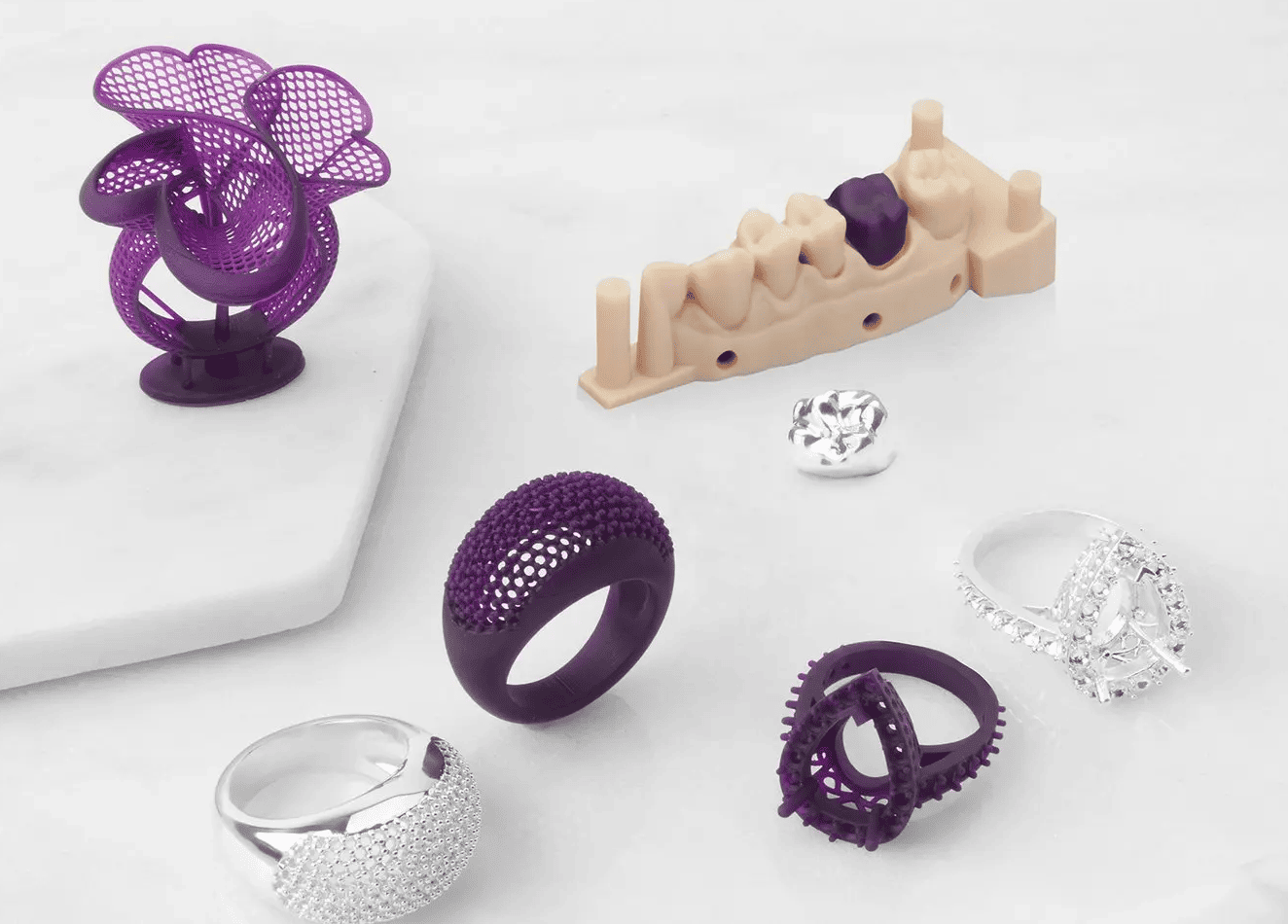
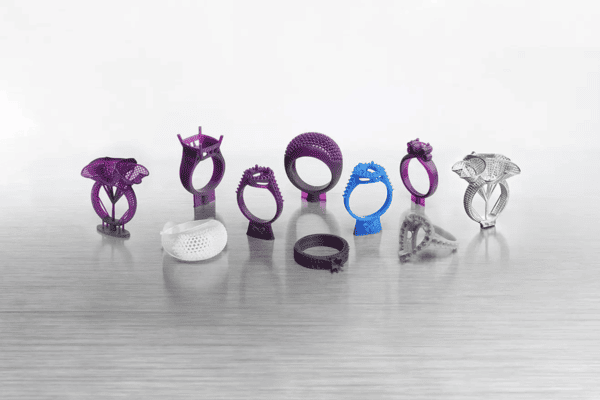
Image Source: Formlabs
Faster Design Iteration
One of the biggest reasons jewelers use 3D printing for prototyping is speed. Jewelry design often involves many small adjustments before a piece is ready for production. A ring may need a slightly different band width. A pendant may need a more balanced shape. A setting may need better spacing for a gemstone. With traditional prototyping methods, each revision can take significant time.
3D printing makes that process much faster. Designers can update a CAD file, send it to print, and hold a new version in their hands soon after. That speed allows jewelers to test multiple ideas in a short period of time. Instead of waiting days or weeks for a new sample, they can quickly compare versions and make better decisions, which is especially useful when working on custom jewelry or limited-edition collections.
Better Visualization of Complex Designs
Jewelry designs often look impressive on screen, but a digital model does not always tell the full story. Scale, proportion, depth, and texture can be difficult to judge from a monitor alone. A 3D printed prototype gives jewelers a physical version of the design, making it easier to see how the piece will actually look and feel.
It is especially important for complex designs. Intricate rings, detailed pendants, and layered bracelet structures can be hard to evaluate in digital form. A printed prototype allows designers to inspect curves, symmetry, thickness, and balance in a more realistic way. It also helps reveal issues that may not be obvious on screen, such as awkward angles or weak structural points.
For clients, the visual advantage is even more valuable. Many customers have trouble imagining a finished piece from a rendering alone. A prototype gives them something tangible to review, making the design easier to understand and appreciate.
Lower Development Costs
Traditional jewelry prototyping can be expensive, especially when several rounds of revisions are needed. Handcrafting samples takes time, labor, and material. If a design changes repeatedly, costs can rise quickly. 3D printing helps reduce those expenses by making the prototyping process more efficient.
Because prototypes can be created directly from digital files, jewelers spend less on manual labor for early-stage samples. They also reduce wasted material, since the digital workflow allows for more precise planning before production begins. If a design needs to be changed, the revised file can be printed again without rebuilding the entire prototype from scratch.
Cost advantage matters for businesses of all sizes. Large jewelry brands may use rapid prototyping to streamline product development across many designs. Smaller studios and independent jewelers can use it to test ideas without taking on unnecessary financial risk. In both cases, 3D printing helps keep the development process lean and manageable.
Improved Precision and Detail
Jewelry is a detail-driven industry. Small differences in surface texture, engraving depth, prong alignment, or stone placement can make a major difference in the final result. 3D printing supports this level of precision by producing highly accurate prototypes that match the original digital model closely.
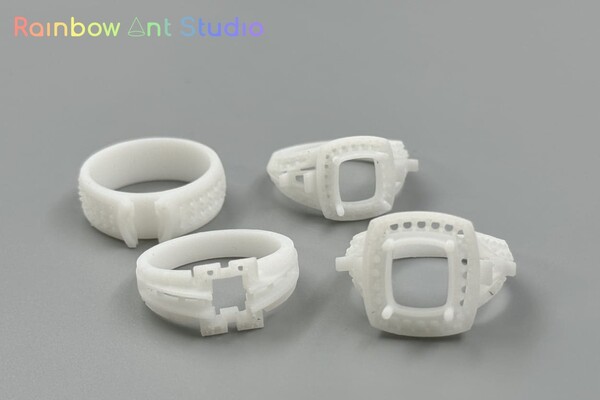
This is one reason jewelers rely on it for fine and delicate designs. Techniques such as filigree, lattice patterns, and engraved surfaces can be represented clearly in a printed prototype. Designers can check whether the details are sharp enough, whether the walls are too thin, or whether the structure needs reinforcement before final production.
Improved precision also helps reduce errors later in the process. A prototype that closely reflects the intended design gives jewelers a better chance of spotting technical issues early. That means fewer surprises during casting or finishing, and a better match between concept and final piece.
Easier Client Approval Process
Working with clients is a major part of jewelry design, especially in custom and premium markets. Even when a digital rendering looks polished, a client may still have trouble deciding whether the design is right for them. A physical prototype makes the approval process much easier.
When clients can hold or inspect a sample, they gain a better sense of size, shape, and overall style. They can see how large a ring looks on the hand, how a pendant hangs, or how a bracelet wraps around the wrist. This makes conversations more productive and reduces the chance of misunderstandings.
A prototype can also speed up approvals. Instead of going back and forth over abstract images, the client sees a real object and can give more confident feedback. That helps the jeweler and customer stay aligned before moving on to final production. In turn, it reduces the risk of expensive revisions after manufacturing has already started.
Works Well with Casting Workflows
3D printing fits naturally into many jewelry production workflows, especially casting. In fact, one of the most common uses of 3D printed prototypes in jewelry is as a model for lost-wax casting. Jewelers can print a prototype in a casting-compatible material, then use it to create a mold or directly move into the casting process.
The workflow combines the speed of digital manufacturing with the flexibility of traditional metal finishing. It allows designers to create detailed forms with less manual sculpting, while still producing a final metal piece with the appearance and value customers expect. For many jewelers, this is the best of both worlds.
3D printing also supports experimentation before casting begins. A prototype can be tested for fit, structure, and visual appeal before committing to the final metal version. That helps avoid expensive casting errors and improves the chances that the finished piece will turn out correctly the first time.
Speeds Up Time to Market
In the jewelry business, timing matters. Trends can shift quickly, seasonal collections need to launch on schedule, and custom orders often come with tight deadlines. 3D printing helps jewelers bring products to market faster by shortening the prototype stage.
When prototyping is faster, the entire development cycle becomes shorter. Designers can test ideas, revise models, get approval, and prepare for production without long delays. That makes it easier to launch new collections on time and respond to customer demand more effectively.
Ultimately, rapid prototyping helps jewelers stay productive and responsive. It supports a faster workflow without sacrificing creativity or quality. In an industry where both craftsmanship and speed matter, that is a powerful combination.
 0
0


COMMENTS
- Be the first to share your thoughts!