 English
  日本語
日本語  Deutsch


What Are Biocompatible Materials
A biocompatible material is one that can safely perform its intended function in contact with the human body without causing an unacceptable biological reaction. In simple terms, it means the material is suitable for a specific medical or body-related use.
That does not mean every biocompatible material is safe for every purpose. A material that works well for a temporary skin-contact device may not be appropriate for an implant, a surgical instrument, or a product that must be sterilized repeatedly. Biocompatibility depends on the exact application and the conditions the part will face.
In 3D printing, biocompatible materials are used to create parts that may need a combination of safety, precision, and customization. These materials can include certain resins, thermoplastics, metals, and flexible polymers. The final printed part often needs additional testing or certification before it can be used in a medical setting.
It is also important to distinguish between “biocompatible,” “medical-grade,” and “body-safe.” These terms are related, but they are not identical. A material can be biocompatible for one use and still not qualify as medical-grade for another. Always evaluate the specific requirements of the project before choosing the material.
Common Types of 3D Printing Biocompatible Materials
Several material families are commonly used in 3D printing when biocompatibility is required.
Biocompatible Resins
Biocompatible resins are widely used in resin-based 3D printing processes such as SLA and DLP. These resins can produce highly detailed parts with smooth surfaces, which makes them useful for dental models, surgical guides, and other precision parts. Some are formulated for short-term skin contact or medical workflows, but they usually require proper washing and curing to reach their intended performance.
Medical-Grade Thermoplastics
They are another major category. Materials such as nylon, PEEK, and PEI are used when stronger mechanical performance or higher heat resistance is needed. PEEK in particular is known for its durability and resistance to chemicals and sterilization, which makes it attractive for demanding medical applications. These polymers are often selected for custom tools, fixtures, and certain patient-specific devices.
Metals
Titanium and stainless steel are also used in biocompatible 3D printing, especially in applications where strength, corrosion resistance, and long-term performance matter. Titanium is especially valued in implant-related and surgical applications because of its compatibility with the human body and excellent strength-to-weight ratio. Stainless steel is often used for durable tools and medical components.
Flexible Materials and Silicones
Flexible materials and silicones can be useful in applications that require softness, comfort, or repeated contact with skin. These materials are often chosen for wearable parts, cushioning elements, or custom-fit products that need a more flexible feel.
In some low-risk applications, PLA and PETG may also be used, especially for prototypes or non-invasive wearable parts. However, these materials should not be assumed to be biocompatible just because they are common in desktop 3D printing. Their suitability depends on the exact formulation and use case.
Typical Applications of 3D Printed Biocompatible Parts
Biocompatible 3D printing is used in many industries, but the most common applications are in healthcare and related fields.
One major use is surgical guides and anatomical models. These parts help surgeons and medical teams plan procedures more effectively. A 3D printed model can represent a patient’s anatomy with high accuracy, making it easier to visualize complex structures before surgery.
Another important area is dentistry. Biocompatible materials are often used for dental models, aligners, crowns, and surgical guides. Dental applications benefit greatly from 3D printing because they require a high degree of precision and often involve custom-fit parts for each patient.
Prosthetics and orthotics are also strong use cases. 3D printing makes it possible to produce custom components that match the user’s body shape, improving comfort and fit. Biocompatible materials are especially valuable when a part touches the skin for long periods or must perform reliably in daily wear.
In the consumer and medical wearables space, biocompatible materials can be used for skin-contact devices and wearable accessories. These parts may include straps, housings, pads, or support structures that need to be comfortable and safe for extended contact.
Biocompatible 3D printing is also used in research and testing. Laboratories and product development teams may print body-related models, fixtures, or experimental parts to evaluate fit, function, or design before moving into full production.
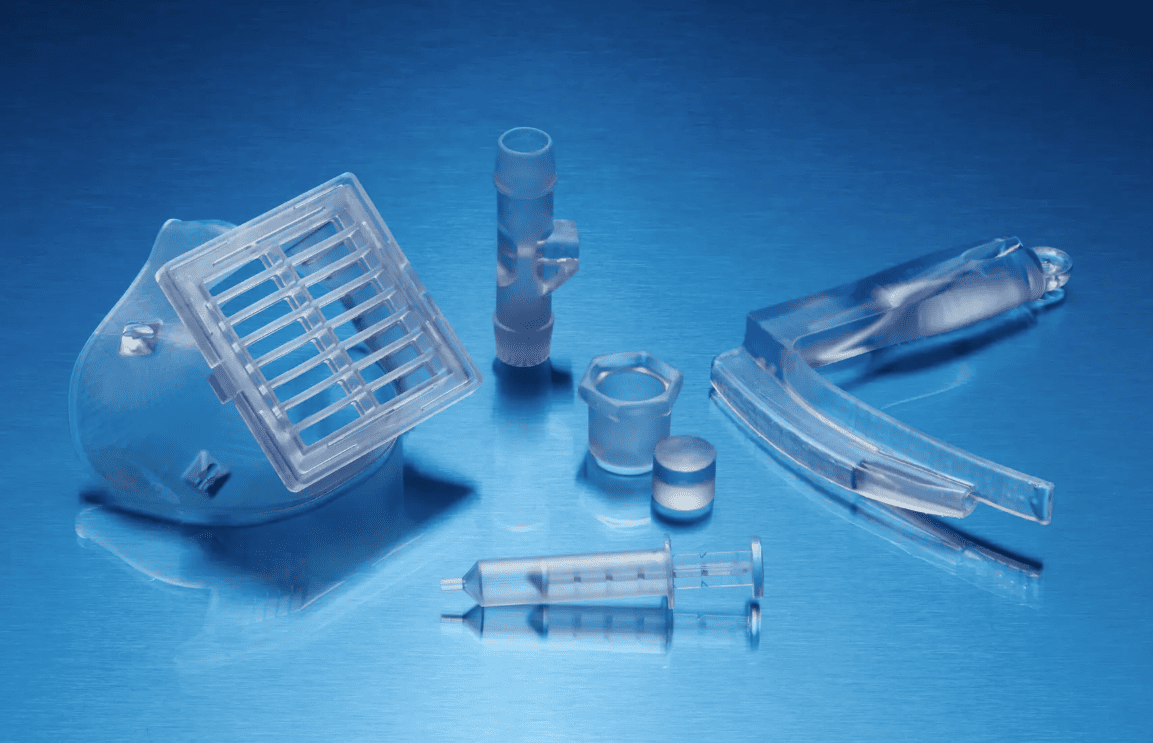
Image Source: Formlabs
Key Factors to Consider Before Choosing a Material
Choosing the right biocompatible material is not just about the material itself. It is about matching the material to the use case.
The first factor is intended use. Ask whether the part will be used externally, in skin contact, in short-term contact with tissue, or in a more demanding medical environment. The level of biological safety required changes with the application.
Next, consider strength, flexibility, and durability. A surgical guide does not need the same properties as a prosthetic socket or an implantable component. The part must perform well in the real conditions it will face.
Sterilization resistance is another major factor. Some parts must survive heat, chemicals, or other sterilization methods without losing performance. If the material cannot handle the cleaning process, it may fail even if it is biocompatible in theory.
You should also think about printer compatibility and post-processing. A material may be biocompatible only when printed on a specific machine, with the right settings, and with proper cleaning and curing. Post-processing steps can affect the final safety and quality of the part.
Finally, check regulatory requirements and certifications. In many medical and dental applications, the material must meet specific standards before it can be used. The label “biocompatible” is not enough on its own. Documentation, validation, and supplier reliability matter just as much as the material itself.
Limitations and Challenges
While biocompatible 3D printing materials offer many advantages, they also come with several important limitations and challenges:
• Not every biocompatible material is suitable for all applications. A material designed for short-term skin contact may not be appropriate for implants or prolonged tissue contact.
• The printing process can affect biocompatibility. Incorrect print settings, contamination, or inadequate post-processing may compromise the safety and performance of the final part.
• Post-processing is often essential. Many biocompatible resins require thorough washing and UV curing to achieve their intended properties and reduce residual chemicals.
• Surface finish can be a concern. Rough or porous surfaces may trap bacteria or contaminants, making cleaning and sterilization more difficult.
• Sterilization compatibility varies by material. Some polymers cannot withstand repeated exposure to high temperatures or harsh sterilization chemicals.
• Material and production costs are generally higher. Certified biocompatible materials are often more expensive than standard 3D printing materials, and additional testing may further increase costs.
• Regulatory compliance can be complex. Medical and dental applications may require materials and manufacturing processes to meet specific industry standards and certifications.
• Printer compatibility should not be overlooked. Certain biocompatible materials are designed for specific 3D printing technologies, limiting the range of equipment that can be used.
 0
0


COMMENTS
- Be the first to share your thoughts!