 English
  日本語
日本語  Deutsch


Computer Numerical Control (CNC) machining remains one of the most important and versatile manufacturing technologies in the world today. From aerospace brackets to medical implants to smartphone housings, CNC machining enables the creation of precise, durable, and highly repeatable parts across nearly every industry. Although additive manufacturing and advanced molding technologies continue to evolve, CNC machining still stands as the backbone of modern production thanks to its accuracy, material compatibility, and reliability.
What is CNC Machining?
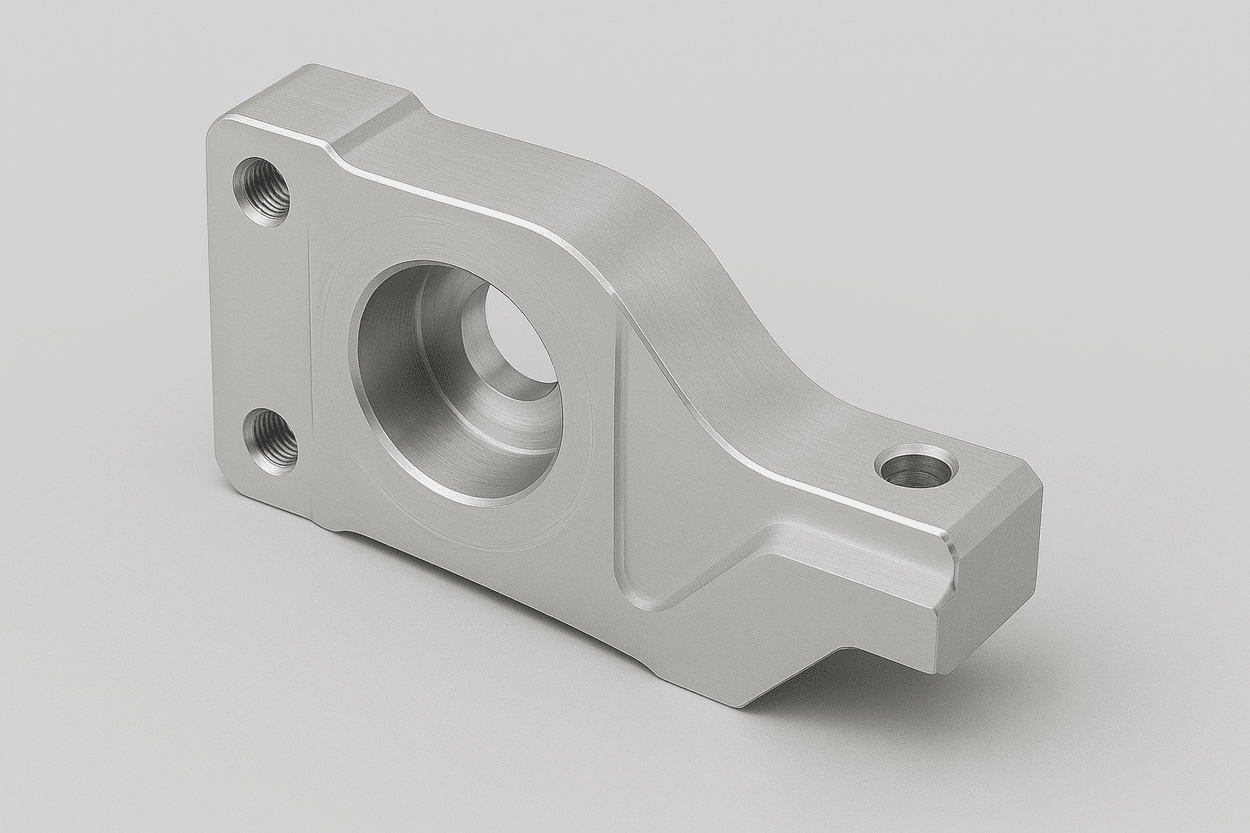
CNC machining is a computer‑controlled subtractive manufacturing process where machines remove material from a solid block (called a workpiece) to create a final part. Instead of manual handwheels and levers, CNC machines follow precise digital instructions known as G‑code, allowing them to cut, drill, mill, turn, and shape materials with exceptional accuracy.
Key Features of CNC Machining
• Subtractive: material is removed to create the final geometry
• Automated: machines follow programmed toolpaths
• Highly accurate: tolerances can reach ±0.005 mm
• Versatile: works with metals, plastics, composites, and more
• Scalable: suitable for prototypes and full‑scale production
How CNC Machining Works?
Step 1: CAD Modeling
Every CNC project begins with a 3D CAD model. This digital blueprint defines the geometry, dimensions, tolerances, and features of the part.
Step 2: CAM Programming
The CAD model is imported into CAM (Computer‑Aided Manufacturing) software, which generates toolpaths, cutting strategies, speeds and feeds, and machine instructions (G‑code).
Step 3: Machine Setup
• A machinist prepares the CNC machine by:
• Securing the workpiece
• Installing cutting tools
• Setting zero points
• Loading the G‑code program
Step 4: Machining Execution
The CNC machine executes the programmed toolpaths. Depending on the machine type, this may involve milling, turning, drilling, boring, tapping, and EDM cutting.
Step 5: Inspection & Quality Control
Finished parts undergo dimensional checks using calipers and micrometers, CMM (Coordinate Measuring Machines), and surface roughness testers.
Types of CNC Machines
CNC machining is not a single technology but a family of digitally controlled manufacturing systems, each designed to perform specific cutting, shaping, or finishing operations. Understanding the different machine types helps designers choose the right process for their geometry, tolerances, and material needs. Below is a deeper, more structured overview of the major CNC machine categories, how they work, and when to use them.
1. CNC Milling Machines
CNC milling is the most widely used CNC process. Milling machines use rotating cutting tools to remove material from a stationary or moving workpiece.
Common Configurations
3‑Axis Mills
Move along X, Y, and Z. Ideal for prismatic parts, pockets, slots, and simple contours.
4‑Axis Mills
Add rotation around the X or Y axis. Useful for machining cylindrical features, engraving, and reducing setups.
5‑Axis Mills
Allow simultaneous movement across five axes. Essential for complex surfaces, undercuts, turbine blades, medical implants, and aerospace components.
When to Choose Milling
• Parts with flat surfaces, pockets, channels, or angled features
• High‑precision components
• Complex geometries requiring multi‑axis movement
• Prototypes and production parts in metals or plastics
2. CNC Lathes & Turning Centers
CNC turning machines rotate the workpiece while a stationary cutting tool removes material. They excel at producing round or cylindrical parts.
Types of Turning Machines
Standard CNC Lathes
For shafts, pins, bushings, and threaded components.
Turning Centers with Live Tooling
Combine turning with milling, drilling, and tapping in one setup.
Twin‑Spindle Turning Centers
Allow simultaneous machining on both ends of a part, improving throughput.
Key Advantages
• Extremely tight concentricity
• Fast cycle times
• Ideal for high‑volume production
• Best for: cylindrical parts, threads, tapers, grooves, and knurling, automotive, aerospace, and industrial components
3. Swiss‑Type CNC Machines
Swiss‑type lathes (also called Swiss screw machines) support the workpiece with a guide bushing, allowing very long, slender, or tiny parts to be machined with exceptional stability.
Key Features of Swiss Machining
• The cutting tool works very close to the guide bushing, minimizing deflection.
• Capable of tolerances in the micron range.
• Designed for continuous, high‑volume production.
Typical Applications
• Medical screws and implants
• Watch components
• Precision pins and fasteners
• Electronics connectors
4. CNC Routers
CNC routers resemble milling machines but are optimized for softer materials and high‑speed cutting.
Common Materials
• Wood
• Plastics
• Foam
• Composites
• Soft aluminum (in some cases)
Applications
• Furniture and cabinetry
• Signage
• Packaging
• Architectural models
• Large‑format prototyping
Routers typically have large work envelopes, making them ideal for sheet‑based materials.
5. CNC EDM (Electrical Discharge Machining)
EDM removes material using controlled electrical sparks rather than mechanical cutting. It is used exclusively for conductive materials.
Two Main Types
Wire EDM
Uses a thin wire to cut intricate profiles, sharp internal corners, and fine details.
Sinker EDM
Uses a shaped electrode to burn cavities into hardened metals.
Benefits of EDM
• Can cut hardened steels and superalloys
• Achieves extremely tight tolerances
• Produces geometries impossible with traditional cutting tools
Applications
• Injection mold tooling
• Die making
• Aerospace components
• Medical instruments
6. CNC Plasma, Laser, and Waterjet Cutters
These machines cut materials using energy‑based or fluid‑based processes rather than mechanical tools.
CNC Laser Cutting
• High precision
• Excellent for thin metals, plastics, and sheet materials
• Clean edges with minimal post‑processing
CNC Plasma Cutting
• Ideal for thicker metals
• Faster but less precise than laser cutting
CNC Waterjet Cutting
• Cuts virtually any material (metal, stone, glass, composites)
• No heat‑affected zone
• Perfect for thick or heat‑sensitive materials
These machines are often used for sheet metal fabrication, signage, architectural components, and industrial parts.
Materials for CNC Machining
Metals
Aluminum (6061, 7075)
• Lightweight
• Excellent machinability
• Ideal for aerospace, electronics, and automotive
Stainless Steel (304, 316, 17‑4PH)
• Corrosion‑resistant
• Strong and durable
• Used in medical, marine, and industrial applications
Steel Alloys
• High strength
• Good wear resistance
• Common in tooling and machinery
Brass & Copper
• Excellent electrical conductivity
• Used in electronics and plumbing
Titanium
• High strength‑to‑weight ratio
• Biocompatible
• Essential for aerospace and medical implants
Plastics
ABS
• Affordable and easy to machine
• Used for housings and prototypes
Nylon
• Strong and wear‑resistant
• Ideal for gears and bushings
POM (Delrin)
• Low friction
• Excellent dimensional stability
Polycarbonate
• Impact‑resistant
• Used for enclosures and optical components
PEEK
• High‑performance engineering plastic
• Withstands high temperatures and chemicals
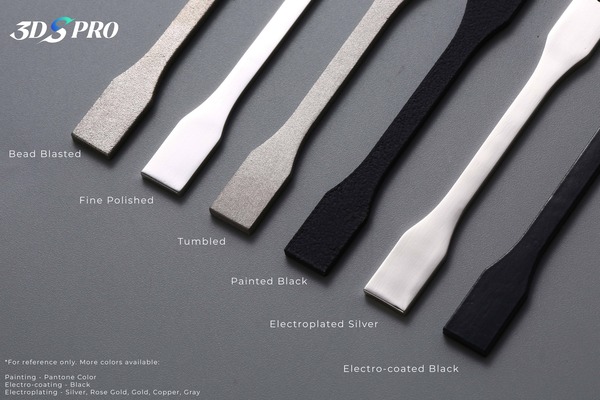
Surface Finishes & Post Processing
As‑Machined
• Visible tool marks
• Standard finish for functional prototypes
• Smooth matte texture
• Ideal for cosmetic parts
Anodizing (Type II & Type III)
• Corrosion resistance
• Color options
• Hard anodizing for wear resistance
• Durable, colorful finish
• Great for consumer products
• High gloss
• Used for decorative or optical components
Heat Treatment
• Improves hardness and strength
• Common for steel and aluminum alloys
Passivation
• Enhances corrosion resistance of stainless steel
Plating (Nickel, Chrome, Zinc)
• Adds conductivity, corrosion resistance, or aesthetic appeal
Pros and Cons
Advantages
1. High Precision & Repeatability
CNC machines deliver extremely tight tolerances, making them ideal for aerospace, medical, and automotive applications.
2. Excellent Material Compatibility
Unlike 3D printing, CNC machining works with nearly all metals and engineering plastics.
3. Fast Turnaround
Once programmed, CNC machines can produce parts quickly and consistently.
4. Strong Mechanical Properties
Machined parts retain the full strength of the base material.
5. Scalable for Prototyping & Production
CNC machining is suitable for one‑off prototypes and large‑volume production.
Limitations
1. Higher Cost for Complex Geometries
Deep pockets, thin walls, and undercuts increase machining time and cost.
2. Material Waste
As a subtractive process, CNC machining generates chips and scrap.
3. Limited by Tool Access
Internal features and organic shapes may be difficult or impossible to machine.
4. Setup Time
Programming and fixturing require skilled labor.
Applications
1. Aerospace & Defense: Aerospace is one of the most demanding industries in the world, requiring extreme precision, lightweight materials, and flawless reliability. CNC machining is indispensable here because it can produce complex geometries in high‑strength metals like aluminum, titanium, and Inconel.
2. Automotive & Transportation: From prototyping to production, CNC machining supports nearly every stage of automotive development.
3. Medical & Dental Devices: Medical manufacturing requires exceptional precision, biocompatible materials, and flawless surface finishes, all strengths of CNC machining.
4. Consumer Electronics: Electronics rely heavily on CNC machining for both functional and cosmetic components.
5. Industrial Machinery & Equipment: CNC machining is the backbone of industrial equipment manufacturing, where durability and precision are essential.
6. Robotics & Automation: Robotics requires lightweight, strong, and highly precise CNC-machined components.
7. Energy & Power Generation: CNC machining supports both traditional and renewable energy sectors.
8. Tooling, Molds & Dies: CNC machining is the primary method for producing high‑precision tooling.
9. Architecture, Art & Creative Industries: Beyond engineering, CNC machining is widely used in creative fields.
When to Choose CNC Machining?
CNC machining is the right choice when your project requires:
1. Tight Tolerances: If your part needs precision within microns, CNC machining is unmatched.
2. High Strength & Durability: Machined parts maintain the full mechanical properties of the material.
3. Complex Geometries with Flat or Angular Features: Milling and turning excel at sharp edges, pockets, and prismatic shapes.
4. Low‑to‑Medium Volume Production: CNC machining is cost‑effective for quantities from 1 to several thousand.
5. High‑Quality Surface Finishes: Machining delivers smooth, consistent surfaces ideal for cosmetic parts.
6. Materials Not Suitable for 3D Printing: Metals like stainless steel, titanium, and copper machine beautifully.
7. Rapid Prototyping with Production‑Grade Quality: CNC prototypes behave exactly like final production parts.
 5
5


COMMENTS
- Be the first to share your thoughts!