 English
  日本語
日本語  Deutsch


Shipping tiny resin parts is deceptively tricky. A small fin, a delicate post, or a painted miniature looks sturdy on the bench but can arrive at a customer with a snapped tab or scuffed finish if we don’t design the packing process around the part’s weakest feature. Over the past few years, we cut our damage rate by treating packaging as a finishing step. We strive to deliver the best outcome to your innovation journey.
What to Think about before Packing
We treat packaging like a small engineering problem.
1. Identify the Weak Points
Look for thin walls, long cantilevers, posts, painted surfaces, and any feature that would break if bent or rubbed. If a part has a 0.6 mm peg or a 0.8 mm fin, that single feature should drive the packing decisions.
2. Consider Surface Finish and Coatings
Fresh paint, delicate primers, or matte finishes can scuff easily. Painted parts may need extra curing time and a barrier layer (tissue, interleaving) between contact surfaces.
3. Decide Whether Parts Should Ship Cured or Mounted
Fully post-cured and finished parts handle better. If parts must ship attached to a support or temporary carrier (to protect a fragile point), plan for that in packing dimensions.
3. Group Logically
Pack by fragility more than by order size. A small order with one fragile piece needs the same attention as a batch of hardy clips. Grouping also helps standardize packing trays and reduces errors.
4. Account for Carrier Handling and Distance
For local same-city shipments, we can get away with lighter packaging. For cross-country or international shipments, assume more handling; use a rigid inner box and more cushioning.
A quick 60–90 second evaluation before packing saves hours of reprints.
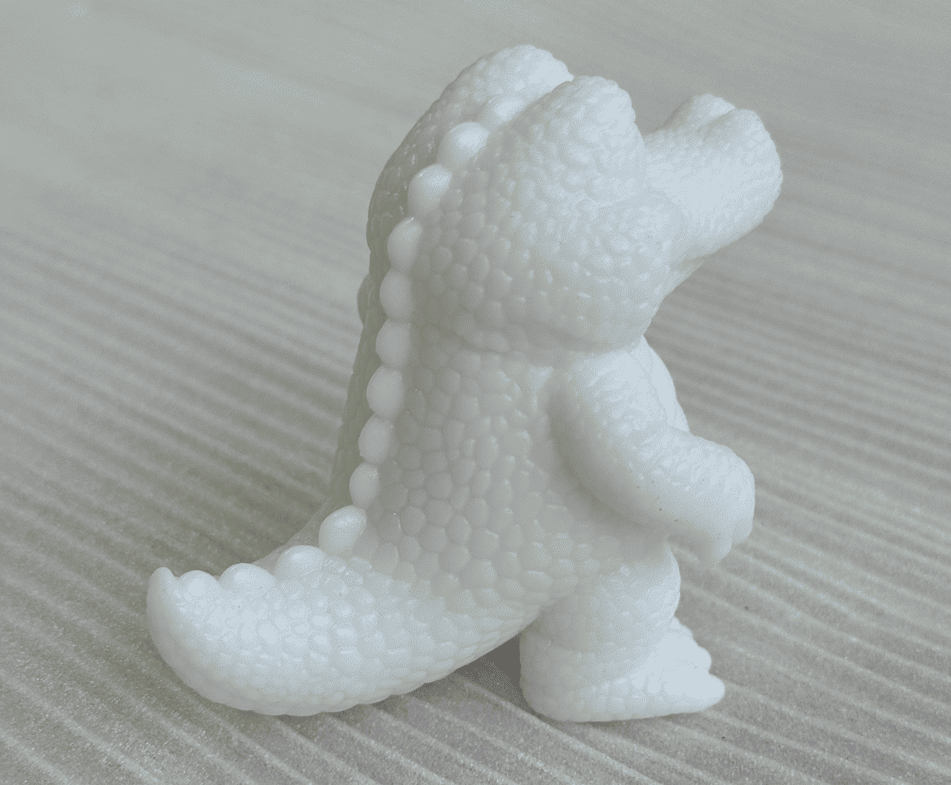
Image Copyright © 2026 3DSPRO Limited. All rights reserved.
Materials and Tools We Use
• Small rigid inner boxes to keep parts from bending and provide crush resistance.
• Corrugated outer mailers or small rigid cartons give about 2 cm total clearance around the inner box for crush protection.
• Closed-cell foam sheets / EPE foam, which are easy to cut, moisture-resistant, can be die-cut or hand-cut into compartments.
• Micro-foam for wrapping delicate surfaces without bulky padding.
• Silicone putty/museum putty works as a temporary, non-adhesive support for tiny feet and posts.
• Packing tape, tamper-evident tape, fragile labels, and a packing slip sleeve.
• Small tags or part ID stickers. We stick these to temporary carriers, never to the finished part.
• Double-sided tape and low-temp hot glue for securing foam in the inner box (not on parts).
Our Packing Workflow
Step A: Inspect and Document
Final QC happens at the packing station. We take a quick photo of every fragile part and log its ID. The photo is insurance and helps with claims. If a part doesn’t pass visual inspection, it goes back to rework before packing.
Step B: Stabilize the Fragile Features
If a part has a thin post or a projecting fin, we either:
mount it on a temporary carrier that supports the weak point, or
press-fit a small silicone putty block under the fragile area so it can’t flex.
Avoid tape or glue on the part surface.
Step C: Individual Cushioning
Wrap each part in a micro-foam sheet or place it into a small foam compartment. For painted surfaces, lay down a sheet of acid-free tissue between surfaces to prevent abrasion. Use cut slots in foam sheets so parts are snug and do not touch each other.
Step D: Inner Box and Void Control
Place the individually wrapped parts into the rigid inner box. Fill any remaining voids with small foam pieces or EPE peanuts so nothing shifts. The inner box should be just large enough to hold the items plus minimal filler; too much free space equals failure.
Step E: Outer Box with Crush Layer
Place the inner box inside the outer mailer or carton. Make sure there’s about 1–2 cm of cushioning all around. Seal with tamper-evident tape and add fragile and orientation labels.
Step F: Test before Shipping
We perform a simple shake test and a desk-height drop test (onto a carpeted floor or padded surface). If any movement or contact is detected, we add more foam until the part stays put. For high-value shipments, we always require signature-on-delivery and insure at a declared value.
Step G: Documentation for the Customer
Include a packing slip with handling notes and a short care card with suggestions for storage and handling, which reduces accidental damage on the customer side and improves the unboxing experience.
Tiny resin parts are worth handling like tiny fragile goods; stabilize the weakest point, isolate every surface, and test before we ship. The materials are inexpensive; the savings show up in fewer reprints, fewer complaints, and happier customers. It is a win-win process!
 0
0


COMMENTS
- Be the first to share your thoughts!