 English
  日本語
日本語  Deutsch


Shipping large 3D printed parts is not as simple as putting the part in a box and sending it out. Bigger parts bring a different set of risks: they can flex under their own weight, rub against packaging during transit, and develop cracks or scuffs if they are not supported correctly. They also take up more space, which means there is less room for error when choosing a box, adding cushioning, or arranging multiple components.
At 3DSPRO, we treat packaging as part of the production process. A great print is not truly finished until it reaches the customer in the same condition it left our facility. That is why we use a careful shipping method designed specifically for large 3D printed parts. Our goal is to reduce movement, protect the surface, and make sure the part arrives ready to use.
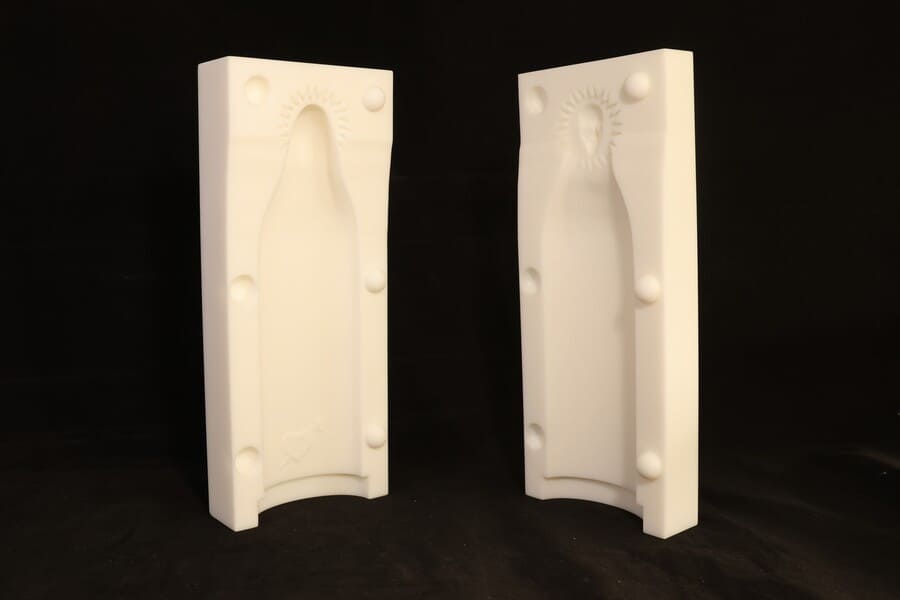
Large 3D Prints Are Harder to Ship
Large 3D printed parts create challenges that small parts usually do not. A tiny resin piece may be fragile, but a large print has to deal with weight, leverage, and shipping vibration over a much larger surface area. Even a part that is strong enough for end use can still be vulnerable during transit if it is not packed correctly.
One common issue is flexing. Long, thin, or flat parts can bend slightly inside a box when the package is handled roughly. That movement may not seem serious, but repeated vibration can cause stress marks, cracks, or broken edges. Another issue is impact. Large parts often have protruding features, corners, or detailed sections that can be damaged when the box is dropped or stacked under other parcels.
Surface quality also matters more on larger parts. A scratch on a tiny hidden component may not be important, but a scuff across a visible finish on a display model or prototype can ruin the part’s appearance. Large prints often have more visible area, so packaging must protect both structure and finish.
There is also the problem of geometry. Some large prints have unusual shapes, hollow sections, or fragile extensions. These parts do not fit neatly into standard packaging methods, which is why a custom approach is often needed.
How We Evaluate Each Part Before Packaging
Before we choose a box or any cushioning, we first inspect the part carefully. Every large print is different, and our packaging plan starts with the shape, size, weight, and material of the specific item.
We look at where the part is strongest and where it is most vulnerable. For example, a large flat panel may need support in the center to prevent bending, while a tall vertical piece may need side protection to keep it from tipping during transit. Thin walls, delicate corners, fine details, and connection points all receive special attention.
We also consider the material and finishing process. A part made from a tough production material may tolerate more handling than a lightweight prototype or a post-processed surface with paint, coating, or polishing. Some finishes are easy to mark, so we plan packaging that minimizes direct contact. If a part has been assembled from multiple pieces, we review the joints and connections to decide whether it should ship assembled or in separate sections.
At this stage, we also think about the destination. A local delivery may require less reinforcement than long-distance shipping, and international freight can demand even stronger protection.
Choosing the Right Packaging Strategy
Once we know the risks, we choose the packaging method that best fits the part. There is no single solution for every large print. Some parts only need a well-fitted carton with foam support, while others need custom inserts, double boxing, or rigid outer protection.
For many large prints, a reinforced carton is the starting point. The box must be large enough to include cushioning on all sides without allowing the part to shift. If the part is especially heavy or awkwardly shaped, we may use a stronger outer box or additional structural support to help it hold up during transport.
Custom foam inserts are often the best choice when the part has a complicated shape. Foam can be cut or arranged to cradle the part securely and distribute pressure more evenly. It is especially useful when the goal is to support the part without pressing directly on delicate surfaces.
For some oversized items, double boxing is the safest option. The inner box holds the part securely, while the outer box adds another layer of protection against impact and compression.
In some cases, a crate or heavily reinforced container is the better solution. Very large or valuable parts may be too exposed in a standard carton, especially if they are heavy, long, or unusually shaped. A stronger package helps prevent damage from stacking, crushing, or rough handling.
How We Stabilize the Part Inside the Box
The most important goal during packing is to keep the part from moving. Even the strongest box will not protect a print if the part can slide, twist, or bounce inside it. Movement creates friction, and friction creates damage.
We begin by placing the part so it sits naturally and securely in the package. The part should be supported at its strongest points, not suspended by weak areas or delicate features. If the design has a large flat base, that base often becomes the main support point. If the part has hollow sections or cutouts, those spaces may be used to help position the part safely, but only if they do not create pressure points.
Void space is a major concern. Empty space inside a box gives the part room to shift, which is why we fill gaps carefully with cushioning material. The key is balance: the packaging should hold the part firmly without squeezing it too tightly. Too little padding allows movement. Too much pressure can deform the print or leave marks on the surface.
We also protect protrusions and corners. Long edges, thin arms, clips, and detailed sections often need extra cushioning so they are not the first points of contact if the box is bumped. Where needed, we add stabilizing blocks or soft supports to keep these areas from bearing weight.
For oversized parts, we sometimes use internal bracing to stop bending. This is especially helpful for long prints with a weak center section. A simple support structure can make a big difference in keeping the part straight during transit.
Protecting the Surface Finish
We usually start with a soft wrap or protective layer around the part. It helps reduce rubbing between the print and the packaging materials and keeps dust, small debris, and abrasion away from the surface. For parts with polished, painted, glossy, or otherwise sensitive finishes, this step is especially important.
The packaging materials themselves matter too. We avoid anything that could leave residue, create scratches, or imprint texture onto the part. Surface-safe wrapping and clean cushioning materials help preserve the appearance of the final print. If the part has delicate decorative features, logos, or post-processing details, we make sure those areas are not pressed directly against hard surfaces.
How We Handle Multi-Part or Oversized Assemblies
Some large 3D printed jobs are not one-piece parts. They may be divided into sections for printing, assembled after production, or shipped with separate accessories and hardware. These jobs require an even more organized packing process.
When multiple parts belong to the same project, we label and organize them so they are easy to identify on arrival. It prevents confusion during unpacking and helps the customer put everything together correctly. Small components, fasteners, and accessories are packed in secure bags or compartments so they do not get lost inside the box.
We also decide whether the parts should ship assembled or disassembled. If an assembled part would be too large, too heavy, or too fragile for safe shipping, we may separate it into sections and pack each one individually, which reduces the risk of damage and often makes the final box easier to handle.
Connection points need special care. If parts are designed to fit together later, we protect the joints and alignment features so they do not chip or deform in transit. In some cases, we add a little extra padding around those areas or isolate them from pressure entirely.
For very large assemblies, the packing method may need to be customized further. The main objective is to keep every piece organized, protected, and ready for clean assembly after delivery.
Final Checks Before Shipping
Before any large 3D printed part leaves our facility, we run a final check on the packaging. It is the last opportunity to catch movement, weakness, or surface risk before the package enters transit.
We inspect the box to make sure it is fully closed, properly reinforced, and labeled clearly. We confirm that the part cannot shift when the package is gently moved. We also check whether there are any unprotected edges, unsupported areas, or pressure points that could become a problem during shipping.
For heavier or more complex packages, we may do a careful movement test to make sure the packaging holds everything in place. The goal is to simulate the type of vibration and handling the package might experience on its way to the customer. If anything feels loose, we adjust the packing before shipment.
Finally, we make sure the package is marked correctly for handling if needed, which includes orientation, fragility, or special care instructions when appropriate. Clear labeling helps reduce avoidable damage during the shipping process.
 0
0


COMMENTS
- Be the first to share your thoughts!