 English
  日本語
日本語  Deutsch


3D printing has become one of the most valuable tools in jewelry making. It gives designers more freedom, helps brands move faster from concept to finished piece, and makes it easier to produce highly detailed custom work. Whether the goal is to create a wax pattern for casting, a prototype for client approval, or even a finished metal component, the right 3D printing technology can improve both workflow and final quality.
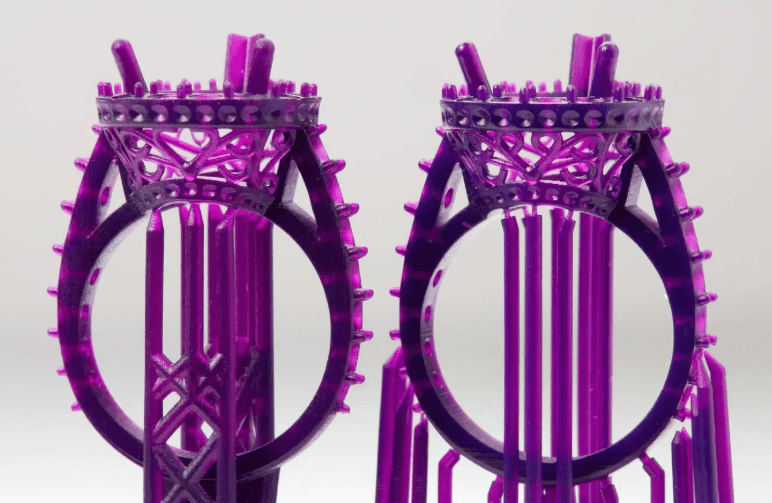
Image Source: Formlabs
How to Choose the Right Technology
|
Factor |
Wax / Castable Materials |
|||
|
Best for |
High-detail jewelry models and casting patterns |
Budget-friendly resin printing for small studios |
Direct metal parts with complex geometry |
Lost-wax casting workflows |
|
Detail level |
Excellent |
Very good |
Good, but depends on finishing |
Excellent for casting patterns |
|
Surface finish |
Smooth |
Smooth to good |
Usually rougher before post-processing |
Smooth enough for casting |
|
Cost |
Medium to high |
Low to medium |
High |
Low to medium |
|
Speed |
Moderate |
Fast for small parts |
Slower and more complex |
Depends on printer and burnout process |
|
Ease of use |
Moderate |
Easier for beginners |
Advanced |
Moderate |
|
Typical use in jewelry |
Rings, earrings, pendants, master patterns |
Prototypes, small-batch models, entry-level production |
Experimental or high-end metal jewelry |
Final casting patterns for metal jewelry |
|
Main advantage |
Very fine detail and reliability |
Affordable access to resin printing |
Direct metal output |
Fits traditional jewelry casting |
|
Main limitation |
Requires post-processing and suitable resin |
Quality may vary by machine |
Expensive and harder to operate |
Must burn out cleanly or it can damage the mold |
What Jewelry 3D Printing Is Used For
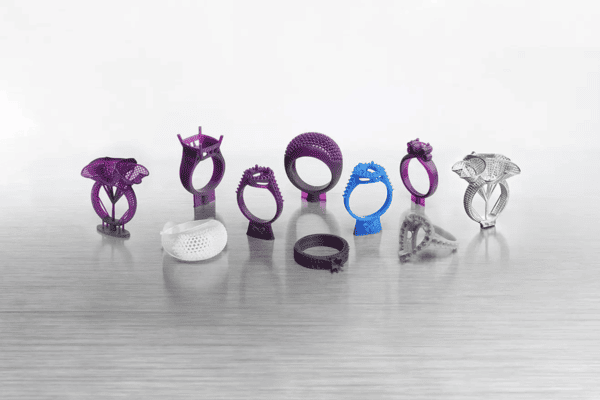
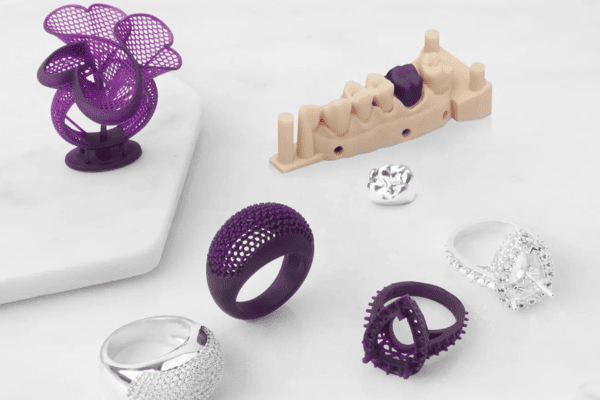
Jewelry 3D printing is used in several different stages of the design and manufacturing process. One of the most common uses is prototype development. Before a ring, pendant, or bracelet is produced in precious metal, a designer may print a model to test the shape, proportions, and overall look. This helps catch design problems early and saves time and material later.
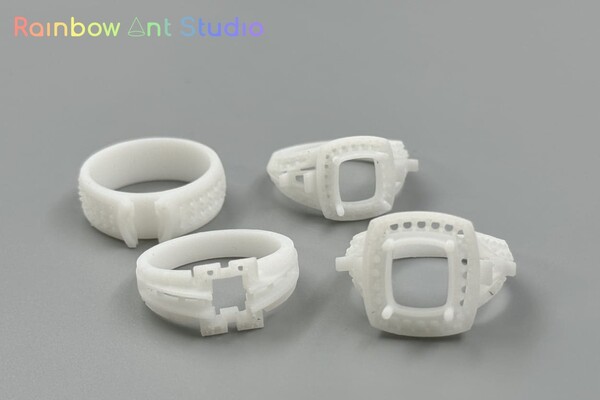
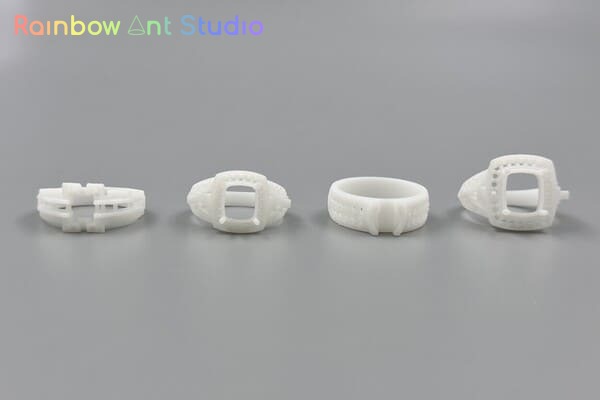
Another major use is pattern making for casting. In traditional fine jewelry production, a wax pattern is often used in the lost-wax casting process. Today, 3D printers can create these patterns much faster and with more design complexity than hand carving or milling alone, which is especially useful for custom engagement rings, personalized pendants, and limited-edition collections.
Jewelry 3D printing is also important for client customization. Customers often want specific ring sizes, names, dates, initials, or one-of-a-kind design details. Digital design and additive manufacturing make these custom requests easier to produce without starting from scratch each time.
Finally, some jewelers use 3D printing for small-batch production. Instead of making large inventories, they can print only what they need. That reduces waste, lowers storage needs, and gives smaller brands a way to offer more variety without a large upfront investment.
SLA 3D Printing for Jewelry
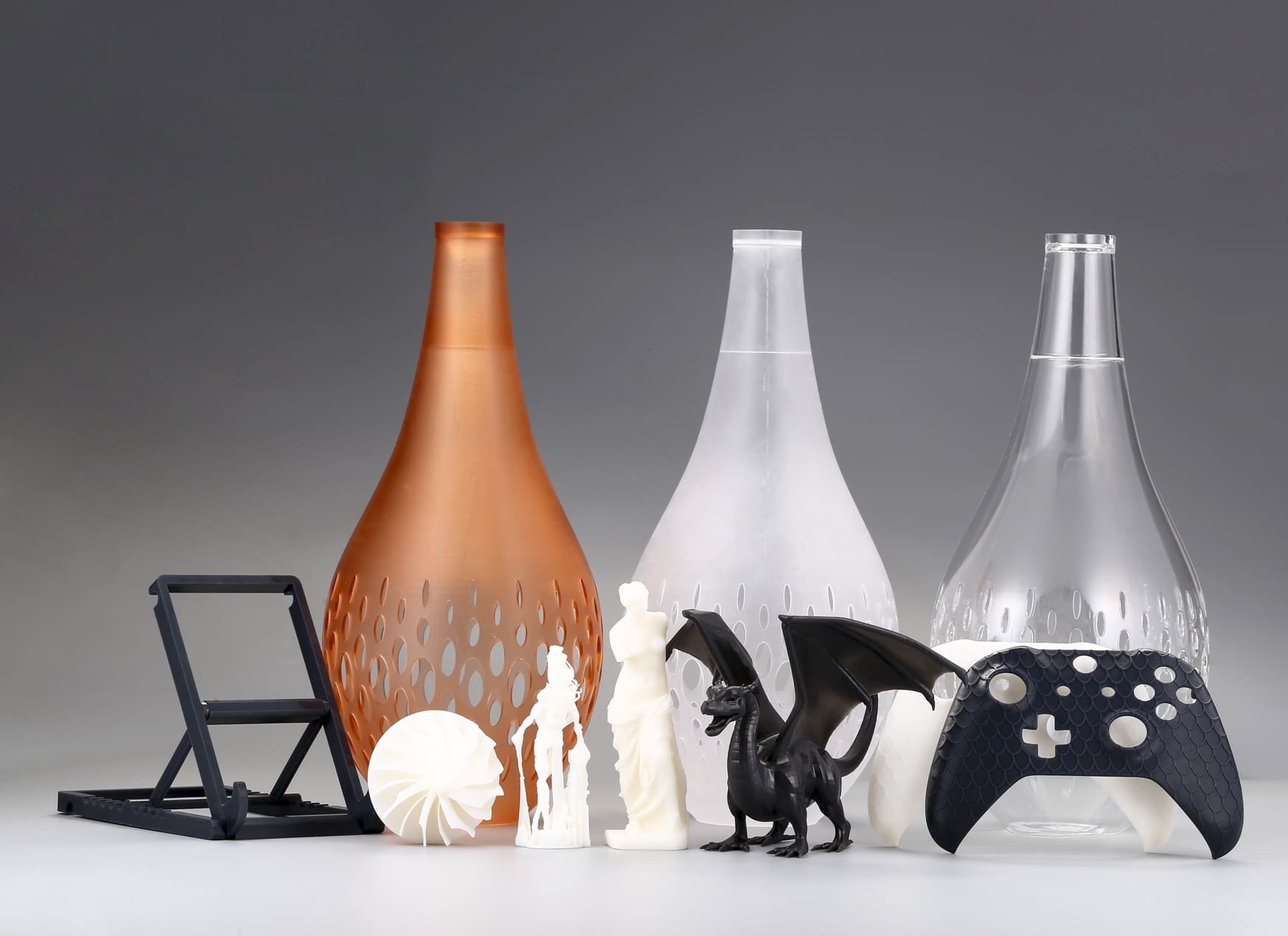
SLA, or stereolithography, is one of the most established 3D printing technologies in jewelry. It works by using a laser to cure a liquid resin layer by layer. Because the laser can trace very fine details, SLA printers are known for their high accuracy and smooth surface finish.
For jewelry, SLA is especially attractive because it can reproduce delicate features very well. Tiny filigree patterns, fine prongs, engraved text, and thin design elements can all be printed with strong precision. That level of detail is important in fine jewelry, where even a small flaw can affect both appearance and fit.
SLA is often used to create master models or casting patterns. These printed parts may be used directly in some workflows, or they may be turned into molds or cast in metal through investment casting. The smooth surface finish of SLA prints also helps reduce finishing time, which is a big advantage when working with small, intricate pieces.
Another reason jewelry makers like SLA is that it provides a good balance between detail and reliability. Many studios rely on it for rings, earrings, pendants, and wax-like prototypes. It is a trusted option when precision matters more than speed.
Still, SLA has some limitations. The process usually requires support structures, careful post-processing, and resin handling. Printed parts need to be washed and cured properly before use. If the resin is not suitable for burnout or casting, it may not work well in lost-wax workflows. So while SLA is excellent for detail, it is important to match the resin to the final application.
LCD 3D Printing for Jewelry
LCD 3D printing has become popular because it offers many of the benefits of resin printing at a lower cost. Like SLA, it uses liquid photopolymer resin, but instead of a laser, it uses an LCD screen to cure each layer, which makes LCD printers more affordable and accessible, which is helpful for small jewelry studios, independent designers, and beginners entering the field.
One of the biggest advantages of LCD printing is cost efficiency. The machines are often less expensive than industrial SLA systems, and many desktop models are compact enough to fit into a small workshop. For a jewelry business that needs to prototype designs frequently, this can be a practical way to produce detailed models without a major equipment investment.
LCD printing can still deliver fine details that are suitable for jewelry applications. It works well for concept models, design checks, and some casting patterns. For many small businesses, it is a strong entry point into digital jewelry production.
However, LCD printing does have tradeoffs. Because the technology is often more affordable, print quality can vary depending on the machine, the resin, and the operator’s experience. Surface finish and dimensional accuracy may not always match higher-end SLA systems. In addition, many LCD printers have smaller build sizes, which can limit how many pieces are produced at once.
For jewelry makers who are starting out or working on smaller volumes, LCD printing can still be a very smart choice. It gives access to detailed resin printing without the high cost of industrial equipment, but it works best when the user understands the limits of the machine and the resin being used.
SLM 3D Printing for Jewelry
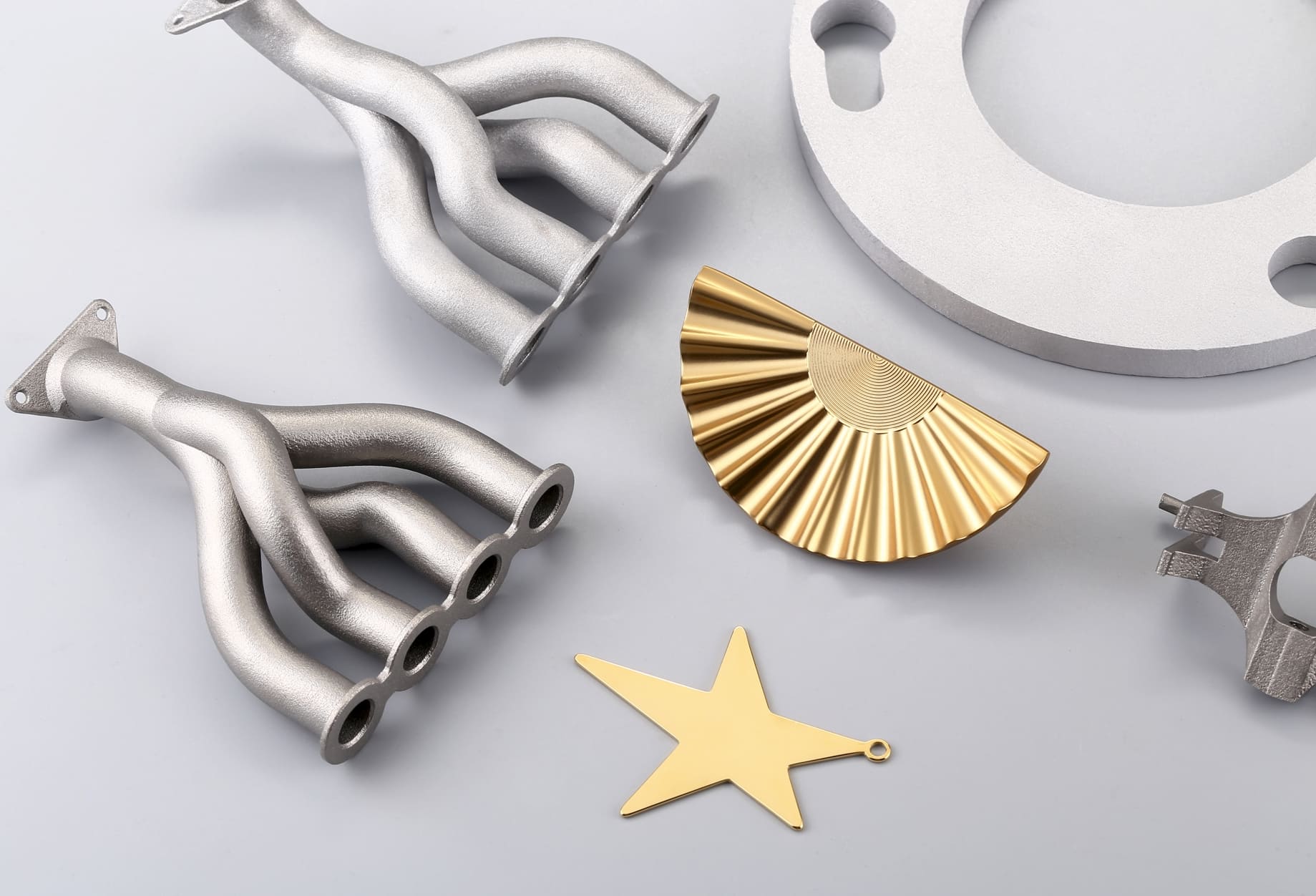
SLM, or selective laser melting, is a metal 3D printing technology. Unlike resin printing, SLM uses a laser to melt fine layers of metal powder into a solid part. In jewelry, SLM produces certain metal components directly rather than casting them from a printed pattern.
SLM is especially useful for designs that are difficult or impossible to make through standard casting or machining. Complex lattice structures, internal channels, and highly customized geometric forms can be produced with impressive precision. For advanced jewelry design, which opens creative possibilities that traditional methods cannot easily match.
The technology is most valuable when the final part needs to be metal from the start. It can be used for experimental collections, architectural jewelry, or high-end custom pieces with very complex geometry. In some cases, it can also reduce the need for multiple production steps.
That said, SLM is not the most common choice for everyday jewelry production. The machines are expensive, metal powder handling requires strict safety measures, and post-processing is still necessary. Printed parts may need support removal, finishing, and polishing before they are ready to wear. Surface texture can also be rougher than what many jewelers want straight off the printer.
Because of these factors, SLM is usually better suited for specialized applications than for high-volume jewelry manufacturing. It is powerful, but it is not always the most practical option for small studios focused on rings, pendants, or castable patterns.
Wax 3D Printing and Castable Materials
Wax 3D printing and castable materials play a major role in fine jewelry production. In traditional lost-wax casting, a wax model is invested in plaster-like material, burned out, and replaced with molten metal. 3D printing makes this process faster and more flexible by producing patterns digitally instead of carving them by hand.
Some printers use true wax-like materials, while others use castable resins designed to burn out cleanly during casting. Both options are used in jewelry, but they serve slightly different needs. Castable materials are especially common because they allow designers to create very detailed patterns with minimal manual labor.
The big advantage of castable printing is that it supports the familiar jewelry casting workflow. A designer can create a digital model, print it in castable material, invest it in a mold, and then cast the final metal piece, which saves time and makes repeated production easier.
Wax and castable materials are particularly helpful for rings, earrings, and intricate decorative designs. They can capture fine details and often reduce the need for hand carving. They also make it easier to produce custom work in small quantities, which is ideal for boutique brands and custom jewelers.
The main challenge is that castable materials must burn out cleanly. If the material leaves ash, expands too much, or cracks during burnout, it can damage the mold and ruin the casting. That means the choice of printer, resin, and burn-out process all need to work together. Good results depend not just on the material itself, but also on careful handling and correct workflow.
 0
0


COMMENTS
- Be the first to share your thoughts!