 English
  日本語
日本語  Deutsch


Among the most widely used materials in MJF are PA 12 and PA 11, two polyamides (nylons) that share similarities but diverge in critical ways. Choosing between PA 12 and PA 11 is a strategic decision that determines how your design performs. In this article, you can explore their properties, applications, and decision-making frameworks. By the end, you’ll know exactly which material aligns with your project’s goals.
What is PA 12?
Polyamide 12 (PA 12) is a petroleum-based thermoplastic belonging to the nylon family. It has long been a staple in industrial manufacturing due to its balance of strength, dimensional stability, and affordability.
Key Features of PA 12:
• High tensile strength: PA 12 parts can withstand significant loads without breaking.
• Dimensional accuracy: MJF’s fine detail resolution pairs perfectly with PA 12’s stability, making it ideal for precision components.
• Low moisture absorption: Unlike some nylons, PA 12 resists water uptake, ensuring parts remain dimensionally stable over time.
• Cost-effectiveness: PA 12 is generally less expensive than PA 11, making it attractive for high-volume production.
What is PA 11?
Polyamide 11 (PA 11) is a bio-based thermoplastic derived from castor oil. While it shares the nylon family name with PA 12, its properties lean toward flexibility and impact resistance.
Key Features of PA 11:
• Superior ductility: PA 11 bends and flexes without losing shape, making it ideal for parts that endure repeated stress.
• High impact resistance: It absorbs shocks better than PA 12, extending the lifespan of parts in demanding environments.
• Sustainability: As a bio-based material, PA 11 reduces reliance on fossil fuels and lowers carbon footprint.
• Slightly higher cost: Its renewable origin and specialized properties make PA 11 more expensive than PA 12.
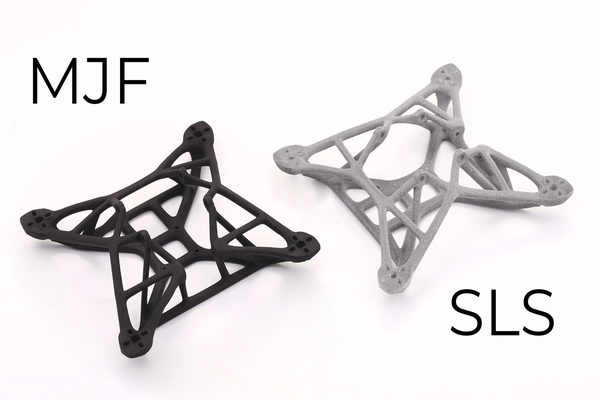
MJF 3D Printed PA 12 vs PA 11
|
Property |
PA12 in MJF |
PA11 in MJF |
|
Source |
Petroleum-based |
Bio-based (castor oil) |
|
Tensile Strength |
High |
Good, more ductile |
|
Flexibility |
Moderate |
Excellent |
|
Impact Resistance |
Good |
Superior |
|
Dimensional Accuracy |
Outstanding |
Very good |
|
Moisture Resistance |
High |
Moderate |
|
Sustainability |
Lower |
Higher |
|
Cost |
Lower |
Higher |
• PA12 excels in precision and rigidity. It’s the material of choice when tolerances are tight and parts must remain dimensionally stable.
• PA11 excels in flexibility and sustainability. It’s the better option when parts must bend, absorb shocks, or align with eco-conscious goals.
MJF + PA 12 Typical Applications
MJF’s ability to produce isotropic parts ensures PA 12 components are strong in all directions. Combined with PA 12’s low moisture absorption, printed parts remain stable even in humid or variable environments:
• Automotive prototypes and production parts: Gears, housings, and brackets that demand dimensional accuracy.
• Aerospace components: Lightweight yet strong parts for cabin interiors and functional prototypes.
• Consumer electronics: Casings, connectors, and fixtures requiring fine detail.
• Industrial jigs and fixtures: Reliable tools for assembly lines, where repeatability is critical.
MJF + PA 11 Typical Applications
MJF enhances PA 11’s ductility, ensuring parts don’t just bend once but continue to flex reliably over time. Its bio-based origin also appeals to industries prioritizing sustainability:
• Medical devices: Orthopedic braces, prosthetics, and surgical tools that require flexibility and patient comfort.
• Sports equipment: Helmets, protective gear, and durable components that endure repeated impacts.
• Wearables: Flexible casings and straps that adapt to body movement.
• Living hinges and snap-fit parts: Components designed to bend repeatedly without breaking.
Decision Framework for MJF Users
Step 1: Define Performance Priorities
Need precision and rigidity? → PA 12
Need flexibility and impact resistance? → PA11
Step 2: Consider Environmental Factors
Exposure to moisture or humidity? → PA 12
Repeated stress or bending? → PA 11
Step 3: Align with Sustainability Goals
Eco-conscious brand or product line? → PA 11
Cost-sensitive production? → PA 12
Step 4: Budget Analysis
Lower material cost required? → PA 12
Willing to invest in bio-based sustainability? → PA 11
Step 5: Prototype and Test
Whenever possible, prototype with both materials in MJF. Real-world testing often reveals nuances that data sheets cannot.
MJF 3D Printing Service at 3DSPRO
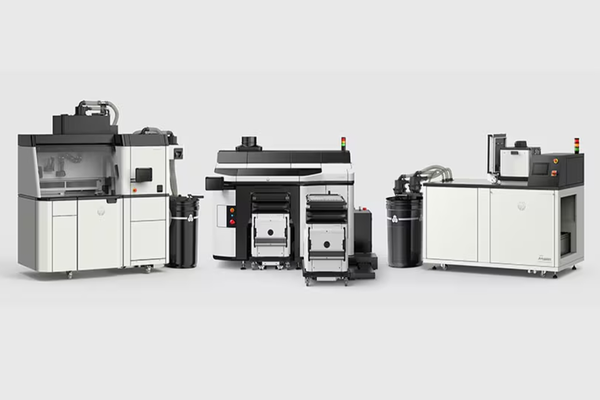
Transform your vision into reality with 3DSPRO's advanced MJF printing services. Our HP Multi Jet Fusion 3D printing service delivers exceptional accuracy for PA 12 parts.
Our 3D Plus™ Solutions is a comprehensive suite of optimization tools that enhance every aspect of your MJF 3D printed PA 12 and PA 11 by delivering various surface finishing options, such as vapor smoothing, dyeing, vibratory smoothing, etc.
Our engineering team provides complimentary design consultations, helping you improve your designs for MJF 3D printing. Upload your design for instant quoting, whether for prototyping innovations or scaling production, we deliver precision that performs.
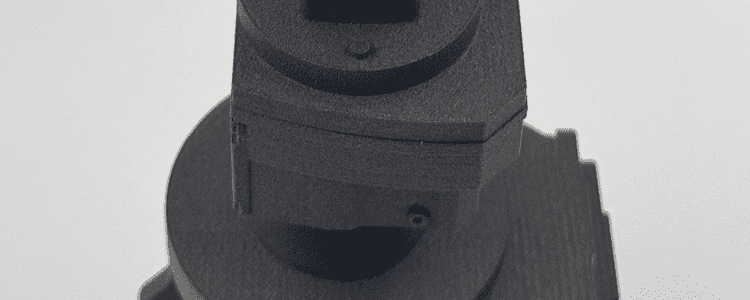
Image Copyright © 3DSPRO Limited. All rights reserved.
 0
0


COMMENTS
- Be the first to share your thoughts!