 English
  日本語
日本語  Deutsch


The Met Gala has always been a place where fashion behaves like performance art, but 2026 made that idea especially literal. The Costume Institute’s exhibition explored the relationship between garments and the body, and the gala’s “Fashion is Art” dress code invited guests to treat clothing as a conceptual medium, not just decoration. That theme made the red carpet especially fertile ground for sculptural silhouettes, experimental materials, and tech-forward design.
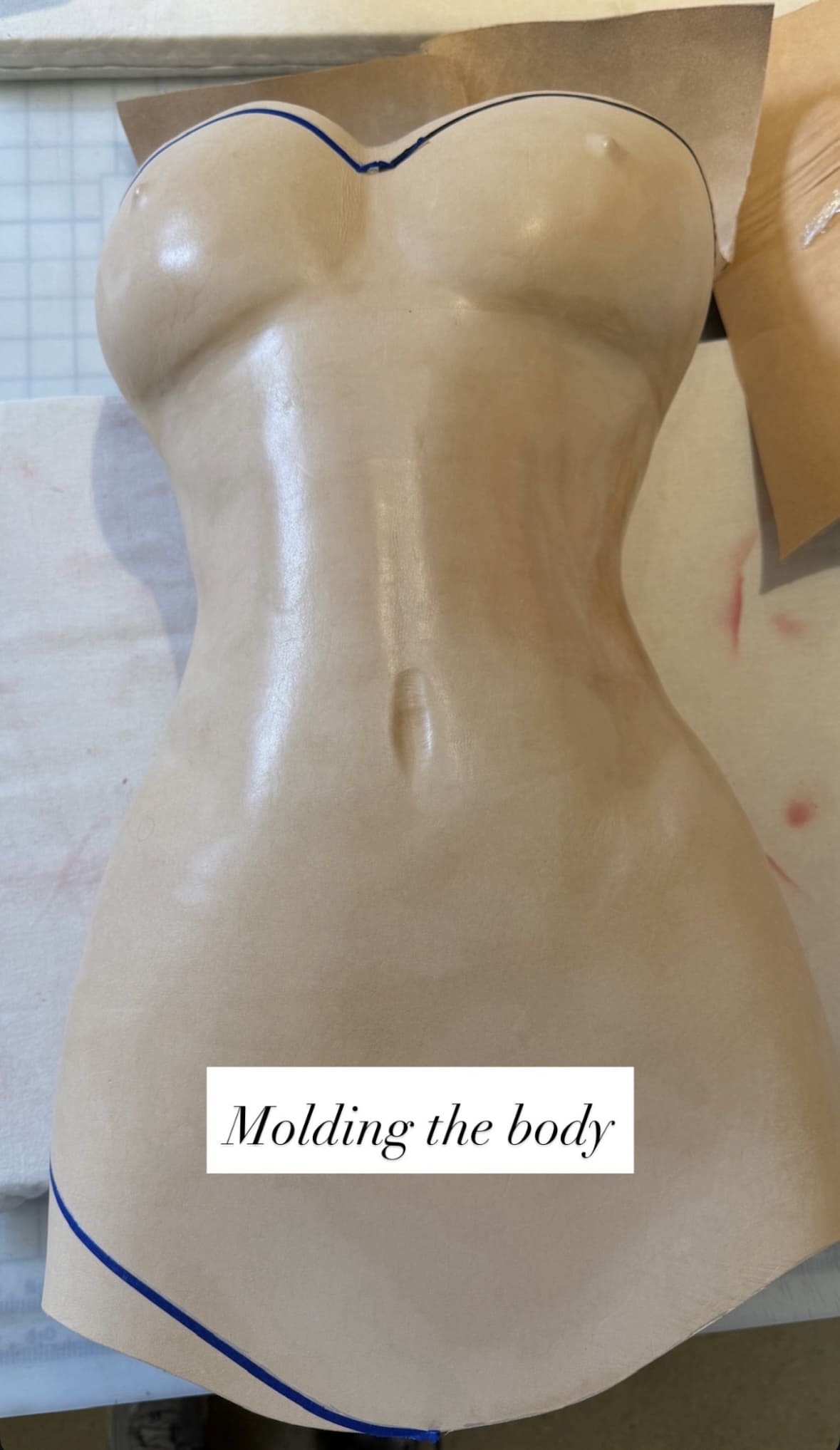
Image Source: Zac Posen Instagram
The Confirmed 3D Printed Look: Kendall Jenner
Among the 2026 Met Gala looks, Kendall Jenner’s outfit stands out as the clearest confirmed example of 3D printing. Vogue reported that her GapStudio look, designed with Zac Posen, was built around a 3D printed leather corset created by Abel Cepeda Ljoka and Will Kowall of Seks. 3D printing was not just used for visual effect; it was part of the garment’s actual structure.
The corset gave the look its sculptural core. Rather than functioning like a soft or purely decorative layer, it helped shape the silhouette and support the entire outfit. The rest of the ensemble was arranged around that base, creating a dramatic contrast between the rigid, engineered bodice and the flowing elements elsewhere in the look. Vogue described the outfit as inspired by the Winged Victory of Samothrace, which helps explain why it felt so statue-like and museum-worthy on the red carpet.
That is one reason Jenner’s look became such an important reference point for fashion-tech coverage that night. It shows how 3D printing can be used in couture not just to add texture or novelty, but to build form, control shape, and push a garment closer to wearable sculpture. Later reporting also referred to the corset as molded to Jenner’s body, reinforcing the idea that precision fit and structural design were central to the look.

Image Source: Kendall Jenner Instagram
3D Printing Matters in Fashion Industry
3D printing matters in fashion because it lets designers build forms that are difficult to make through sewing alone. It can create rigid geometry, highly customized fit, lightweight lattice structures, and shapes that feel more like sculpture than standard apparel. In a setting like the Met Gala, where clothing is judged as image, concept, and engineering all at once, that flexibility is a major advantage.
The technology also supports a broader shift in fashion toward digital prototyping and precision customization. Designers can test volume, surface texture, and support structures before committing to the final piece, which is especially useful for dramatic red-carpet garments. The result is not just visual novelty; it is a new way of thinking about how clothes are conceived and assembled.
Designers Who Make the Most of 3D Printing
If you want to discuss designers who use 3D printing especially well, Iris van Herpen has to be near the top of the list. Her brand has long been associated with technology-driven couture, and the house’s own site notes that the Lucid collection featured 3D printed Magma dresses. Smithsonian also described van Herpen as the first designer to send 3D printed couture down the runway, beginning in 2010.
Another strong name is Danit Peleg, whose official site describes her as a designer and researcher who pioneered 3D printed fashion using accessible desktop printers. That matters because her work helps move 3D printing from a rare couture spectacle toward a more practical fashion technology with broader creative potential.
A third designer worth mentioning is Julia Koerner, whose site explicitly positions her studio around 3D printing for product design and fashion. Her portfolio includes fashion and costume work, and her practice shows how 3D fabrication can bridge runway aesthetics, costume design, and advanced manufacturing.
But Why Most Looks Were Still Not 3D Printed
Even in a Met Gala defined by artistic experimentation, most looks were still not 3D printed. Many relied on traditional haute couture methods such as draping, embroidery, corsetry, beading, molded textiles, and hand-finished tailoring. It simply reflects the reality that couture has many tools, and 3D printing is only one of them.
Some looks used adjacent technologies instead. For example, Vogue reported that Eileen Gu’s Iris van Herpen gown included a complex system of glass bubbles, pumps, microprocessors, and timed nozzles, while coverage around other looks discussed 3D scans or sculptural bodices rather than printed garments. Those methods can produce an equally futuristic effect, but they are not the same thing as 3D printing.
 0
0


COMMENTS
- Be the first to share your thoughts!