 English
  日本語
日本語  Deutsch


Underwater environments, especially saltwater, are tough on materials. Water ingress, hydrostatic pressure, dissolved salts and gases, temperature changes, and biofouling all conspire to degrade parts that perform perfectly in air. When designing and printing parts that will be submerged, choosing the right material is the first and most important decision.
Key Material Properties to Consider
Before picking a material, always evaluate these properties in the context of the intended environment:
• Corrosion resistance: Can the material withstand chlorides, oxygen and other dissolved chemicals? Saltwater is far more aggressive than freshwater.
• Hydrolytic stability and water absorption: Does the polymer absorb water and swell (nylons do), or is it essentially impermeable (PEEK, HDPE)? Metals don’t absorb water but can corrode.
• Mechanical performance when wet: Tensile strength, impact resistance and fatigue can change after soaking. Some polymers become softer or lose stiffness when saturated.
• Permeability and porosity: AM parts can be porous, and internal voids or layer interfaces create leakage paths. Process selection and post-processing to seal pores are crucial.
• Temperature performance: If the part will see hot water, choose materials with sufficiently high glass transition or melting temperatures.
• Galvanic compatibility: When metals are near dissimilar materials, you can get galvanic corrosion in saltwater.
• Density and buoyancy: For floats and buoys, density matters. Metals sink; HDPE and PP float.
• Biofouling and leaching: Some materials encourage marine growth or leach additives that affect environments.

Image Source: VoxelMatters
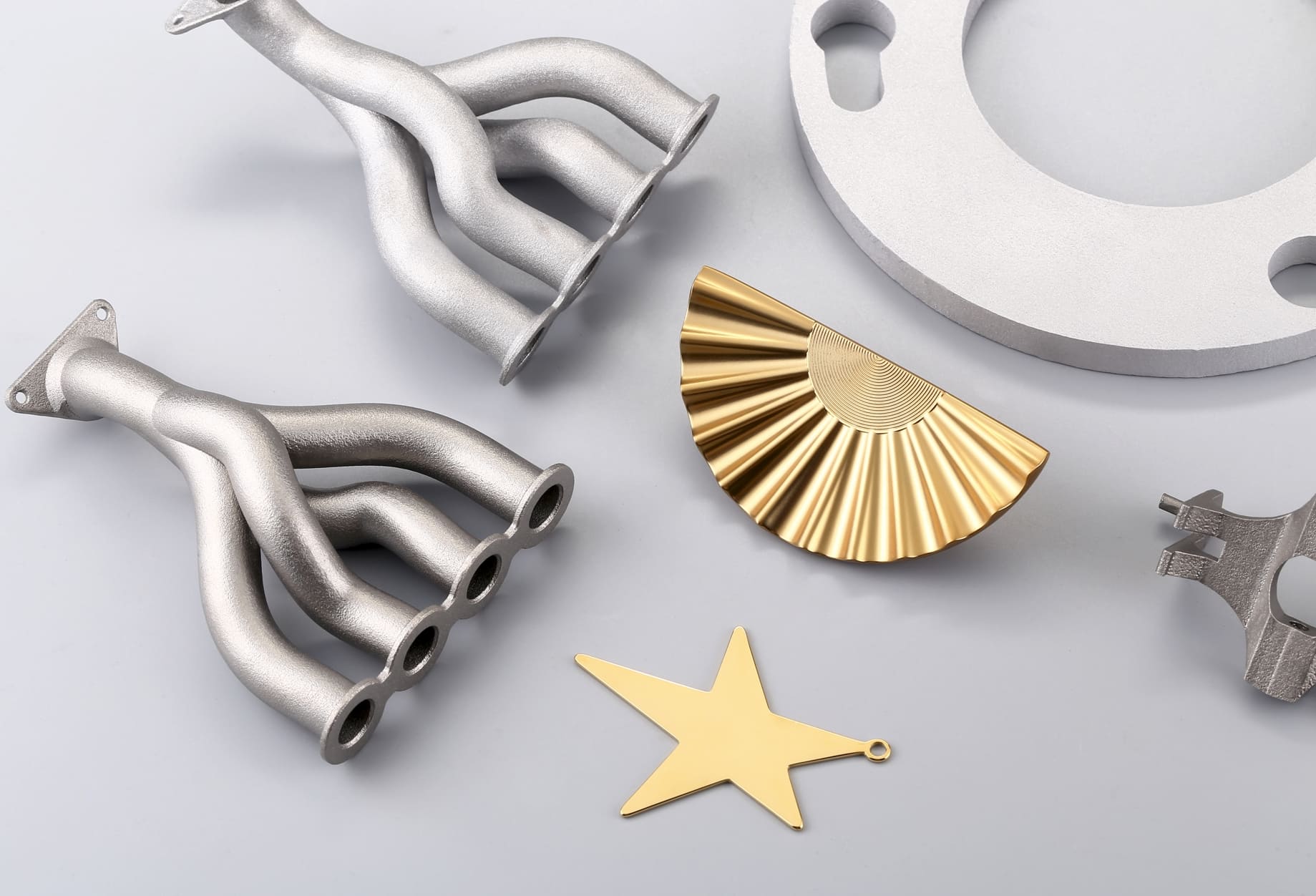
Titanium Ti-6Al-4V
Titanium alloys are excellent for long-term submerged use, including seawater and deep deployments.
3D printed Titanium Ti-6Al-4V forms a stable, adherent oxide layer that resists pitting and crevice corrosion in chloride-containing seawater far better than most steels and many other metals. Titanium is also biologically compatible and resists many chemical attacks.
Design and Processing Tips
• Target >99% density to avoid internal porosity that can trap water and cause leak paths or stress concentrators.
• Specify post-print heat treatment and stress relief to optimize toughness.
• Clean and passivate surfaces; remove loose powders and fused powder particles from crevices.
• Finish critical sealing surfaces to avoid micro-leak channels.
Stainless Steel 316L
316L is good for many marine applications if processed and finished correctly.
316L has molybdenum content that improves resistance to chloride-induced pitting relative to 304 stainless steel. When properly passivated and with a dense microstructure, it performs well in seawater.
Design and Processing Tips:
• Minimize porosity and keyholing, use conservative energy density and adequate hatch strategies.
• Post-processing is crucial: heat treatment, hot isostatic pressing if possible to close internal pores, surface polishing, and chemical passivation improve corrosion resistance.
• Apply protective coatings if exposure is extreme or if crevice corrosion is a concern.
• Be mindful of galvanic interactions with dissimilar metals; isolate if necessary.
PEEK
Polyether ether ketone is excellent for long-term submerged use, including hot water and chemically aggressive environments.
PEEK is a high-performance semicrystalline polymer with very low water uptake, excellent hydrolytic stability, great processing temperature range, and excellent chemical resistance. It maintains mechanical properties when soaked.
HDPE
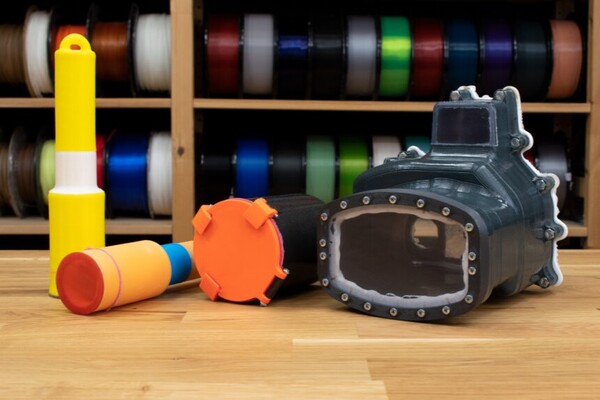
High-Density Polyethylene is excellent for many underwater applications, especially floats and housings where buoyancy and chemical resistance are needed.
HDPE is chemically inert in most environments, has negligible water absorption, and offers good toughness. It’s commonly used for marine buoys and tanks in injection-molding applications.
PP
Polypropylene is excellent for buoyant, chemically resistant parts; widely used in marine applications when floatation or chemical resistance is needed.
PP is low-density, chemically resistant to many solvents and salts, and shows very low water uptake. It’s used for flotation devices, containers and parts that contact seawater but are not load-bearing in extreme conditions
Choosing a material is only step one. For any underwater application:
• Define the environment: freshwater vs. saltwater, depth, temperature cycles, and expected service life.
• Pick the right process: metal PBF for titanium or 316L; HIP and surface finishing for steel; high-temp FFF for PEEK; FDM or CNC for HDPE/PP with special handling.
• Design for sealing: thicker walls, continuous shells, minimized seams; integrate drains or vents for pressure changes.
• Post-process: HIP, passivation, polishing; chemical smoothing, epoxy potting or conformal coatings; thermal welding for PP/HDPE joins.
• Test: immersion soak tests, hydrostatic pressure checks for depth rating, salt-spray or corrosion testing for metals, and functional tests with pressure cycles.
• Iterate: validate prototypes with real water exposure.
 0
0


COMMENTS
- Be the first to share your thoughts!