 English
  日本語
日本語  Deutsch


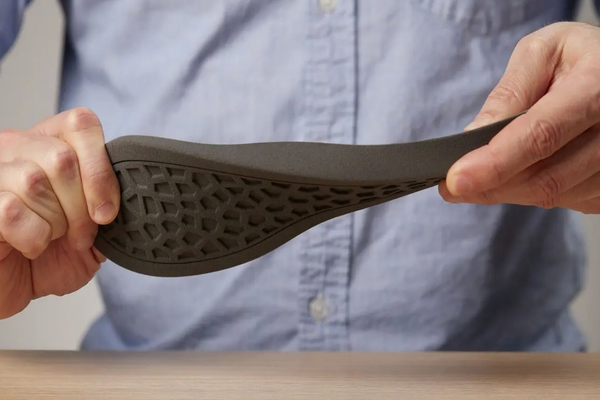
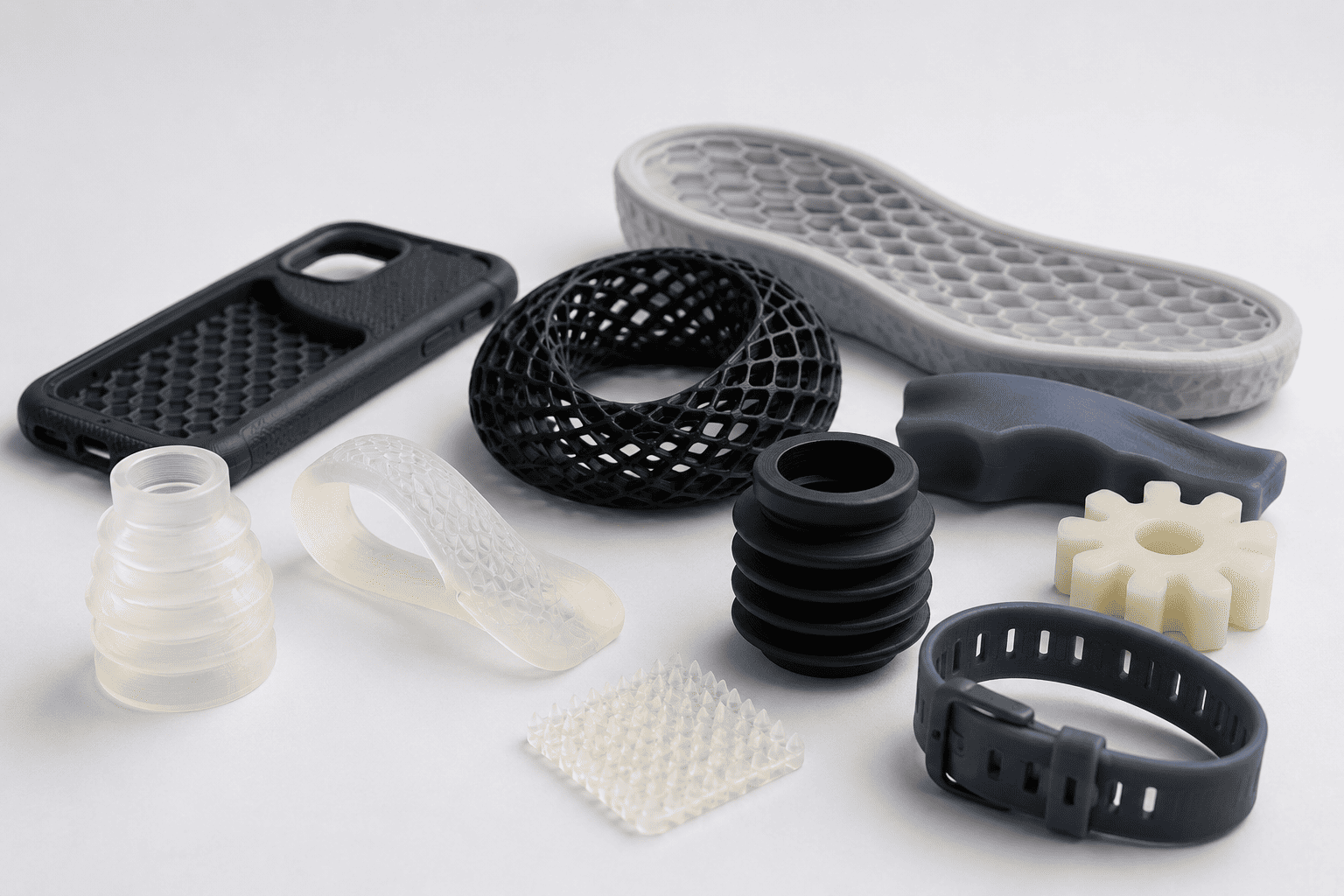
Flexible 3D printing materials are ideal when a part needs to bend, absorb impact, or return to its original shape after use. Two of the most common options are TPU and elastic resin. Both can produce soft, functional parts, but they behave very differently in printing and in real-world use. One of the easiest ways to understand the difference is through Shore hardness, a scale that measures how soft or firm a material feels.
AI Generated Image
What Shore Hardness Means
Shore hardness is a measurement used to describe how resistant a material is to indentation. In simple terms, it tells you whether a material feels soft, medium, or firm. For flexible 3D printing materials, the most relevant scale is usually Shore A.
A lower Shore A number means the material is softer and more elastic. A higher number means it is firmer and holds its shape better. For example, a Shore 50 material feels much softer than Shore 90, which is closer to a semi-rigid plastic.
This matters because not all flexible parts need the same behavior. Some parts should compress easily, like gaskets or cushioning pads. Others should flex only slightly, like grips or protective housings. Shore hardness helps you match the material to the job instead of choosing by appearance alone.
3D Printing TPU
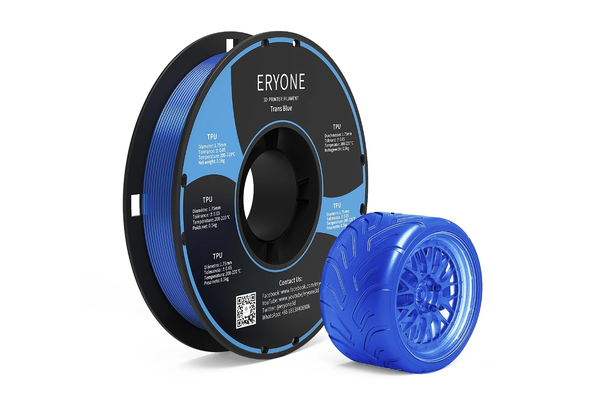
TPU (thermoplastic polyurethane) is one of the most popular flexible materials in FDM 3D printing. It is known for its elasticity, abrasion resistance, and durability. TPU can bend repeatedly without cracking easily, which makes it useful for functional parts that must survive real use.
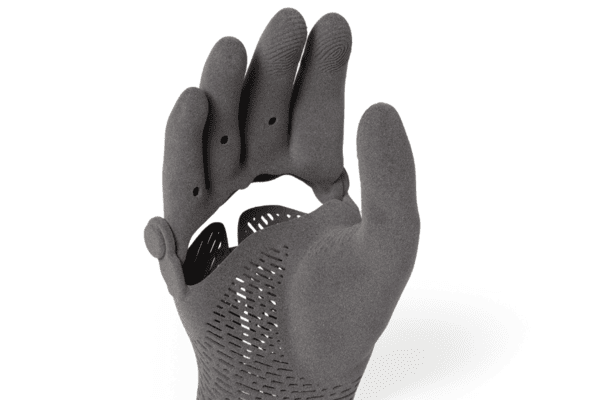
One of TPU’s biggest strengths is its balance. It is flexible, but still tough enough for practical applications. Compared with many other filaments, TPU resists wear, impact, and tearing better than you might expect. That is why it is commonly used for phone cases, seals, vibration-damping parts, shoe components, and wearables.
TPU also comes in a range of Shore hardness levels. Softer TPU grades are better for cushioning and compression, while firmer TPU grades offer more structure and stability. In many workflows, TPU around Shore 70 to Shore 95 is especially useful because it gives a good mix of flexibility and printability.
That said, TPU can be challenging to print. Because it is soft and elastic, it may bend inside the extruder, string during printing, or slow down the process. Good printer setup, correct retraction settings, and careful material handling are important for consistent results.
3D Printing Elastic Resin
Elastic resin is a photopolymer material used in resin-based 3D printing processes such as SLA, DLP, or LCD printing. It is designed to produce soft, rubber-like parts with smooth surfaces and fine details. Compared with TPU, elastic resin usually delivers a cleaner surface finish and better detail reproduction.
This makes elastic resin a strong choice when appearance and surface quality matter. It is often used for prototypes, soft-touch models, ergonomic parts, and components that need a more polished finish. It can also be used for short-run functional parts where flexibility is important.
Elastic resin is typically available in different softness levels, and the finished part can feel very different depending on the formulation. Some elastic resins are extremely soft and stretchable, while others are firmer and more shape-retaining.
The tradeoff is that elastic resin often needs more post-processing than TPU, and its mechanical performance can vary by brand and print settings. It may also be less rugged than TPU for repeated mechanical stress, especially in applications that involve abrasion, twisting, or outdoor use.
Shore Hardness Comparison
When comparing flexible materials, Shore hardness gives a practical way to narrow the choice. Here is a simple breakdown of common flexibility levels:
Shore 50
Very soft and highly flexible. These materials compress easily and are suitable for cushioning, soft inserts, and parts that need a rubbery feel. They are ideal when maximum softness matters more than structural support.
Shore 70
A balanced option that combines softness with better shape retention. This is a good middle ground for wearables, grips, seals, and parts that must flex without feeling floppy.
Shore 80
Noticeably firmer, with more support and less deformation. Shore 80 materials are useful when you need flexibility but also want the part to keep its form under load.
Shore 90
Close to rigid plastics in feel, but still with some give. These materials are best for tough parts that need only mild flexibility, such as protective housings, connectors, or stiff functional components.
In general, the lower the number, the softer the part. The higher the number, the more the material behaves like a firm plastic rather than a rubber-like material.
TPU vs. Elastic Resin
TPU and elastic resin can both make flexible parts, but they are not interchangeable.
TPU is usually the better choice for durability, repeated movement, and wear resistance. If the part will be handled often, bent repeatedly, or exposed to friction, TPU is often the safer option. It is especially strong in functional parts where toughness matters.
Elastic resin is better when surface finish, fine detail, and a smooth look are the priority. It is great for models that need a soft feel and a polished appearance, especially when the part will not experience heavy mechanical stress.
A simple way to think about it is this:
• Choose TPU for rugged, flexible parts.
• Choose elastic resin for detailed soft parts with a cleaner surface.
If your project needs both durability and appearance, the final choice depends on which requirement matters more.
Best Applications by Hardness
Different Shore hardness levels are suited to different applications.
• Shore 50 is best for soft contact parts, cushioning pads, flexible inserts, soft grips, and shock-absorbing components. It works well when comfort and compression are more important than structural strength.
• Shore 70 is a strong choice for wearables, straps, seals, protective covers, and parts that need to flex regularly. It gives enough softness without becoming too unstable.
• Shore 80 is suitable for flexible mechanical parts, clips, housings, and parts that need to bend slightly while staying controlled. It is a good option for users who want flexibility with more support.
• Shore 90 is ideal for tough, semi-flexible components such as enclosures, connectors, and functional parts that need only a small amount of movement. It is often used when the design calls for impact resistance rather than softness.
When selecting a hardness level, think about how the part will be used, how often it will move, and how much shape retention it needs.
3D Printing TPU and Elastic Resin at 3DSPRO
At 3DSPRO, we help customers choose the right flexible 3D printing material based on performance, appearance, and application. Whether you need TPU for a durable functional part or elastic resin for a smooth, detailed prototype, material selection is a key part of getting the best result.
Our team can help evaluate Shore hardness, compare material options, and recommend the best printing process for your project. If your part needs a specific level of softness, flexibility, or rebound, we can guide you toward the right grade and printing approach.
Flexible parts are often more demanding than rigid parts, so choosing the right material early can save time, reduce trial-and-error, and improve the final result. From soft Shore 50 components to firmer Shore 90 parts, the right choice depends on the balance between flexibility, strength, and surface quality.
 0
0


COMMENTS
- Be the first to share your thoughts!