 English
  日本語
日本語  Deutsch


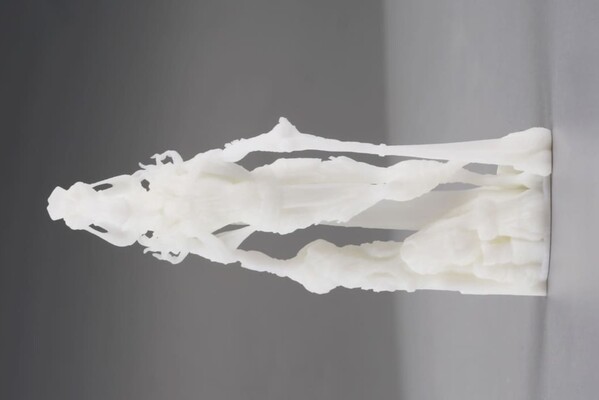
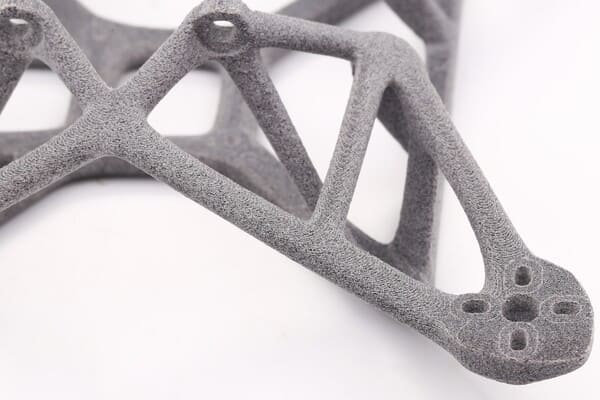
Nylon is often chosen for parts that need strength, toughness, and a bit of flexibility. That makes it a useful material for miniature models and delicate, irregular parts, especially when the geometry is too complex for more brittle plastics. Still, printing small or thin structures in nylon is not simple. Tiny features can warp, bend, or break more easily than expected, and even a well-designed part may need extra wall thickness to survive handling.
For miniature models, nylon can be a strong option when the goal is functional detail rather than only visual appearance. For delicate, irregular parts, it can also offer better durability than materials that crack under stress. The success of the print depends heavily on part design, wall thickness, and print settings. If the structure is very fine, there is always a risk of breakage, even after careful preparation.
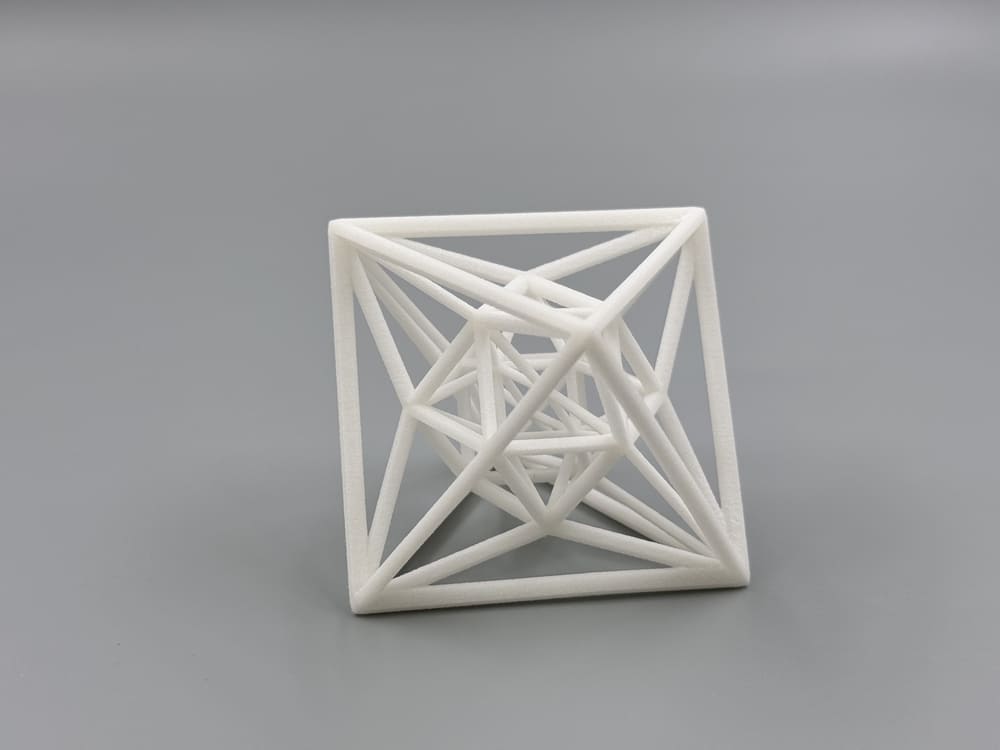
Image Copyright © 3DSPRO Limited. All rights reserved.
Why Nylon Is Used for Miniature and Delicate Parts
Nylon is valued because it combines toughness with wear resistance. Compared with more rigid but brittle materials, it can absorb impact better and tolerate some flexing without immediate failure. That matters for miniature models, small connectors, thin arms, hooks, clips, housings, and irregular shapes with uneven stress distribution.
For delicate parts, the toughness can make nylon more forgiving during use. A tiny feature printed in a brittle material may snap the first time it is touched, while nylon may bend slightly and recover, which makes it useful for functional miniatures, prototypes, and parts that need repeated handling.
Nylon also performs well when a design includes small features that must fit together precisely. It can be a practical choice for parts with joints, slots, tabs, and thin structural elements, especially when durability matters more than ultra-sharp cosmetic detail.
What Makes Miniature and Irregular Parts Difficult to Print
Small parts are difficult because there is less material available to carry the load. A miniature model may look simple on screen, but in physical form, every wall, corner, and connection point becomes vulnerable. Thin walls cool quickly, uneven shapes can shrink differently, and tiny overhangs may not have enough support during printing.
Irregular parts create another layer of difficulty. Unlike a simple block or cylinder, they often have changing thickness, sharp transitions, or narrow protrusions. These areas concentrate stress. A long, thin arm, a curved hook, or a narrow decorative edge can become a weak point even if the rest of the model is strong.
Nylon adds its own challenge. It is more demanding than many common materials because it can warp, absorb moisture, and sometimes behave unpredictably on very small features. To a large part, nylon’s toughness is an advantage. On a very small part, that same flexibility can turn into instability if the walls are too thin.
That is why miniature and delicate irregular parts often need conservative design choices. In many cases, a wall thickness of at least 2 mm is a safer starting point than trying to keep everything ultra-thin. Even then, thickness alone does not guarantee the part will not break.
Choosing the Right Wall Thickness for Nylon Parts
Wall thickness is one of the most important factors when printing nylon miniatures and delicate parts. Thin walls may look elegant in a digital model, but they are often too fragile in real life. If the part must survive handling, assembly, or light functional use, extra thickness gives it a much better chance.
As a general practical rule, 2 mm is often a minimum worth considering for nylon parts with small or delicate geometry. For some shapes, even more thickness may be needed, especially if the part has long unsupported sections, sharp corners, or points that will be gripped during use. Very thin walls may print successfully but still fail later during removal, cleaning, or assembly.
The right wall thickness also depends on the part’s purpose. A display miniature may tolerate thinner sections if it will never be stressed. A functional clip, bracket, or structural connector needs more material to resist bending. Where possible, it is better to thicken the load-bearing areas rather than increasing the thickness everywhere.
It is also important to remember that wall thickness is only one side of the equation. A 2 mm wall in a well-supported shape can perform better than a thinner wall in a poor design. Strong geometry matters just as much as raw thickness.
Design Considerations Before Printing
Good nylon prints begin with good design. For miniature models and delicate irregular parts, the goal is to reduce stress and make the shape easier to print without sacrificing the intended function.
One useful strategy is to avoid very slender features unless they are absolutely necessary. Long thin legs, narrow tabs, and tiny protrusions are all likely failure points. If those features must remain, consider widening their base or blending them gradually into the main body instead of attaching them abruptly.
Sharp transitions should also be reduced whenever possible. A sudden change from a thick section to a thin one creates a stress concentration. Smooth curves and fillets distribute force more evenly and can make a part much more durable. Rounded corners are especially useful in nylon parts that may flex or be assembled repeatedly.
Unsupported overhangs should be limited. Delicate irregular models often include shapes that hang into space or extend outward at awkward angles. These features can print poorly and become weak after printing. If the design allows it, reorient the part or slightly modify the geometry so it rests more naturally on the build plate.
Another important point is part orientation. Small nylon components should be positioned so that their strongest direction aligns with the main load direction. Layer lines can become weak planes, so orienting the part wisely can improve durability more than simply increasing thickness.
Finally, think about post-processing and handling. Miniature nylon parts can be damaged during support removal or cleaning. A design that is technically printable but impossible to clean safely is not a good design. Simpler support structures and more accessible surfaces usually lead to better results.
When Nylon May Not Be the Best Choice
Even though nylon is strong and versatile, it is not always the ideal material for miniature models or delicate, irregular parts. Very thin decorative pieces, ultra-fine ornamental details, and parts that rely on crisp visual edges may be better suited to another material. Nylon’s flexibility can make extremely fine features less stable than expected.
If the part needs to preserve tiny surface details with high precision, another material may produce better visual quality. If the geometry is so thin that it cannot reasonably be reinforced, the part may remain fragile no matter how carefully it is printed. In that case, changing the design or choosing a different material can save time and frustration.
Nylon is also not the easiest option when the part must stay perfectly dimensionally stable under all conditions. Moisture absorption and slight flexibility can affect fit and shape over time. For some miniature components, those properties are acceptable. For others, they may cause problems.
So, while nylon is a strong candidate for many small functional parts, it should be chosen with clear expectations. It works best when the design has enough thickness, the geometry is reasonable, and a little flexibility is acceptable. For ultra-fine or purely decorative parts, there may be a better match.
 0
0


COMMENTS
- Be the first to share your thoughts!