 English
  日本語
日本語  Deutsch


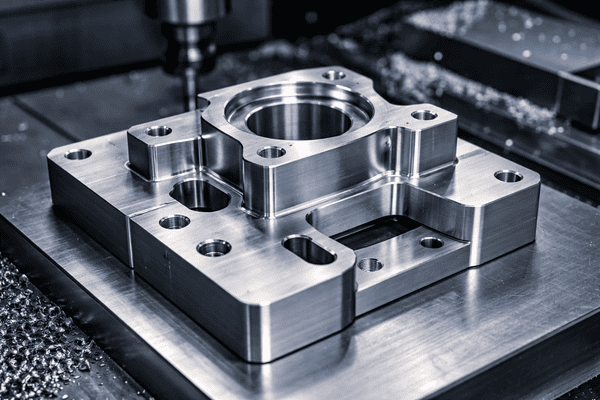
CNC machining is known for producing highly accurate, durable, and repeatable parts. However, even the most advanced CNC equipment has practical limitations. Certain design features require specialized tools, longer machining times, or multiple setups, all of which increase manufacturing cost and production lead time. In some cases, these features may also reduce dimensional accuracy or compromise surface quality.
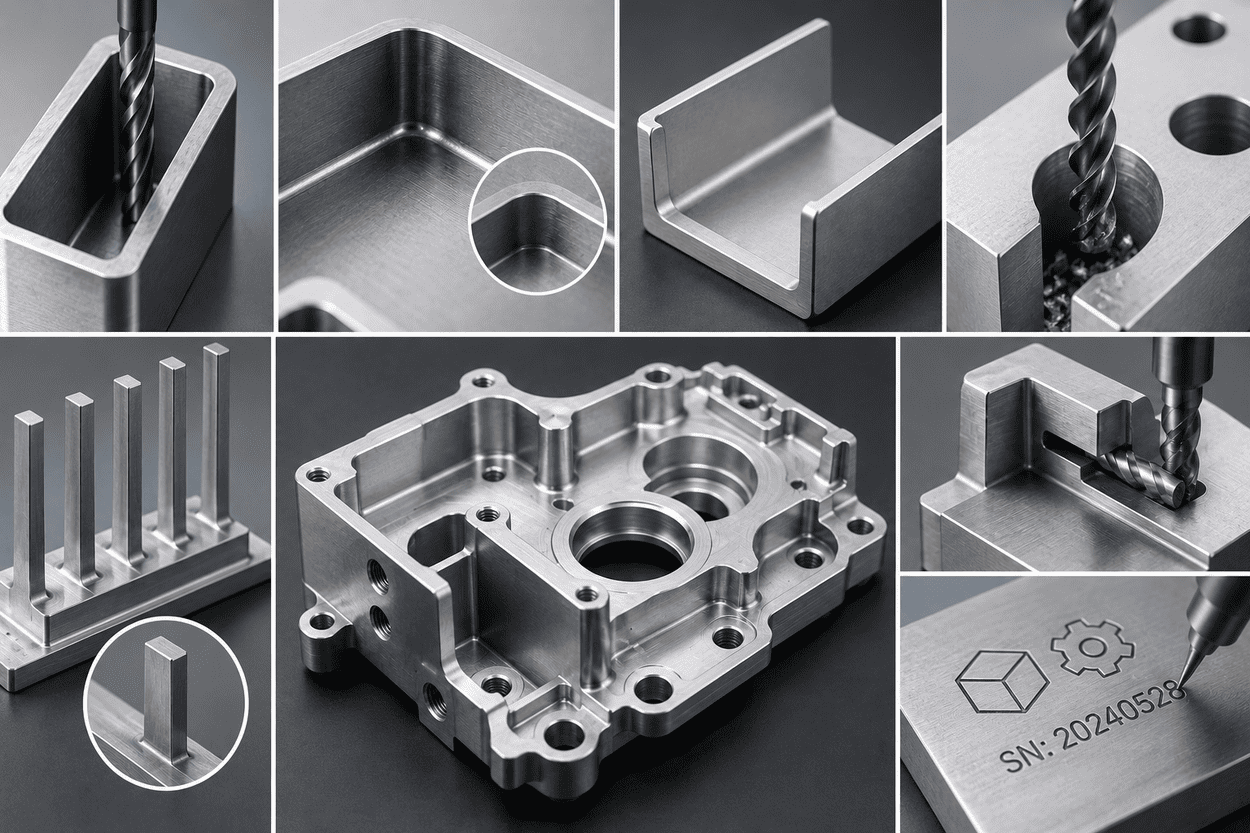
AI Generated Image
Deep and Narrow Pockets
Deep pockets with very small openings are among the most challenging features for CNC machining. Because the cutting tool must reach deep into the material, it needs to be significantly longer than its diameter. Long tools are less rigid and more prone to vibration, also known as chatter.
Tool vibration can lead to poor surface finish, inaccurate dimensions, and faster tool wear. To compensate, machinists often reduce cutting speeds and make multiple light passes, which increases machining time and cost.
When possible, design pockets with a wider opening or reduce their depth. If a deep pocket is unavoidable, increasing the corner radius allows larger, more rigid cutting tools to be used, improving machining stability.
Sharp Internal Corners
One of the most common misconceptions about CNC machining is that it can produce perfectly sharp internal corners. In reality, CNC milling cutters are round, meaning every internal corner naturally has a radius that matches the cutter size.
Requesting perfectly square internal corners usually requires additional operations such as electrical discharge machining (EDM) or manual finishing, both of which add cost and extend production time.
For most applications, adding an appropriate internal corner radius is the best solution. If mating components require clearance, consider using corner reliefs or redesigning the assembly so that small radii do not interfere with fit. These simple changes often improve manufacturability without affecting function.
Extremely Thin Walls
Thin walls may look simple in a CAD model, but they present significant machining challenges. As material is removed, the remaining wall becomes less rigid and may flex under cutting forces.
This movement can cause dimensional inaccuracies, uneven wall thickness, poor surface finish, or even damage to the part. Thin walls also limit the cutting parameters that machinists can safely use, resulting in slower machining and higher production costs.
Whenever possible, maintain adequate wall thickness based on the material being machined. Plastics generally require thicker walls than metals because they are more flexible and susceptible to deformation. If lightweight construction is important, consider using pockets or ribs instead of reducing the entire wall thickness.
Deep, Small-Diameter Holes
Small holes with excessive depth create several machining difficulties. As drill depth increases, chip evacuation becomes less efficient, causing chips to accumulate inside the hole. Heat builds up more quickly, increasing tool wear and reducing hole quality.
Deep drilling also increases the risk of drill deflection, which can cause the hole to deviate from its intended location or diameter. In extreme cases, the drill may break inside the workpiece.
A practical design approach is to avoid unnecessarily deep holes with very small diameters. When deep holes are essential, discuss the requirements with your machining supplier during the design stage so the most suitable drilling process can be selected.
High Aspect Ratio Features
Features with a high aspect ratio, such as tall ribs, long pins, slender posts, or narrow standing walls, are difficult to machine accurately because they lack structural rigidity.
During machining, these features may vibrate or bend slightly under cutting forces, making it difficult to maintain tight tolerances. They are also more susceptible to accidental damage during handling or subsequent machining operations.
Where possible, increase the thickness of these features, shorten their unsupported height, or add supporting geometry to improve stiffness. In many cases, relatively small design adjustments can significantly improve both manufacturability and part reliability.
Undercuts That Require Special Tooling
Standard CNC end mills can only approach a workpiece from certain directions. Features that extend underneath an overhang or behind another surface cannot be reached using conventional tools.
Producing these undercuts often requires specialized T-slot cutters, lollipop cutters, custom tooling, or additional machining setups. These extra processes increase programming complexity, setup time, and manufacturing cost.
Not every undercut should be eliminated. Some are necessary for product function or assembly. However, designers should evaluate whether each undercut is truly required or whether the geometry can be modified to achieve the same purpose using standard machining operations.
Tiny Text and Intricate Engravings
Many machined parts include engraved logos, serial numbers, or identification marks. While CNC machining can produce engraved features, extremely small text or highly intricate graphics require very small cutting tools and precise machining paths.
Tiny engraving tools are more fragile and remove material slowly, increasing machining time and tool wear. Very fine details may also become difficult to read after surface finishing processes such as bead blasting or anodizing.
For better results, use simple fonts with sufficient stroke width and avoid engraving details that are smaller than necessary. If very fine graphics are required, alternative marking methods such as laser engraving may offer higher precision and lower cost.
By simplifying these features where possible, designers can reduce machining time, improve dimensional accuracy, lower manufacturing costs, and shorten lead times. Early collaboration with an experienced CNC machining partner is one of the most effective ways to identify potential issues before production begins, ensuring that parts are both functional and economical to manufacture.
 0
0


COMMENTS
- Be the first to share your thoughts!