 English
 日本語
日本語 Deutsch


A prototype is often the first physical version of a product, but that does not always mean it must be made from the same material as the final product. In many projects, the prototype and production parts serve different purposes. A prototype may be created to check appearance, dimensions, assembly, or basic functionality, while the final product must meet strict requirements for strength, durability, temperature resistance, and long-term use.
Choosing the right prototype material can therefore save time and cost without compromising the validation process. However, use a different material only when it will not produce misleading test results, especially when material properties have a direct impact on performance.
So, should your prototype use the same material as the final product? The answer depends on what you need the prototype to prove.
In the success story of 3DSPRO and mokka to go, the 3D printed prototypes were made with different materials from those used in the final products. Learn more about the story >>
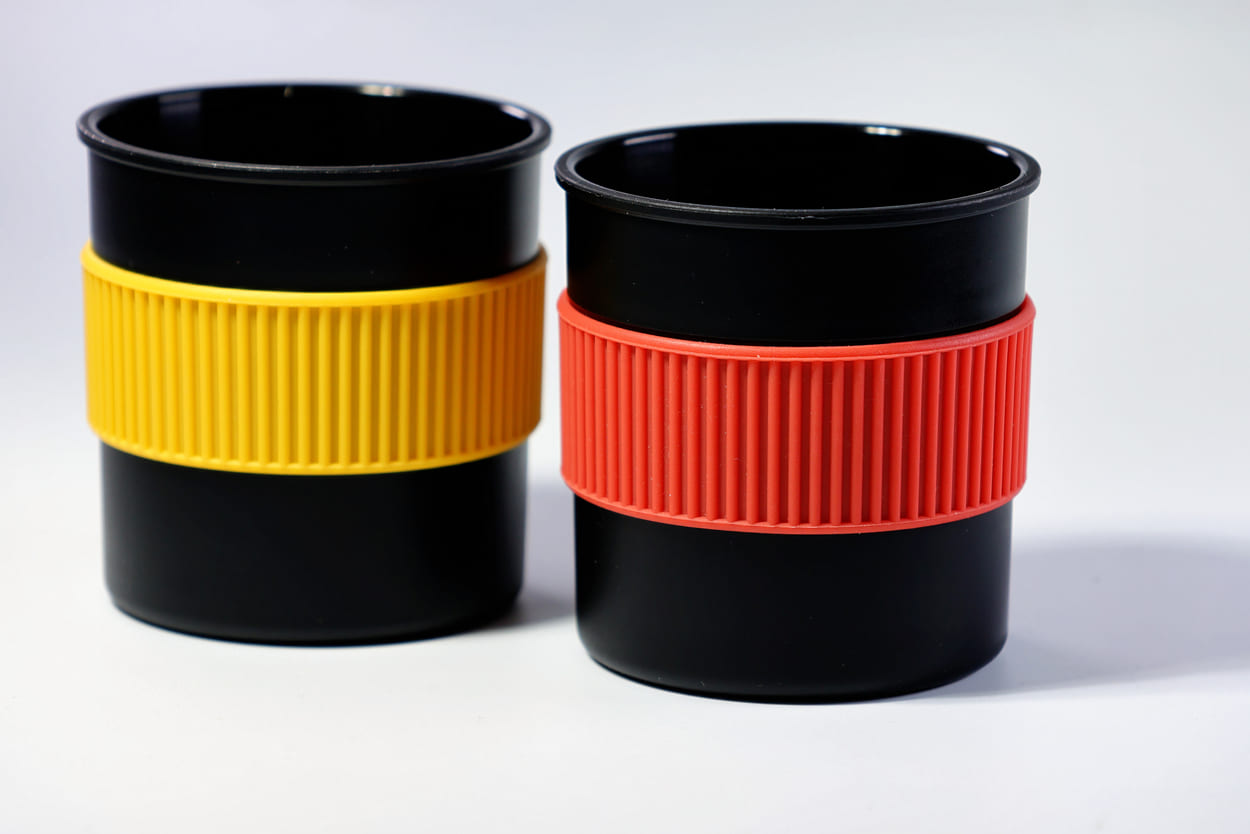
Image Copyright © 3DSPRO. All rights reserved.
Does a Prototype Need the Same Material as the Final Product?
Not necessarily. The key point is the prototype's purpose.
For visual and dimensional validation, the exact production material is often unnecessary. A prototype may only need to reproduce the product's shape, key dimensions, surface appearance, or general assembly features. In these situations, a material that is easier and more economical to produce can be sufficient.
For example, an SLA resin prototype can help evaluate the appearance of a housing that will later be injection molded in ABS or PC. It can help engineers identify design problems, review surface details, and confirm the overall shape before investing in production tooling.
However, the situation changes when the prototype will undergo functional or performance testing. In those cases, different materials can have significantly different mechanical, thermal, and chemical properties. A prototype made from a substitute material may perform differently from the final product even when the geometry is identical.
For example, consider a snap-fit component. If the final part will be produced from flexible nylon or polypropylene, but the prototype is made from a relatively brittle resin, the prototype may crack during assembly. This does not necessarily mean the final design is defective. The issue may simply be the material difference.
The same issue can occur during load testing, impact testing, heat exposure, or long-term durability testing. When material properties are critical, using a different material can reduce the reliability of the results.
The general rule is simple: the more closely the prototype testing depends on material properties, the more important it is to use the same or a closely equivalent material.
When Should You Use the Same Material?
Using the same material as the final product is especially important when evaluating how a part will behave in real-world conditions.
Functional and Mechanical Testing
Material selection matters because the prototype material should match the final product when testing strength, stiffness, impact resistance, flexibility, fatigue, or wear.
A prototype made from a material with significantly different mechanical properties may give you the wrong impression of how the final product will perform. For instance, a rigid resin prototype may pass a dimensional inspection but fail a bending test that the production plastic part would easily pass.
When the purpose of the prototype is to validate load-bearing performance, use material behavior that is as close as possible to the final product.
Thermal and Chemical Testing
The same principle applies to temperature and chemical resistance: match the prototype material closely when these conditions matter.
If the final part will operate near a heat source, in a high-temperature environment, or in contact with oils, solvents, or other chemicals, the prototype should ideally use the same material or a material with closely matched resistance.
A prototype material with a lower heat-deflection temperature may deform during testing even though the final production material is designed to withstand the operating temperature. Likewise, a prototype material may react differently when exposed to chemicals, creating test results that do not represent the finished product.
Assembly and Fit Testing
Material differences can also affect assembly, so match the prototype material closely when fit is being evaluated.
Properties such as stiffness, friction, flexibility, and deformation behavior can influence snap fits, press fits, threaded connections, hinges, clips, and other interfaces. If these features depend on the material's ability to flex or compress, using a different prototype material can lead to inaccurate conclusions.
For example, a prototype made from a rigid material may be difficult to assemble, while the final polypropylene part may flex easily into position.
User and Real-World Testing
When prototypes are given to users for evaluation, matching the final material is also valuable because it helps reflect the final experience.
Users may notice differences in weight, texture, flexibility, hardness, grip, or thermal feel. For consumer products, these characteristics can influence purchasing decisions and overall product acceptance.
In such cases, the objective is not simply to confirm that the part looks correct. The prototype should clearly provide an experience that is reasonably representative of the final product.
When Can You Use a Different Material?
Using a different material is often practical early in product development, especially when the prototype is for concept validation rather than final performance verification.
Appearance and Design Review
If you only need to evaluate shape, appearance, proportions, or surface details, another material can be perfectly acceptable. For example, an SLA resin prototype can reproduce smooth surfaces and fine details for a product later injection molded in ABS.
Dimensional Validation
A different material may also work for checking overall dimensions and basic fit, if its manufacturing process and dimensional behavior suit the application.
Engineers can use prototypes to confirm whether components fit together, whether holes are correctly positioned, and whether the overall assembly works as intended.
However, care is still necessary when dimensional accuracy depends on material shrinkage, flexibility, or deformation. Use a substitute material only if its behavior will not distort fit or create false results.
Early Design Iterations
Cost and lead time are often major factors in early development.
When a product is still going through multiple design changes, making every prototype in the final production material and process may be unnecessarily expensive.
For example, a company developing an injection-molded plastic enclosure might first use 3D printed resin prototypes to validate the housing geometry.
When the Substitute Material Has Similar Relevant Properties
The key is not to match the material name. Instead, focus on the properties that matter for the specific test.
A prototype material may differ from the final material but still be appropriate if it provides sufficiently similar performance in areas such as:
✅ Stiffness
✅ Strength
✅ Flexibility
✅ Heat resistance
✅ Chemical resistance
✅ Surface characteristics
✅ Friction
✅ Density
For example, a prototype does not necessarily need the exact final material to evaluate basic mechanical assembly. It may only need similar flexibility and stiffness for the test to provide useful information.
Make the Decision Based on the Prototype's Purpose
Before selecting a prototype material, ask one simple question: What does this prototype need to prove?
If the answer is appearance, shape, or basic dimensions, using a different material can often reduce cost and speed up development.
If the answer involves strength, durability, thermal performance, chemical resistance, or realistic user behavior, use the same material—or a material with closely matched properties—only when those properties are essential to the test.
For many projects, the most efficient strategy is to use different prototype materials at different stages. Early prototypes can prioritize speed and affordability, while later prototypes can more closely replicate the final material and manufacturing process.
This approach allows teams to identify design issues early without spending too much, while still obtaining reliable performance data before production.
Ultimately, the best prototype material is not automatically the same as the final product material. Choose the material based on what you need to validate. By matching the prototype material to the testing objective, you can avoid unnecessary costs while ensuring that important decisions are based on realistic results.
 0
0


COMMENTS
- Be the first to share your thoughts!