 English
  日本語
日本語  Deutsch


In 3D printing design, reducing weight and material usage is often a key goal. However, creating parts with very thin walls can introduce structural challenges. A thin-walled component may look efficient and lightweight, but it can become weak, flexible, or difficult to manufacture if the design is not optimized.
One effective solution is adding rib structures. Ribs are small reinforcing features that increase stiffness and strength without requiring the entire part to become thicker. By strategically placing ribs, designers can improve mechanical performance while keeping the part lightweight and cost-efficient.
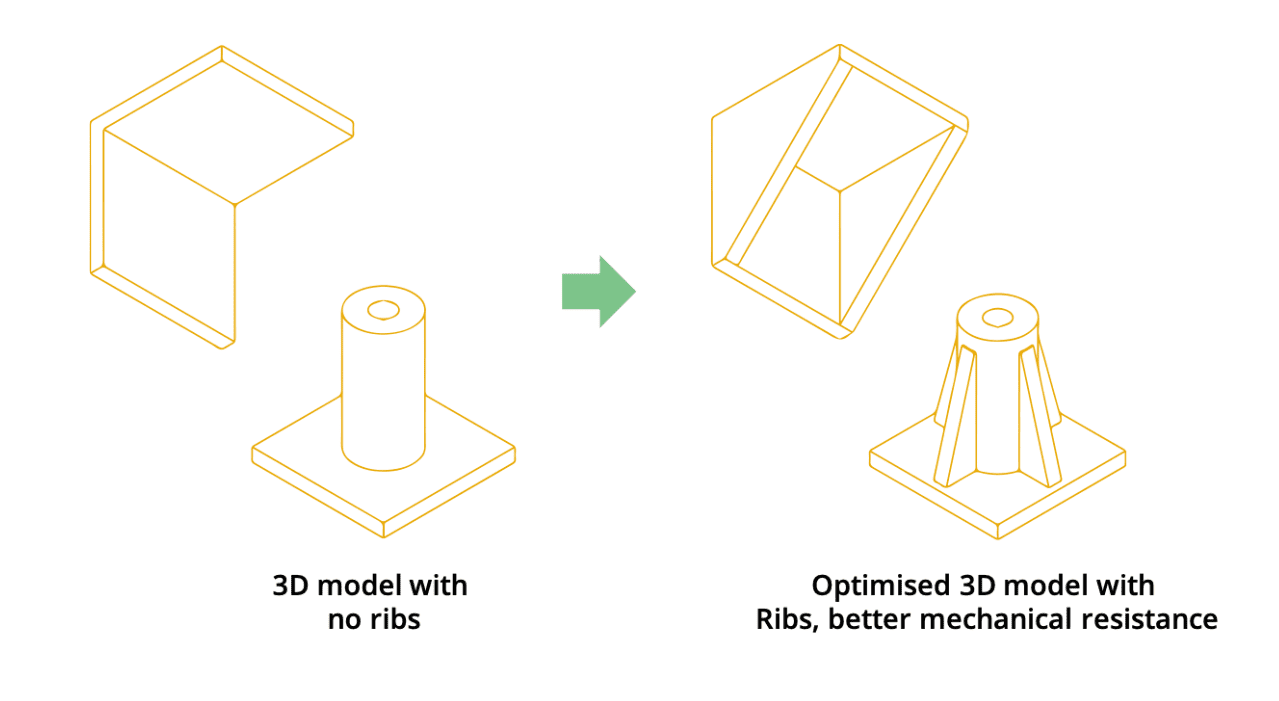
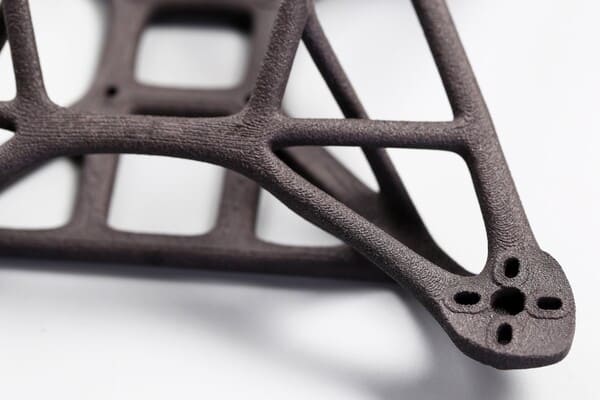
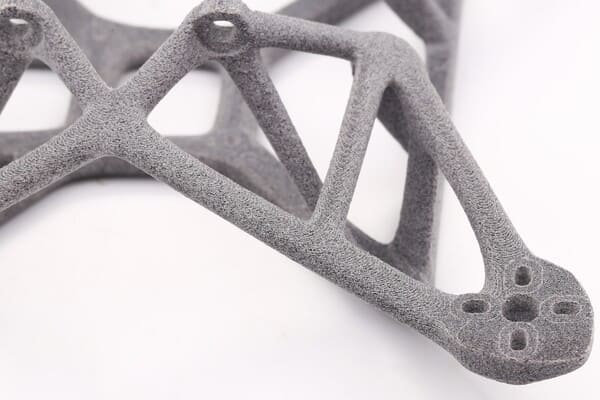
Image Source: Pollen
Thin Walls in 3D Printing
Thin walls are commonly used in 3D printed parts to reduce material consumption, lower weight, and improve production efficiency. They are especially common in applications such as product housings, enclosures, brackets, covers, and lightweight prototypes.
However, thin walls also have limitations. When a wall becomes too thin, the part may lose its ability to withstand external forces. Common issues include:
• bending or flexing under load
• reduced impact resistance
• higher risk of cracking or failure
• poor dimensional stability
• difficulty maintaining consistent print quality
For example, a large flat panel with a thin wall may appear strong when viewed as a simple structure, but it can easily deform when pressure is applied. The larger the surface area, the more likely the wall is to flex.
A common approach to solving this problem is simply increasing the wall thickness. While this can improve strength, it also creates new disadvantages:
• more material consumption
• higher production cost
• increased part weight
• longer printing time
• less efficient design
For many applications, adding more material everywhere is not the best solution. Instead, designers can reinforce specific areas where additional strength is needed.
Therefore, rib structures become valuable in 3D printing design.
Rib Structures Improve Thin-Wall Strength
A rib structure is a raised reinforcement feature added to a part’s surface or internal structure. Ribs are commonly used in injection molding and mechanical design, and they are also highly effective for 3D printed components.
The main purpose of ribs is to increase stiffness without significantly increasing the overall thickness of the part.
Ribs improve thin-wall strength in several ways:
Increase Structural Stiffness
A thin, flat wall can easily bend because it has limited resistance against deformation. Adding ribs changes the geometry of the wall, making it more resistant to bending forces. Instead of adding thickness across the entire surface, ribs reinforce only the areas that experience stress.
Improve Load Distribution
When a force is applied to a thin wall, the stress is concentrated in specific areas. Properly designed ribs help distribute these forces across a larger area, reducing the risk of failure.
Maintain Lightweight Design
One of the biggest advantages of ribs is the strength-to-weight ratio. A rib-reinforced structure can often achieve similar strength to a much thicker solid wall while using less material.
It is especially useful for applications where weight matters, such as:
• robotics components
• automotive prototypes
• aerospace parts
• consumer product housings
• functional engineering prototypes
Good rib design is not about adding more material. It is about placing reinforcement where it creates the most structural benefit.
Rib Design Guidelines for 3D Printed Parts
Although ribs are simple geometric features, their design has a major impact on performance and print quality. Several factors should be considered when adding ribs to 3D printed parts.
Keep Rib Thickness Balanced
Ribs should provide reinforcement without becoming unnecessarily thick. Overly thick ribs can create unwanted material buildup and may introduce manufacturing issues. A common design approach is to make the rib thickness smaller than the main wall thickness. This keeps the structure lightweight while still improving stiffness.
Consider Rib Height Carefully
Increasing rib height generally improves stiffness, but extremely tall ribs may create design and printing challenges.
Very high ribs may:
• require additional support structures.
• increase printing difficulty.
• create stress concentration areas.
The ideal rib height depends on the part size, material, and expected loading conditions.
Align Ribs with Load Direction
Rib placement should follow the direction of expected forces.
For example:
• Vertical ribs can improve resistance against bending in tall walls.
• Cross ribs can reinforce large flat surfaces.
• Directional ribs can support specific mechanical loads.
Randomly adding ribs without considering force direction may increase material usage without improving performance.
Add Rounded Transitions
Sharp corners between ribs and walls can create stress concentration points. Adding fillets or rounded transitions helps distribute stress more smoothly and improves durability. It is especially important for functional parts that experience repeated loading.
Common Rib Design Mistakes to Avoid
While ribs are useful, incorrect rib design can create new problems.
Adding Too Many Ribs
More ribs do not always mean a stronger part. Excessive reinforcement can:
• increase weight
• increase printing time
• make post-processing more difficult
• reduce available internal space
A well-designed part uses ribs only where reinforcement is needed.
Making Ribs Too Thick
Oversized ribs can create unnecessary material usage and may affect surface quality. In some printing technologies, thick sections may cool or shrink differently compared with thinner areas.
Ignoring Printing Orientation
3D printed parts are often anisotropic, meaning their strength depends on print direction. A rib that looks strong in the CAD model may perform poorly if the layer orientation creates weak points.
Designers should consider:
• layer direction
• applied forces
• printing orientation
• support requirements
Using Ribs Instead of Fixing Poor Geometry
Ribs cannot solve every structural problem. Sometimes the better solution is:
• increasing wall thickness
• changing the overall shape
• adding curves or supports
• selecting a stronger material
Ribs should be part of an optimized design strategy, not a replacement for good engineering.
Rib Design Considerations for Different 3D Printing Technologies
Different 3D printing processes have different capabilities and limitations when creating rib structures.
For FDM parts, rib thickness and orientation are especially important because strength depends heavily on layer adhesion. Designers should avoid extremely thin ribs that may not print reliably. Rib placement should also consider the direction of extrusion and expected loads.
SLA and DLP 3D Printing
Resin-based printing can produce fine rib details, but thin ribs may become fragile depending on the resin material. For functional parts, ribs should be designed with enough thickness to avoid cracking during use.
SLS and MJF 3D Printing
Powder-based technologies are well-suited for complex lightweight structures. Internal ribs and lattice-like reinforcement designs can often be produced without support structures. However, designers should consider powder removal if ribs create enclosed spaces.
For metal 3D printing, ribs are often used for lightweighting and structural optimization. Engineers may combine ribs with topology optimization to reduce weight while maintaining mechanical performance.
When to Use Rib Structures vs Increasing Wall Thickness
Ribs and thicker walls both improve strength, but they solve different design problems.
Use rib structures when:
• A large flat surface needs reinforcement.
• Weight reduction is important.
• Material efficiency is a priority.
• Specific areas experience higher stress.
Increase wall thickness when:
• The entire part needs more durability.
• The part experiences impact from multiple directions.
• A simple and robust structure is preferred.
In many cases, the best solution combines both approaches. A moderately thin wall with strategically placed ribs can provide excellent strength while keeping the part lightweight.
 0
0


COMMENTS
- Be the first to share your thoughts!