English
 日本語
 Deutsch


Sheet metal fabrication is widely used to manufacture durable, lightweight, and functional metal components for industrial equipment, electronic enclosures, machinery, and many other products. By cutting, bending, and joining flat metal sheets, manufacturers can create parts with specific dimensions and geometries without removing large amounts of material from a solid workpiece.
Understanding the fabrication process helps engineers choose suitable materials, simplify part designs, and control manufacturing costs. This guide explains what sheet metal fabrication is, how it works, the most common processes and materials, and when custom sheet metal fabrication is the right choice.
What Is Sheet Metal Fabrication?
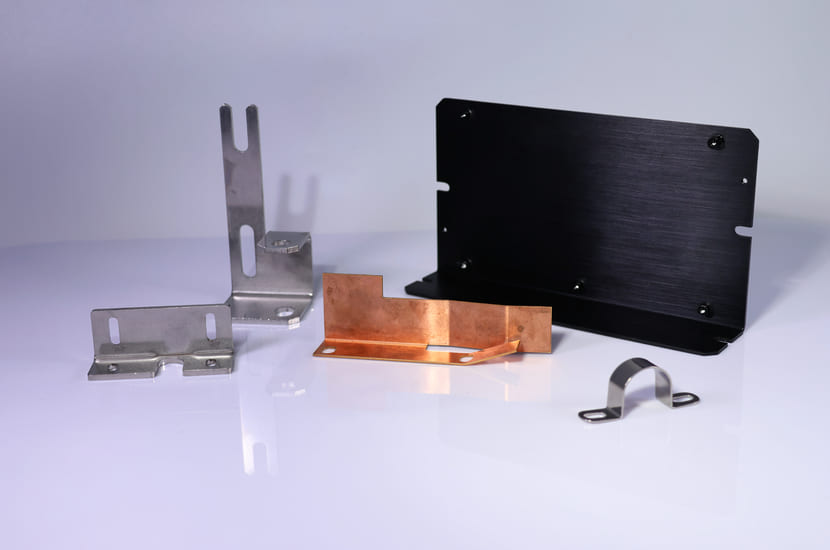
Sheet metal fabrication is a manufacturing process that transforms flat metal sheets into finished components or assemblies through operations such as cutting, bending, forming, and joining. Depending on the design, a finished part may be a simple flat bracket, a folded panel, or a multi-part enclosure.
Unlike CNC machining, which removes material from a solid workpiece to achieve the desired shape, sheet metal fabrication primarily works with relatively thin metal stock. It is particularly suitable for parts made from flat panels, folded sections, and connected sheet metal components.
The process typically begins with a 2D drawing or 3D CAD model. Manufacturers use the design to determine the flat pattern, cutting paths, bend locations, and assembly requirements before production.
Sheet metal fabrication is commonly used for custom parts and small-to-medium production runs. It offers design flexibility and can produce parts that combine structural strength with relatively low weight.
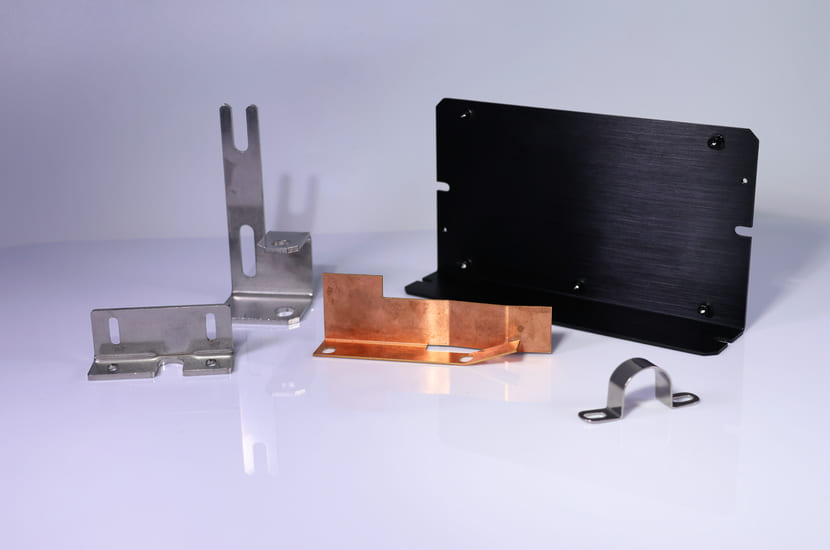
Image Copyright © 3DSPRO. All rights reserved.
How Does Sheet Metal Fabrication Work?
The sheet metal fabrication process varies according to part geometry, material, and performance requirements. However, most projects follow a similar workflow.
1. Design and engineering. The process begins with a CAD model or engineering drawing that defines dimensions, material, thickness, hole positions, bend angles, and other critical features. Designers must account for bend allowances, clearances, and assembly requirements to ensure the finished part matches the intended geometry.
2. Material selection and preparation. The appropriate sheet metal is selected based on strength, weight, corrosion resistance, formability, and cost. The material is then prepared in the required size and thickness for processing.
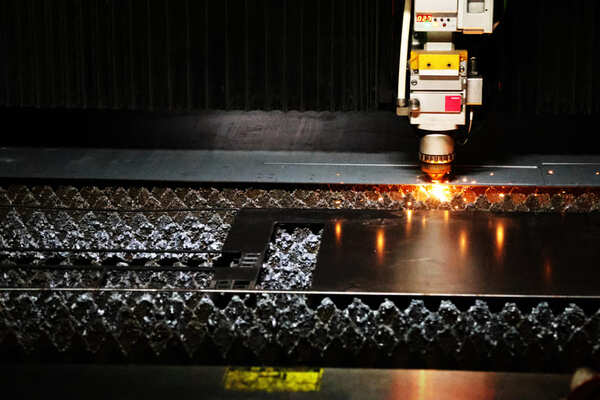
3. Cutting and blanking. The sheet is cut into the required flat shape using a suitable method, such as laser cutting or waterjet cutting. The resulting blank contains the outlines, holes, and cutouts needed for subsequent operations.
4. Bending and forming. The flat blank is bent into the required geometry using equipment such as a press brake. Bend radius, material properties, and springback must be considered to achieve the intended angles and dimensions.
5. Joining and assembly. When a design contains multiple components, manufacturers may join them through welding or mechanical fasteners. Some parts require additional hardware or assembly operations.
6. Finishing and inspection. Depending on the project, finishing may include deburring, coating, painting, or other surface treatments. Final inspection checks dimensions, appearance, and critical functional requirements before delivery.
Not every part requires all these steps. A simple flat panel may only need cutting and deburring, while a custom enclosure may require cutting, multiple bends, joining, finishing, and dimensional inspection.
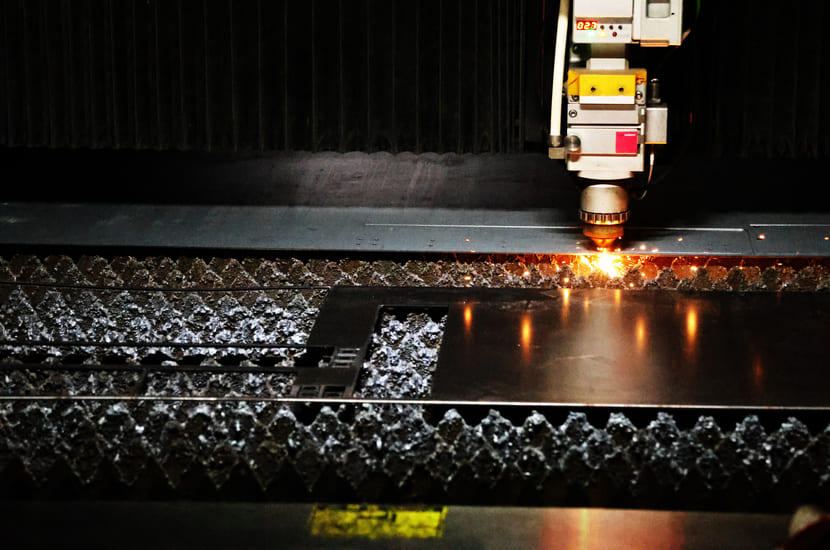
Image Copyright © 3DSPRO. All rights reserved.
Common Sheet Metal Fabrication Processes
Different fabrication processes serve different purposes. The best option depends on the material, part geometry, required precision, production volume, and final application.
|
Process |
How It Works |
Common Applications |
|
Uses a focused laser beam to cut metal sheets along programmed paths. |
Panels, brackets, flat patterns, and parts with detailed cutouts |
|
|
Uses a high-pressure water jet, typically mixed with abrasive, to cut through metal without a conventional heat-based cutting process. |
Thick plate components and heat-sensitive cutting applications |
|
|
Uses a press brake or similar equipment to form sheet metal into specified angles and shapes. |
Brackets, channels, frames, and enclosures |
|
|
Joins separate metal components by creating a welded joint. |
Frames, housings, structural assemblies, and fabricated enclosures |
|
|
Uses laser cutting to create precise cuts, slots, and profiles in metal tubes. |
Tubular frames, supports, and custom tube assemblies |
Laser cutting is often suitable for producing complex flat profiles efficiently. Waterjet cutting is useful when minimizing heat-related effects is important, although cutting speed, edge quality, and cost depend on the material and thickness.
Bending adds three-dimensional geometry to flat sheets, while welding connects components into larger assemblies. Tube laser cutting serves tubular parts rather than flat sheet stock, making it a complementary process for projects that combine sheet metal and tube structures.
Common Sheet Metal Materials
Material selection affects not only a part's mechanical performance but also its manufacturability, surface finish, and overall cost. Common options include aluminum, carbon steel, stainless steel, copper, brass, and selected titanium grades.
Aluminum is lightweight and naturally corrosion-resistant, making it suitable for enclosures, panels, brackets, and equipment housings. Its relatively low density is advantageous when reducing component weight is a priority. Different alloys offer different levels of strength and formability, so the alloy should match the intended bending and service requirements.
Carbon steel is a practical option for brackets, frames, supports, and general industrial components. It offers useful strength and is often cost-effective, although corrosion protection may be necessary depending on the environment. Coated or galvanized steel can be considered when additional surface protection is required.
Stainless steel combines mechanical strength with corrosion resistance. It is commonly used for equipment covers, industrial housings, and components exposed to moisture or demanding operating conditions. The grade should be selected according to corrosion exposure, forming requirements, and budget.
Copper offers high electrical and thermal conductivity, making it suitable for electrical components and related applications. Its material cost and fabrication requirements should be evaluated for each project.
Brass combines useful machinability, corrosion resistance, and an attractive appearance. It can be considered for decorative components, fittings, and selected electrical or mechanical parts.
Titanium offers a high strength-to-weight ratio and excellent corrosion resistance in suitable environments. However, it generally costs more and can be more challenging to fabricate than common sheet metals, making it most appropriate when its performance advantages justify the expense.
The ideal choice depends on the full set of project requirements rather than a single material property. Engineers should also confirm that the selected alloy and temper are suitable for the required bends, joining methods, and finishing operations.
Applications of Sheet Metal Fabrication
Sheet metal fabrication supports a wide range of industries because it can produce repeatable components with practical combinations of strength, weight, and geometry.
In industrial machinery, fabricated brackets, guards, mounting plates, and equipment panels help support, protect, and organize machine components. The design may need to accommodate installation clearances, fasteners, vibration, and maintenance access.
In electronics and electrical equipment, sheet metal is widely used for enclosures, control cabinets, chassis, and equipment housings. Engineers must consider mounting features, ventilation, cable access, and protection for internal components.
In automotive and transportation, fabricated sheet metal parts can include supports, covers, brackets, and structural or interior components. Material selection and design depend on the required strength, weight, environmental resistance, and production conditions.
In consumer and commercial products, sheet metal can be used for appliance panels, furniture components, display structures, and custom housings. Appearance, edge quality, coating consistency, and assembly fit may be especially important.
Custom sheet metal fabrication is particularly useful when a standard off-the-shelf part does not meet the required dimensions, mounting configuration, material properties, or appearance.
Advantages and Limitations
Sheet metal fabrication offers several manufacturing advantages, but it is not suitable for every component. Understanding its strengths and limitations helps determine whether it fits a particular project.
|
Advantages |
Limitations |
|
Material Efficiency: Cutting and forming flat stock can reduce material waste compared with machining a solid block. |
Geometric Constraints: Deep cavities and complex solid shapes may be difficult or impractical to fabricate from sheet metal. |
|
Lightweight Structures: Thin metal sections can provide useful rigidity without excessive weight. |
Bending Limitations: Tight radii and certain bend geometries may cause cracking or deformation. |
|
Design Flexibility: Cutting patterns and bend configurations can be customized for different parts. |
Assembly Requirements: Multi-component designs may require welding, fasteners, or additional alignment operations. |
|
Scalable Production: Suitable processes can support prototypes, custom orders, and repeat production. |
Finishing Considerations: Weld marks, sharp edges, and surface imperfections may require additional treatment. |
The overall suitability of sheet metal fabrication depends on the part's geometry, material, quantity, dimensional requirements, and intended use. For complex solid components, CNC machining or 3D printing may offer a more practical alternative.
Custom Sheet Metal Fabrication at 3DSPRO
Choosing the right fabrication partner helps translate a design into a functional component while accounting for material requirements, manufacturability, and finishing needs.
3DSPRO offers custom sheet metal fabrication services, including laser cutting, waterjet cutting, sheet metal bending, welding, and tube laser cutting. These capabilities support the production of custom brackets, panels, enclosures, tubular components, and other fabricated metal parts.
To prepare for a quote, provide your CAD files or engineering drawings, preferred material and thickness, required quantity, critical dimensions, surface finishing requirements, and intended application. Complete specifications help the manufacturing team evaluate the design and identify potential fabrication considerations before production.
Explore 3DSPRO's Sheet Metal Fabrication Solutions to find suitable manufacturing options for your next project.
 0


COMMENTS
- Be the first to share your thoughts!