 English
  日本語
日本語  Deutsch


3D printed gaskets and seals are useful for custom enclosures, fluid connections, prototypes, and low-volume parts. 3D printing supports unusual profiles and quick design revisions without dedicated molds. However, a gasket-shaped part does not automatically perform as a seal; its reliability depends on the material, contact surfaces, compression, and operating conditions.
Start with the application, not simply the softest available material.
Key Material Properties for 3D Printed Gaskets and Seals
Hardness indicates how resistant a material is to indentation. A softer material may conform more easily to small surface irregularities, while a harder one may offer greater support. Too soft a seal can deform or extrude under load; too hard a seal may not conform enough to close small gaps. Choose hardness alongside joint design and compression.
Compression Set and Elastic Recovery
A seal is compressed against mating surfaces to create contact pressure. Compression set describes how much deformation remains after the load is removed. If a material does not recover adequately, it may lose contact pressure over time.
Tear Strength and Elongation
Thin sealing lips, corners, and narrow features can tear during installation or repeated movement. Elongation indicates how far a material can stretch before breaking, while tear strength helps assess resistance to a growing cut or notch. Consider both alongside hardness and cyclic performance.
Chemical and Temperature Resistance
Oils, cleaning agents, fuels, water, and other media can cause a material to swell, soften, harden, or lose strength. Temperature can also change flexibility and compression. Check the exact grade’s compatibility data rather than relying on labels such as TPU or silicone.
Dimensional Accuracy and Surface Quality
A seal must fit the groove or mating surfaces as designed. Rough surfaces, support marks, layer interfaces, and dimensional variation can create possible leak paths, particularly for low-viscosity fluids or gases. The required finish depends on pressure and acceptable leakage.
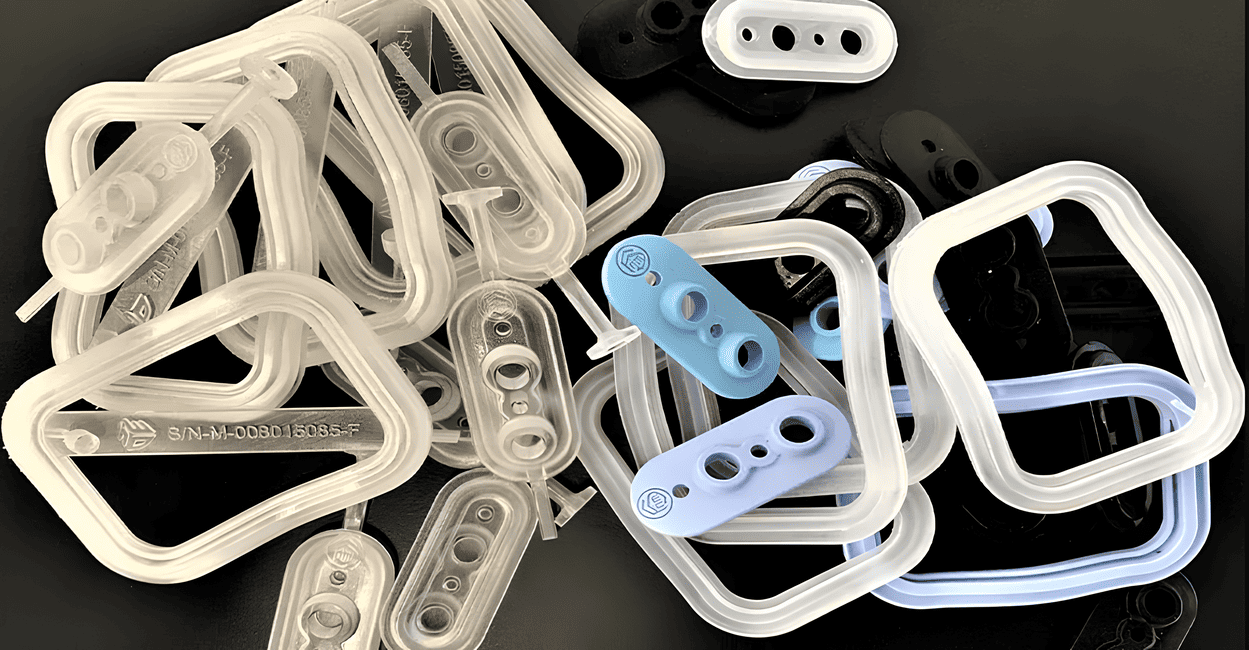
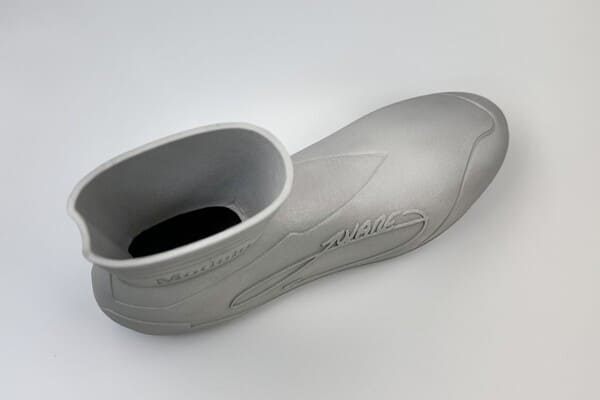
Image Source: 3D Systems
Comparing Common Materials for 3D Printed Gaskets and Seals
|
Material |
Key Characteristics |
Potential Applications |
Key Considerations |
|
Flexible, tough, and abrasion-resistant |
Enclosure gaskets, protective seals, low-pressure sealing prototypes |
Hardness, surface quality, and compression recovery vary by grade and process |
|
|
TPE |
Flexible with rubber-like behavior |
Flexible sealing components and custom-fit gaskets |
Printability and mechanical performance depend on the specific formulation |
|
Flexible or Elastic Resin |
Supports detailed geometries and rubber-like flexibility |
Precision gasket prototypes and customized sealing parts |
Tear strength, compression set, chemical resistance, and aging need validation |
|
3D-Printed Silicone or Specialized Elastomers |
Potentially offers application-specific flexibility and environmental resistance |
Specialized seals and demanding sealing applications |
Availability, material qualification, and process-specific limitations must be checked |
Match the Material to Your Sealing Application
Static gaskets for enclosures and housings. For a gasket between stationary surfaces, consider contact pressure, surface flatness, and environmental exposure. A flexible printed material may suit fit checks or basic dust protection. For water-resistant or pressure-rated designs, test the finished part; a tight-looking fit does not prove reliable sealing.
Seals exposed to repeated compression or movement. Repeated opening, flexing, or sliding demands elastic recovery, tear resistance, fatigue life, and abrasion resistance. A material suitable for a fit check may not survive repeated cycles. Test the actual geometry, as thin lips and corners behave differently from standard test specimens.
Seals exposed to oils, chemicals, or temperature changes. List all contact media, including cleaning fluids and lubricants, plus normal and peak temperatures. Check shortlisted materials for swelling, hardening, strength loss, and dimensional change. Compatibility tables are screening tools; confirm the choice with supplier data and relevant testing.
High-pressure or safety-critical seals. Pneumatic, hydraulic, fuel, gas, medical, and other safety-critical systems may require qualified materials, controlled manufacturing, and specified leakage performance. A general-purpose printed elastomer that seals at low pressure may not suit these uses. Confirm relevant standards and qualification requirements; where failure could cause harm, use a solution validated for the service conditions.
Design Considerations for Reliable 3D Printed Seals
Design the compression in the joint. Set gasket thickness, groove dimensions, and compression based on the material and joint. Do not transfer squeeze values from another material’s design guide without validation.
Protect vulnerable features. Thin lips, sharp internal corners, and abrupt changes in section can concentrate stress and start tears. Use smooth transitions and avoid installation stretches beyond the material’s limits.
Account for print orientation and surface finish. Build direction and layer interfaces affect part strength and surface quality. Plan critical faces to minimize support marks and seams. Finishing may improve contact, but must not damage the material or alter dimensions beyond the design allowance.
Inspect the finished part. Check critical dimensions, sealing faces, and visible defects after printing and post-processing. Use a suitable method to measure flexible parts. Validate leakage and repeatability in assembly rather than relying on visual inspection.
How to Select and Validate the Right Material
Use a structured selection process:
1. Define operating conditions: record pressure, temperature, medium, movement, cycle count, and acceptable leakage.
2. Prioritize material properties: identify the required hardness, tear resistance, elastic recovery, and chemical compatibility.
3. Compare exact grades and processes: review the grade’s data and required post-processing.
4. Print a representative prototype: match intended geometry and surface conditions, including lips and grooves.
5. Test under realistic conditions: test installation, recovery, leakage, cycling, and relevant fluid and temperature exposure. Retest after significant design or process changes.
3D printing can efficiently validate custom designs and produce low-volume parts, but selection and testing must match the risk and duty cycle. For demanding applications, compare it with molded elastomers or qualified commercial seals.
3DSPRO supports custom 3D printing for prototypes and functional parts. Share the part geometry, operating conditions, and target material properties when evaluating a manufacturing route, then validate the finished seal for its intended use before deployment.
 0
0


COMMENTS
- Be the first to share your thoughts!