 English
  日本語
日本語  Deutsch


Small robots are becoming more capable, more accessible, and increasingly designed for people to interact with outside traditional robotics labs. Microduck, the latest robot from Pollen Robotics, is a good example of this shift. The 25 cm-tall biped robot combines 15 motors, a camera, LiDAR, two IMUs, and an articulated beak in a body that weighs less than 800 g. It can walk, crouch, sit, pick up objects, recover from falls, and even roller-skate with the right accessories.
What makes Microduck especially interesting for the 3D printing industry is not only what happens inside the robot. Its exterior is also built around printed shells, available in four colorways, which give the small AI robot a distinctive appearance while showing how digital manufacturing can become part of the physical identity of emerging consumer robots.
Microduck Brings AI Robotics into a Smaller Package
Microduck is designed to make physical AI easier to approach. At just 25cm tall and under 800g, it is small enough to sit on a normal desk while still being capable of dynamic movement. Its 15 motors control its articulated legs, head, and neck, while a front camera, compact LiDAR, and two IMUs provide information about its surroundings and movement.
The robot is also designed to be usable before any programming begins. Pollen Robotics says Microduck comes with trained behaviors that allow it to walk, sit and stand, kick, grab objects, roller-skate and get back up after falling. A game controller is included, giving users a direct way to interact with the robot from the beginning.
The smaller form factor is important because experimenting with legged robots can otherwise require expensive hardware, dedicated space, and specialized equipment. Pollen Robotics explains that Microduck was intentionally made small and light so that movement experiments can be carried out in environments such as homes, classrooms, and ordinary workspaces.
The result is a robot that looks less like laboratory equipment and more like a consumer product. Its duck-inspired design, compact proportions, and playful movements make the technology easier to approach without removing the underlying robotics.
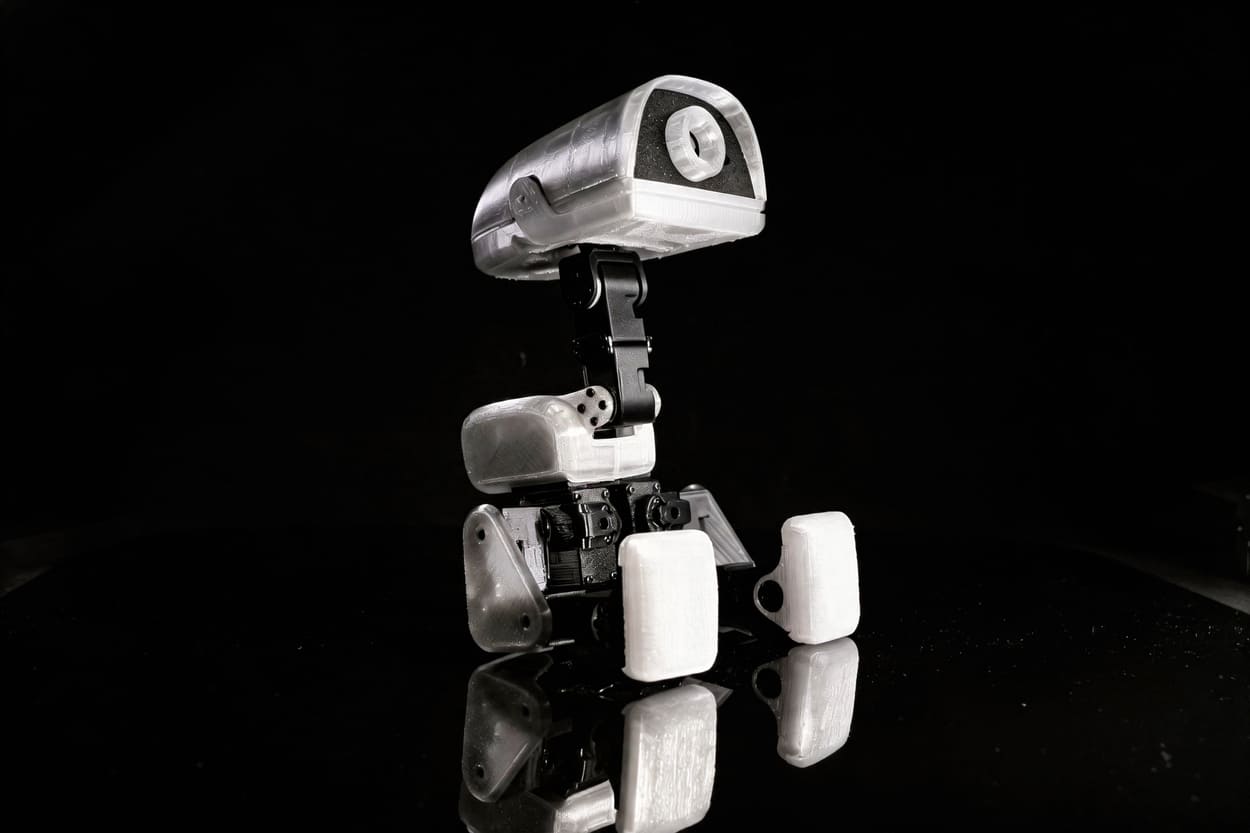
Image Copyright © 3DSPRO. All rights reserved.
3D Printed Shells Give Microduck Its Distinctive Look
One of the most noticeable elements of Microduck is its exterior. Pollen Robotics offers four printed shell colorways: Cream, Graphite, Lavender, and Sky. The company describes them as different printed colorways built around the same robot underneath.
The approach highlights an important advantage of digitally produced exterior parts. The core robotic platform can remain unchanged while the visible appearance can be offered in multiple configurations. Instead of developing an entirely different robot for each visual version, manufacturers can use different exterior components to create a new character or product identity.
The printed shell also plays an important role in how users perceive the machine. Robotics products often contain motors, sensors, batteries, processors, wiring, and other mechanical components that can make them look highly technical. Microduck presents those systems through a much more approachable exterior.
The company has not publicly specified the exact 3D printing technology or material used for the shells in its current press materials. Therefore, it would be inaccurate to assume that the shells are made with a particular process such as FDM, SLA, or SLS. What is clear is that printed shells are part of the product's visual design and are offered in four different colorways.
The Printed Shell in Black & White from 3DSPRO:
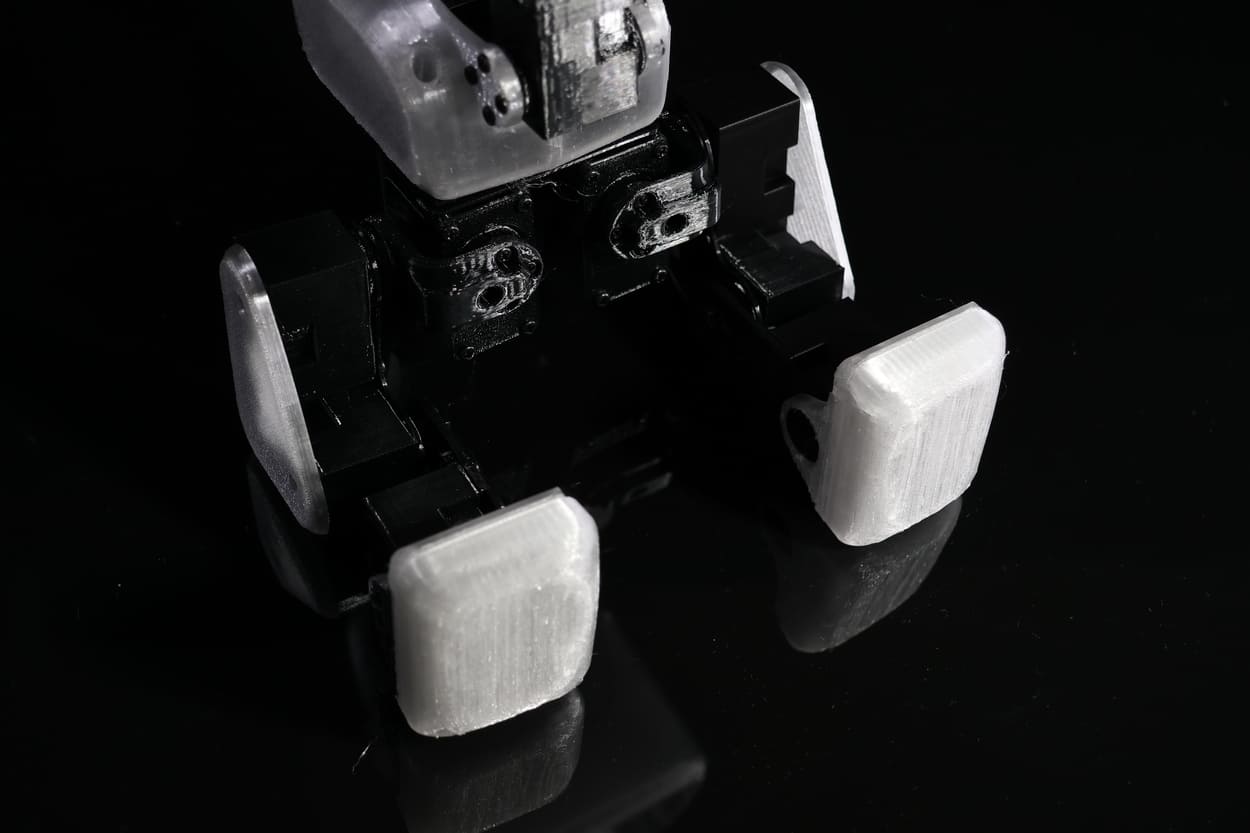
Image Copyright © 3DSPRO. All rights reserved.
The Shell Is More Than a Decorative Layer
A robot's exterior enclosure is not simply a piece of decoration. It has to coexist with the mechanical systems underneath while maintaining the intended shape and usability of the final product.
Microduck contains 15 motors, a removable battery, computing hardware, wireless connectivity, cameras, LiDAR, IMUs, microphones, a speaker, and two NFC antennas. The exterior therefore has to fit around a relatively dense collection of components inside a very small body.
At the same time, the shell contributes to the robot's physical identity. The rounded body, duck-like proportions, head, and beak help communicate that Microduck is designed to be playful and approachable. Pollen Robotics describes the duck character as a natural result of the robot's proportions, beak, and waddling gait.
This is where 3D printing can become particularly interesting for robotics. Compared with conventional manufacturing approaches that may require dedicated tooling for each exterior configuration, digitally produced parts can support highly customized geometries and product variations. A manufacturer can potentially adjust the shape, surface details, or appearance of an enclosure without redesigning the entire robotic platform.
For consumer robotics, this flexibility can matter just as much as mechanical performance. The shell is the part people see and touch, so it becomes one of the easiest ways to differentiate a product while the electronics and control system remain largely unchanged.
Open-Source AI Makes Microduck More Than a Finished Product
Microduck is also designed to be more than a ready-to-use robot. Its software stack is open source and includes the SDK, simulation environment, reinforcement learning tools, and a sim-to-real workflow. Users can train behaviors in simulation, deploy them to the physical robot, refine the training, and share policies with others.
This gives Microduck a different role from a conventional consumer robot. Instead of simply receiving a fixed set of capabilities, users can treat the robot as a platform for experimenting with physical AI.
The process is relatively straightforward. A behavior can first be trained inside a simulated environment. After testing, the resulting policy can be transferred to the real robot. The real-world results can then be used to refine the simulation and training process. Pollen Robotics calls this a tested sim-to-real workflow.
It is important to distinguish software openness from open-source hardware. Pollen Robotics explicitly states that its open-source designation covers the software stack, while the mechanical and electronic design files are not released as open-source hardware.
That distinction is especially relevant when discussing the 3D printed shell. The fact that Microduck uses printed shells does not mean users can currently download official shell files and manufacture their own replacements. The open development model described by Pollen Robotics is focused primarily on software, simulation, and robot behaviors.
Microduck Shows Where 3D Printing and Robotics Can Meet
Microduck demonstrates how 3D printing can fit naturally into the development of modern robotic products. The shell does not need to perform the same job as the motors, sensors, or AI system. Instead, it connects the complex technology inside the robot with the physical product that users actually see and interact with.
For robotics manufacturers, digitally produced exterior components can offer several potential advantages:
|
Robotics Need |
Potential Role of 3D Printing |
|
Distinctive product shapes |
Complex exterior geometries can be produced without relying solely on conventional tooling |
|
Multiple visual versions |
Different shell designs or color configurations can support product personalization |
|
Product development |
Physical enclosure concepts can be modified and reproduced digitally |
|
Small-batch production |
Flexible manufacturing can be useful when production volumes are limited or uncertain |
|
Custom robotics |
Printed parts can support specialized forms for different robotic platforms |
Microduck brings these ideas together in a particularly accessible form. Its AI capabilities are designed to evolve through reinforcement learning, while its printed shells give the robot a recognizable physical identity. Pollen Robotics has also built the product around a community-oriented software ecosystem where users can train and share new behaviors.
As AI moves from screens into physical machines, the design of the robot itself becomes increasingly important. Microduck shows one possible direction: a small, playful machine whose intelligence can be retrained and whose physical appearance is supported by digitally produced shells. For the 3D printing industry, that is a useful reminder that printed parts do not have to be limited to prototypes. They can also become part of the final identity of a new generation of consumer robots.
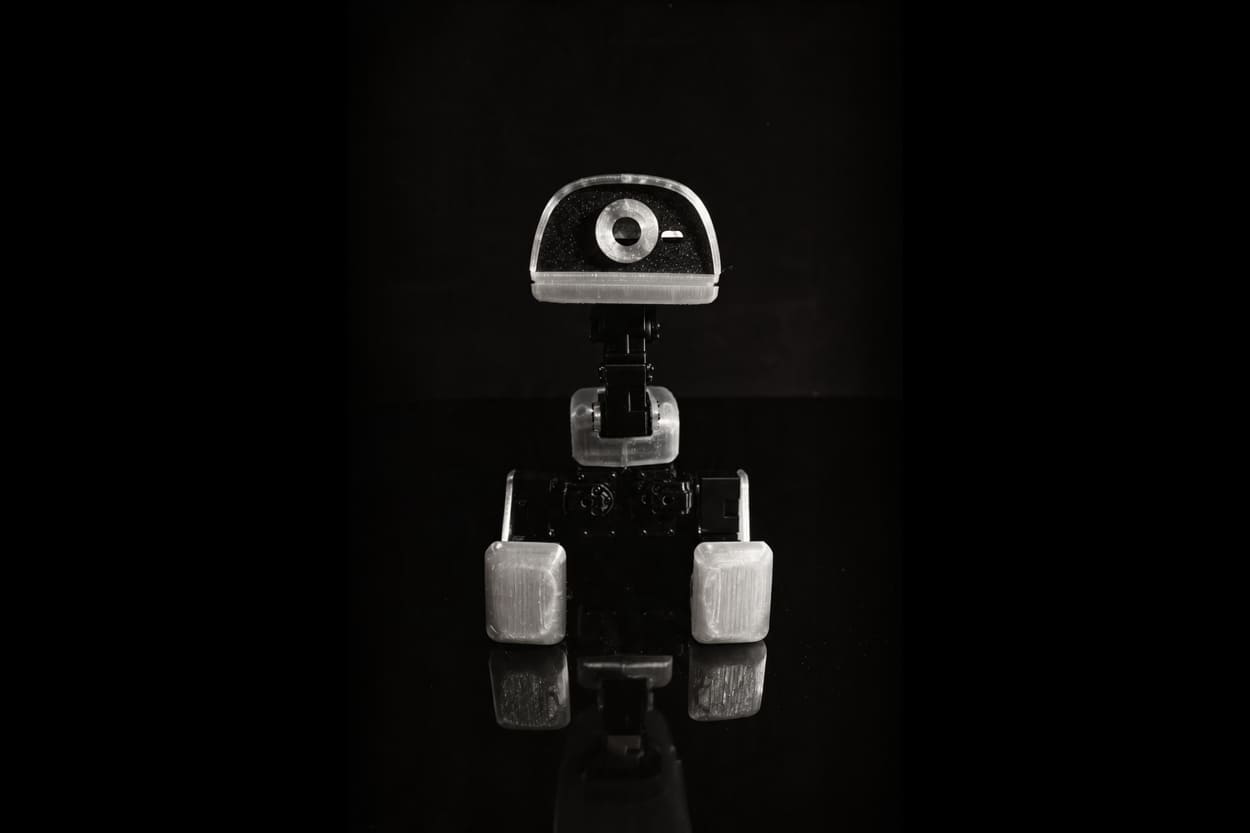
Image Copyright © 3DSPRO. All rights reserved.
 0
0


COMMENTS
- Be the first to share your thoughts!