 English
  日本語
日本語  Deutsch


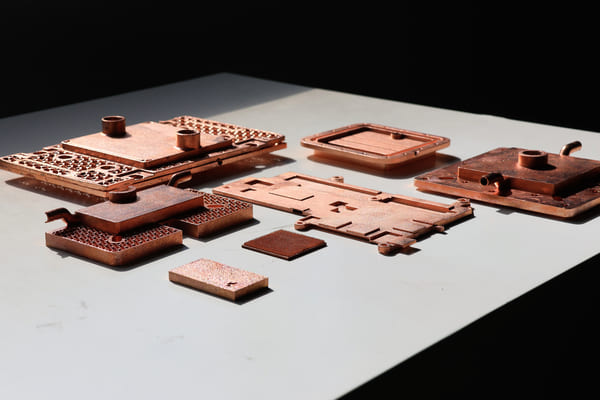
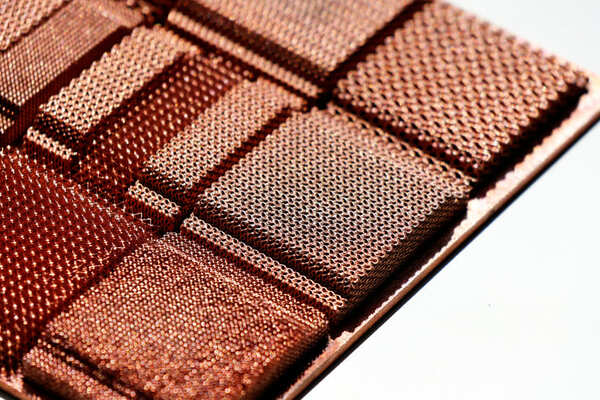
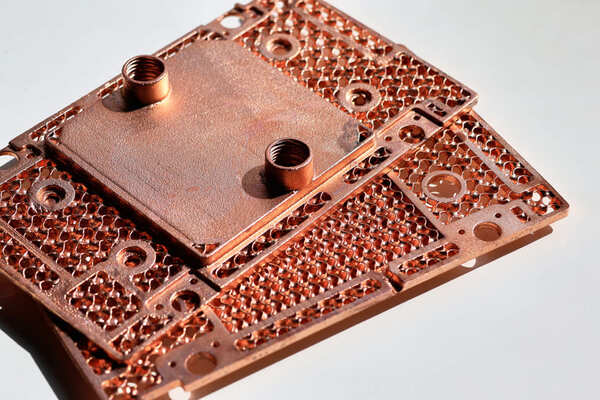
Pure copper is valued for its excellent electrical conductivity, thermal conductivity, and suitability for demanding applications such as heat exchangers, electrical components, RF parts, and complex cooling structures. Those same properties make post-processing choices especially important. Pure copper 3D printed parts are not simply smaller versions of conventionally machined copper components. Powder bed fusion can leave relatively rough surfaces, partially fused particles, sharp edges, thin walls, and complex internal features that are difficult to finish uniformly. Recent research on additively manufactured copper shows that surface finishing can significantly change surface roughness and surface characteristics, making process selection an important part of the overall manufacturing strategy.
Why Pure Copper Needs a Different Post-Processing Strategy
The first issue is material behavior. Pure copper is relatively soft compared with many engineering metals, so aggressive mechanical finishing can remove material or round features that were intended to remain sharp. At the same time, copper's electrical and thermal properties mean that a surface treatment cannot be judged only by appearance. A finish that looks smooth may still be unsuitable if it affects electrical contact or creates an unwanted thermal barrier.
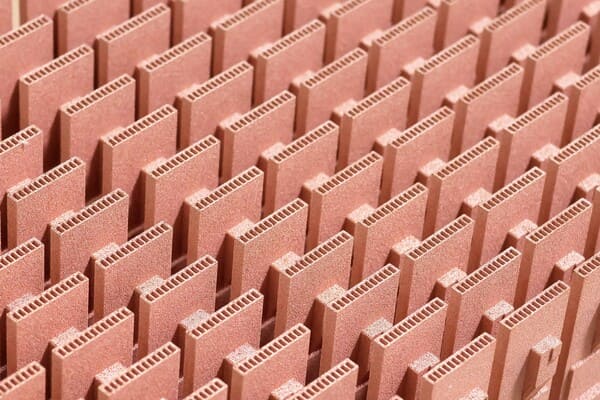
The second issue is 3D printing geometry. Copper 3D printed parts may contain lattice structures, thin walls, small holes, deep cavities, or conformal channels. Mechanical finishing has limited or uneven access to these areas, while some finishing media or residues can be difficult to remove. For this reason, a post-processing method should be selected according to surface roughness, dimensional tolerance, feature size, accessibility, and functional requirements rather than by material name alone.
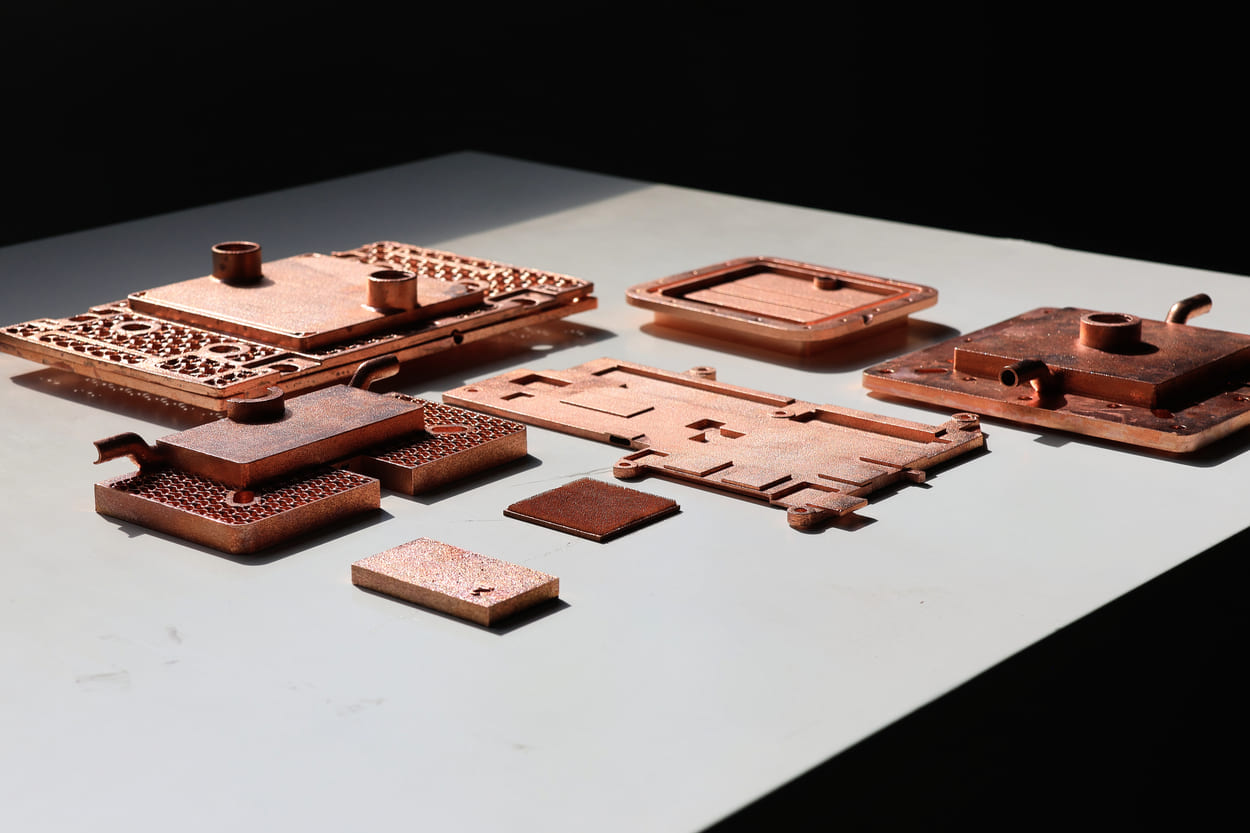
Image Copyright © 3DSPRO. All rights reserved.
Post-Processing Methods That Are Not Suitable for Pure Copper 3D Printed Parts
Tumbling and Barrel Finishing
Tumbling, also called barrel finishing or mass finishing, uses a rotating container with abrasive media and compounds to deburr and smooth parts. It is important to make one distinction: tumbling is not universally impossible for pure copper. Research has shown that controlled mass or vibratory finishing can significantly reduce the surface roughness of additively manufactured copper components. The concern is that tumbling is not a good default for precision pure copper 3D printed parts. Repeated contact with abrasive media can remove material from exposed surfaces, round sharp edges, and change small features or critical dimensions. Thin walls and small openings can be particularly sensitive, while complex cavities may be difficult to clean after processing. For parts with tight tolerances, sharp functional edges, or highly controlled surface profiles, CNC machining or controlled polishing may therefore be more appropriate.
Conventional Anodizing
Conventional anodizing should not be treated as a standard finishing option for pure copper. Aluminum anodizing is specifically used to create anodic oxide coatings on aluminum and its alloys, while pure copper does not form the same type of protective anodized layer. As a result, an aluminum-style anodizing process cannot simply be transferred to a pure copper component. When copper needs oxidation protection, appearance changes, or another surface property, plating or another suitable protective treatment should be considered instead.
Vapor Smoothing
Vapor smoothing is also unsuitable for pure copper because the process is designed around polymer surfaces. Solvent-vapor smoothing works by interacting with a polymer surface; acetone vapor smoothing, for example, is commonly used for ABS and related thermoplastics. Pure copper has no polymer surface that can be softened and reflowed by the solvent. Therefore, vapor smoothing should not be considered a surface-finishing route for copper 3D printed parts.
Thick Paint or Powder Coating on Functional Surfaces
Paint and powder coating can be used on copper for certain decorative or protective applications, but they are not automatically suitable for functional surfaces. A thick non-metallic coating can interfere with direct electrical contact and can change the surface conditions relevant to heat transfer. For a copper component whose primary function depends on conductivity, the coating needs to be evaluated together with the electrical or thermal requirements of the part rather than selected purely for appearance.
What Can Go Wrong When the Wrong Finish Is Used
Choosing the wrong post-processing method can create problems that are more serious than a rough surface.
|
Problem |
Typical Cause |
Potential Impact |
|
Rounded edges |
Tumbling or aggressive abrasion |
Fine features become less defined |
|
Dimensional changes |
Excessive material removal |
Critical dimensions may no longer match the design |
|
Uneven surface finish |
Limited access to complex geometry |
Different areas receive different levels of finishing |
|
Media or residue trapped inside |
Mass finishing of complex cavities |
Internal channels become difficult to clean |
|
Reduced functional conductivity |
Thick non-conductive coating |
Electrical contact performance may be affected |
|
Surface damage |
Excessive abrasive treatment |
Surface quality and functional performance may be compromised |
Functional performance can also be affected. Copper components are often selected specifically for their conductivity, so an inappropriate coating or overly aggressive surface treatment can undermine part performance. Research on additively manufactured copper has shown that finishing processes require careful control; in electropolishing, for example, excessive treatment can cause preferential dissolution of corners and sharp edges.
Better Post-Processing Options for Pure Copper 3D Printed Parts
CNC Machining
CNC machining is often a strong choice for critical interfaces, flat surfaces, holes, and other features that require controlled dimensions. Unlike bulk finishing, machining can target specific areas where accuracy matters most.
Precision Polishing
Precision polishing can be used when a smoother external surface is required while maintaining better control over material removal. It is particularly useful when only selected surfaces need refinement rather than the entire part.
Electropolishing
Electropolishing is another option for suitable copper geometries. Research on laser powder bed fusion copper has shown that electropolishing can reduce surface roughness significantly. One study reduced the measured Ra from about 6.4 μm to 2.78 μm under a specific process condition. However, electropolishing also requires process control. Current density, processing time, electrolyte conditions, and geometry all influence the result, and sharp features can dissolve faster than surrounding surfaces.
Plating or Protective Coatings
Plating and protective coatings can be considered when the objective is oxidation protection, appearance, solderability, wear resistance, or another specific surface property. The coating system should always be selected together with the electrical and thermal requirements of the copper component.
Pure Copper 3D Printing Post-Processing Methods Compared
|
Post-Processing Method |
Suitability |
Main Concern |
Typical Use |
|
Tumbling / Barrel Finishing |
Application-dependent |
Edge rounding and dimensional change |
Controlled deburring and roughness reduction |
|
CNC Machining |
Suitable for precision areas |
Requires tool access and machining allowance |
Critical dimensions and interfaces |
|
Precision Polishing |
Suitable |
Material removal must be controlled |
Smooth external or functional surfaces |
|
Electropolishing |
Application-dependent |
Sharp features can dissolve faster |
Roughness reduction and surface refinement |
|
Conventional Anodizing |
Not suitable as an aluminum-style process |
Does not create the same protective anodic coating on pure copper |
Consider plating or other protective treatments |
|
Vapor Smoothing |
Not suitable |
Designed for polymer surfaces |
Use mechanical or electrochemical finishing instead |
|
Paint / Powder Coating |
Application-dependent |
Can interfere with electrical or thermal functions |
Decorative or protective non-contact surfaces |
Selecting the finishing method according to geometry, tolerance, surface requirements, and end use is essential for preserving the performance advantages of pure copper 3D printing.
 0
0


COMMENTS
- Be the first to share your thoughts!