 English
  日本語
日本語  Deutsch


Copper 3D Printing Cost
Copper 3D printing usually sits toward the higher end of metal additive manufacturing costs. However, there is no universal price because the final cost depends on the material, part geometry, build time, production quantity, and required post-processing.
Main Factors Affecting Copper 3D Printing Cost
✅ Copper material and powder cost: Metal powder is a significant part of the overall cost. Pure copper and copper alloys used for additive manufacturing may have different powder prices and processing characteristics.
✅ Printing time: Larger parts and complex geometries require more machine time. Build efficiency also matters because several smaller parts can sometimes be manufactured together in a single build.
✅ Part size and geometry: Tall, bulky, or highly complex parts generally require more resources. Internal channels and intricate structures can increase manufacturing complexity even when the overall part volume is relatively small.
✅ Support requirements: Some geometries need support structures during printing. These supports consume material and add time for removal and finishing.
✅ Post-processing: Machining, heat treatment, support removal, and surface finishing can add to the final cost, particularly when a copper part requires tight dimensional tolerances or specific surface conditions.
✅ Order quantity: For prototypes or low-volume production, additive manufacturing can avoid the tooling costs associated with some conventional processes. For larger production volumes, however, other manufacturing methods may become more economical.
Copper 3D Printing Cost Compared with Other Metal Materials
Copper is generally more expensive to 3D print than materials such as aluminum alloys or stainless steel, although the exact difference varies by process and supplier. Aluminum alloys are widely used when low weight and cost efficiency are priorities, while stainless steel is a common choice for general-purpose functional metal parts. Copper commands a higher cost when its conductivity and thermal performance are valuable enough to justify the premium.
|
Material |
Relative 3D Printing Cost |
Thermal Conductivity |
Electrical Conductivity |
Common Selection Reason |
|
Aluminum Alloys |
Lower |
High |
Moderate |
Lightweight and cost efficiency |
|
Stainless Steel |
Moderate |
Low |
Low |
Strength and general-purpose use |
|
Copper |
Higher |
Very High |
Very High |
Thermal and electrical performance |
The comparison should be viewed as a general reference rather than a fixed pricing rule. A complex stainless steel part can still cost more than a simple copper part because geometry, build time, and post-processing have a major influence on the final quote.
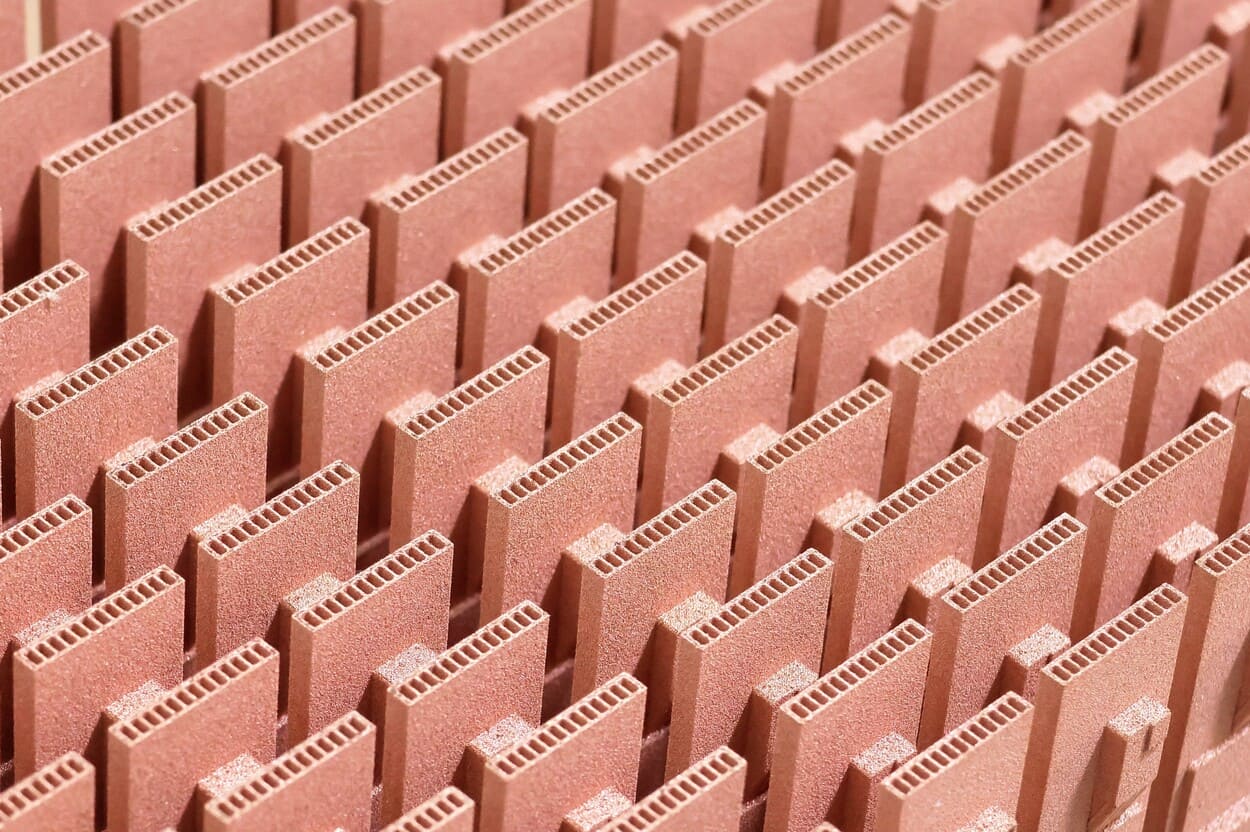
Image Copyright © 3DSPRO Limited. All rights reserved.
Copper 3D Printing and Its Core Advantages
The value of 3D printed copper comes from combining the inherent properties of copper with the geometric freedom of additive manufacturing.
Copper is well known for its excellent thermal and electrical conductivity. These properties make it attractive for components that must transfer heat efficiently or carry electrical current. Copper additive manufacturing has therefore been investigated for heat exchangers, induction coils, electrical components, and other high-performance applications.
At the same time, 3D printing can produce geometries that are difficult to manufacture using conventional methods. Internal cooling channels, integrated structures, and complex flow paths can be built directly into a part. NASA, for example, used powder bed fusion to manufacture copper-alloy combustion chamber components with intricate internal coolant channels.
This creates two distinct sources of value: Copper provides functional performance, while 3D printing provides geometric freedom.
Copper's high reflectivity and thermal conductivity can make laser processing more challenging than processing many other metals, which is one reason specialized process development is important for copper additive manufacturing.
Applications of 3D Printed Copper
The most suitable applications for 3D printed copper are those where its thermal or electrical properties directly contribute to part performance.
Heat Exchangers and Cooling Components
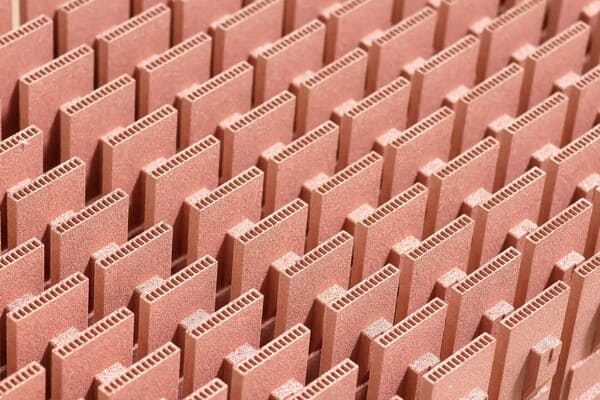
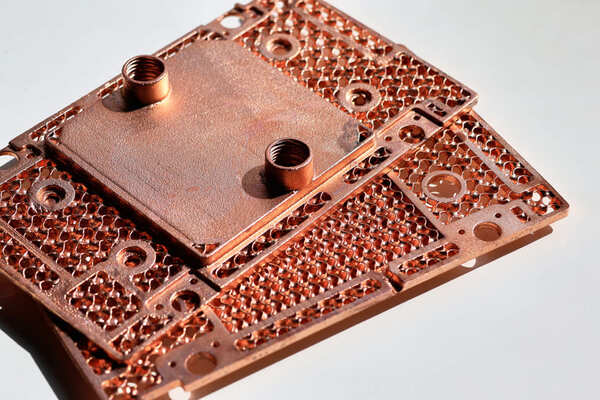
Heat exchangers, cooling plates, heat sinks, and other thermal management components can benefit from copper's high thermal conductivity. 3D printing also makes it possible to create complex internal cooling channels and compact heat-transfer structures that may be difficult to machine or assemble using conventional methods.
Induction Coils
Induction coils require good electrical conductivity and effective heat management. Additive manufacturing can produce complex coil geometries and integrate cooling channels into the component, supporting more compact and application-specific designs.
Electrical and Conductive Components
Copper is widely used for electrical conduction, making 3D printed copper relevant to specialized conductive components, electrical contacts, busbars, and other applications where conductivity is important.
Aerospace and Energy Components
Copper and copper alloys are also being developed for demanding aerospace and energy applications. NASA's GRCop-42, a copper-chromium-niobium alloy, was developed for high-temperature propulsion components that require high thermal conductivity and strength. NASA has demonstrated the alloy using laser powder bed fusion.
Custom and Low-Volume Components
For prototypes, replacement parts, and specialized low-volume components, additive manufacturing can eliminate the need for dedicated tooling and make customized copper geometries more practical.
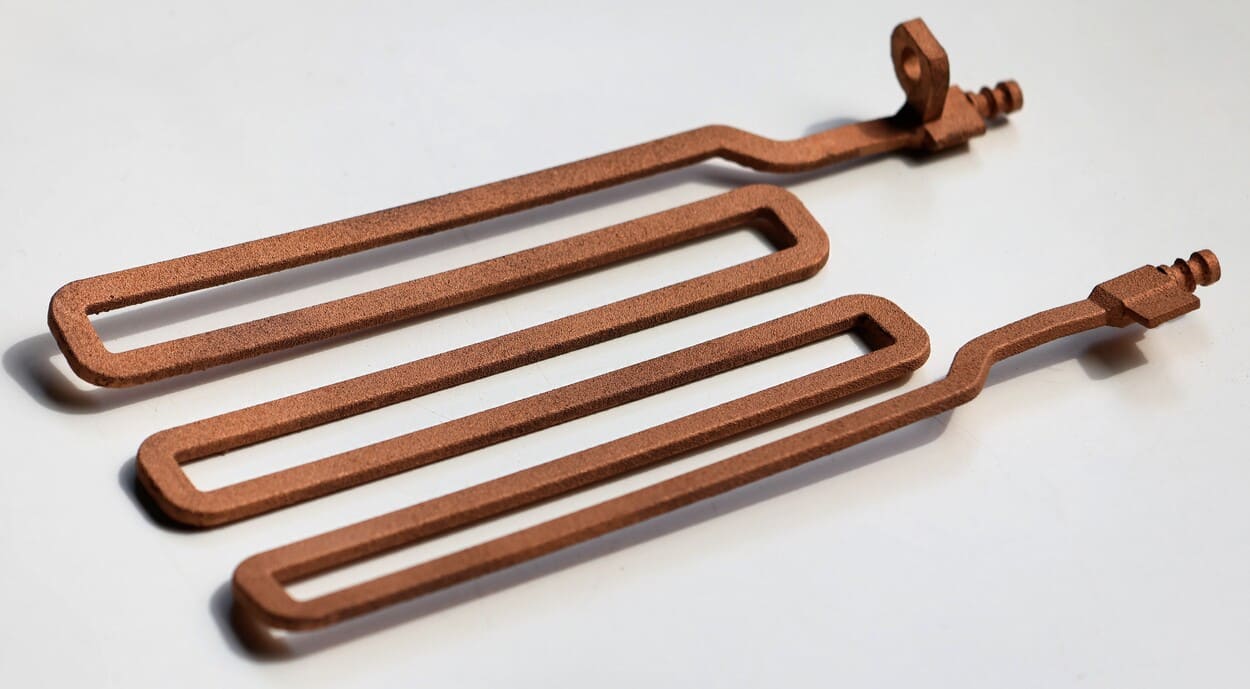
Image Copyright © 3DSPRO Limited. All rights reserved.
When the Higher Cost of Copper 3D Printing Is Justified
The higher cost of copper 3D printing is easiest to justify when the material's performance has a direct impact on the function of the part.
✅ Thermal performance: If a component must remove or transfer heat efficiently, copper can offer a meaningful performance advantage.
✅ Electrical performance: When electrical conductivity is a primary requirement, the properties of copper can outweigh its higher manufacturing cost.
✅ Complex internal channels: Copper 3D printing becomes particularly valuable when a component needs internal cooling or flow channels that are difficult to produce conventionally.
✅ Part consolidation: 3D printing can combine multiple components or manufacturing steps into a single part. For example, NASA has demonstrated copper-alloy propulsion hardware with integrated channels, reducing the number of separate components and manufacturing operations.
✅ Low-volume customization: When production quantities are small, avoiding molds, dies, or specialized tooling can improve the overall economics.
Copper 3D printing is less likely to be the best choice for simple shapes, very high production volumes, or applications where copper's thermal and electrical properties provide little additional value.
Copper 3D Printing vs. Conventional Manufacturing
Copper parts can be produced through CNC machining, casting, forging, forming, and other established processes. These methods remain highly competitive for simple geometries and high-volume production.
The main advantage of 3D printing appears when geometry and function are closely connected. Internal channels, integrated structures, and complex three-dimensional geometries can be manufactured as one component instead of being created through multiple machining, joining, or assembly steps.
For example, a simple copper plate may be more economical to machine, while a compact heat exchanger with complex internal passages may gain much more from additive manufacturing. NASA's work with copper-alloy combustion chambers demonstrates how additive manufacturing can integrate internal channels that would otherwise require multiple manufacturing and joining operations.
Therefore, copper 3D printing should not be viewed as a universal replacement for conventional manufacturing. The better choice depends on part complexity, production volume, functional requirements, and total manufacturing cost.
Copper 3D Printing Service at 3DSPRO
Selecting a copper 3D printing service requires more than comparing material prices. The supplier should have the appropriate metal additive manufacturing technology and the ability to produce the required geometry and material properties.
At 3DSPRO, the metal 3D printing service supports the production of metal components based on specific part requirements. When evaluating a copper project, important considerations include the available copper and copper alloy materials, printing technology, part dimensions, tolerances, post-processing requirements, surface finishing, inspection, and production quantity.
Customers should also consider whether a supplier can support complex functional components rather than only simple copper geometries. This is particularly important for heat exchangers, cooling components, induction coils, and other parts where the value of copper 3D printing comes from the combination of material performance and geometric complexity.
For customers looking for a copper 3D printing service, the right supplier should therefore evaluate the complete manufacturing requirement instead of treating material cost as the only decision factor.

Image Copyright © 3DSPRO Limited. All rights reserved.
 7
7


COMMENTS
- Be the first to share your thoughts!