 English
  日本語
日本語  Deutsch


Titanium 3D printing is widely used for aerospace, medical, automotive, and other demanding applications because titanium alloys offer an excellent combination of strength, low density, corrosion resistance, and biocompatibility. However, printing is only one step in producing a functional titanium component. Post-processing is often necessary to remove supports, improve surface quality, relieve residual stress, and achieve the required dimensional accuracy.
Post-processing titanium 3D printed parts can be particularly difficult because the material itself is challenging to machine, while the additive manufacturing process creates surfaces and internal stresses that require additional treatment. Understanding these factors can help manufacturers choose appropriate finishing methods and avoid unnecessary costs or quality problems.
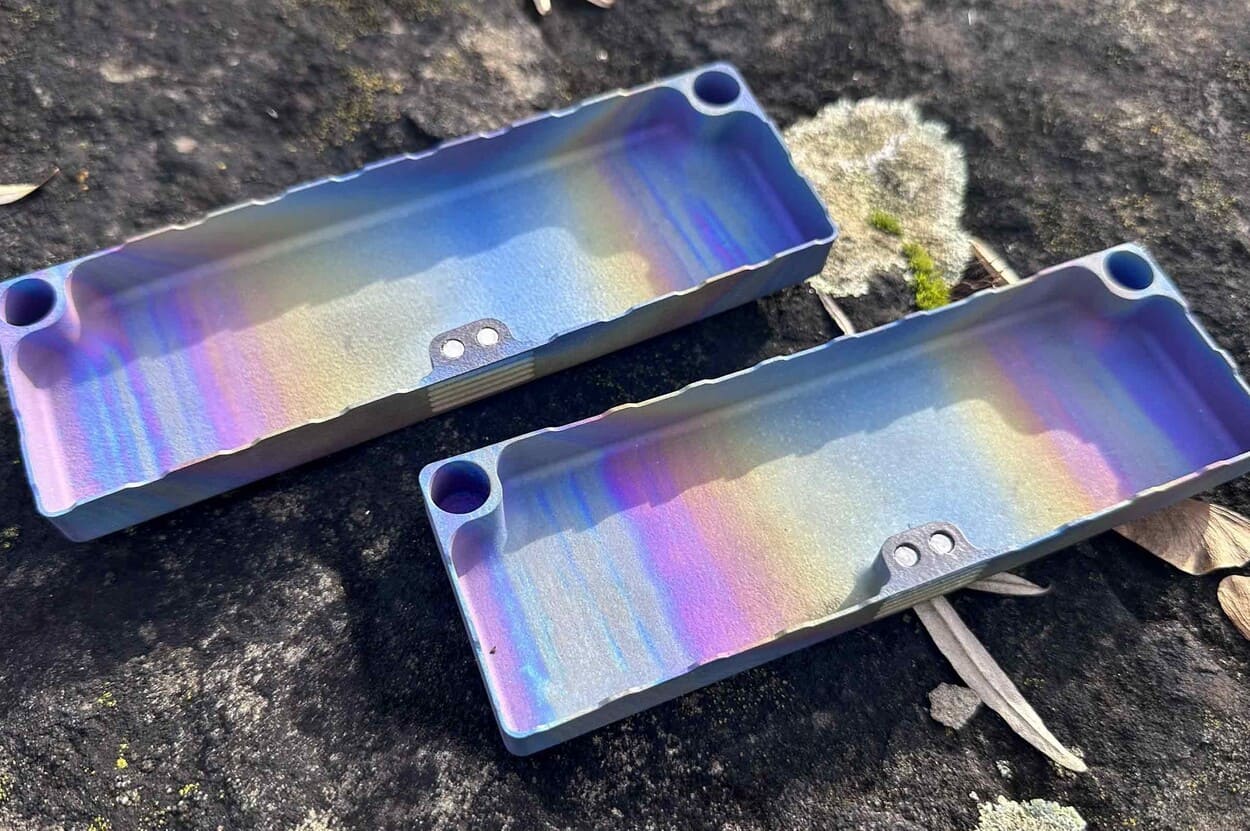
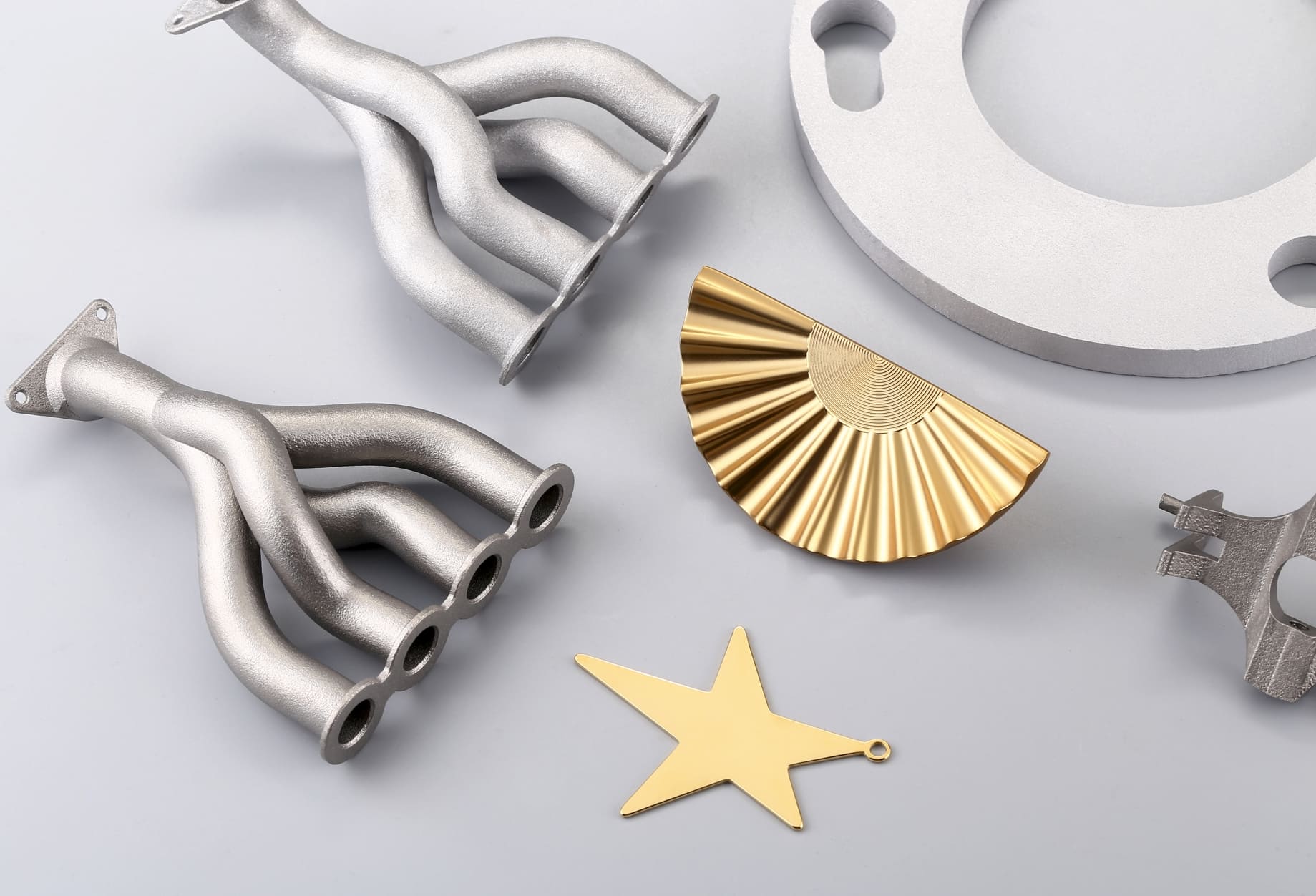
Image Copyright © 3DSPRO. All rights reserved.
Why Titanium 3D Printed Parts Are Difficult to Post-Process
Titanium 3D printed parts are difficult to post-process for two main reasons: the properties of titanium make material removal challenging, and the printing process creates an as-built condition that is different from conventional wrought or machined material.
Processes such as Selective Laser Melting (SLM) and other laser powder bed fusion technologies build parts layer by layer. The resulting surfaces are typically rougher than machined surfaces and may contain partially fused particles, stair-stepping, and support structures. Internal residual stresses can also develop during repeated heating and cooling.
Once printing is complete, these characteristics often require several post-processing operations. For example, a part may need stress relief, support removal, CNC machining, blasting, or polishing before it reaches its final specifications.
The difficulty increases when a component has tight tolerances, thin walls, deep cavities, or complex internal channels. These geometries can restrict tool access and make consistent finishing much more difficult.
Titanium Properties That Make Post-Processing Difficult
The physical and mechanical properties of titanium alloys are a major reason they are challenging to post-process.
High strength and hardness make titanium resistant to cutting and material removal. Although common titanium alloys such as Ti-6Al-4V are not necessarily harder than every tool material, their combination of strength and low thermal conductivity creates demanding machining conditions.
Low thermal conductivity is especially important. During cutting, titanium does not transfer heat away from the cutting zone efficiently. As a result, a significant amount of heat remains concentrated around the cutting edge. This can accelerate tool wear and increase the risk of surface damage.
Chemical reactivity also affects tool life. Titanium can react with certain cutting tool materials at elevated temperatures, contributing to adhesion, chipping, and rapid tool degradation.
Titanium alloys can also experience work hardening under unfavorable cutting conditions. Once a surface layer becomes hardened, subsequent cutting may become more difficult. For this reason, stable cutting conditions and appropriate tool geometry are important when machining titanium 3D printed parts.
In addition, the residual stresses generated during additive manufacturing may lead to distortion when supports are removed or when material is machined away.
Surface Conditions of Titanium 3D Printed Parts
The as-built surface of a titanium 3D printed part is fundamentally different from that of a conventionally machined component.
One common issue is surface roughness. Because the part is built layer by layer, the surface can contain partially melted particles and irregularities. Curved and angled surfaces may also show a noticeable stair-step effect depending on the layer thickness and build orientation.
Support structures create another challenge. Supports are often necessary to anchor the part and manage heat during printing, but removing them can leave marks or localized surface damage. Areas close to supports may therefore require additional machining or finishing.
Residual stress is another important consideration. Thermal cycling during printing can introduce stress into the material. If the stresses are not properly relieved, removing supports or machining the part may cause dimensional changes or distortion.
Surface condition also varies with geometry. External surfaces that are easy to access can usually be machined or blasted relatively easily. By contrast, internal channels, lattice structures, and narrow cavities may be difficult or impossible to finish using conventional tools.
Common Post-Processing Methods for Titanium 3D Printed Parts
Different post-processing methods address different requirements, and titanium components often require a combination of them.
Stress relief and heat treatment may be performed after printing to reduce residual stresses and improve dimensional stability. Depending on the alloy and application, additional heat treatments can also be used to obtain desired mechanical properties.
Support removal is generally one of the first mechanical operations. Supports can be removed manually, with cutting tools, or through machining. The appropriate method depends on their size, location, and accessibility.
CNC machining is widely used when tight dimensional tolerances and smooth functional surfaces are required. It is particularly useful for mating surfaces, holes, threads, and precision features. However, titanium machining requires suitable cutting tools, speeds, feeds, cooling strategies, and work holding.
Grinding and polishing can improve surface quality where machining is not practical or where a finer finish is required. These methods are commonly applied to accessible surfaces but may be difficult to use uniformly on complex geometries.
can hAbrasive blastingelp remove loose particles, improve surface consistency, and clean the part. However, blasting is generally not a substitute for precision machining because it offers limited control over final dimensions.
For demanding titanium components, these methods may be combined. A typical workflow could include stress relief, support removal, CNC machining of critical surfaces, and final surface finishing.
How to Improve Titanium 3D Printed Part Post-Processing
Effective post-processing starts before the titanium part is printed. The geometry, tolerances, build orientation, support strategy, and machining requirements should be considered as part of the overall manufacturing plan.
First, identify critical surfaces and dimensions. Not every surface requires machining to a tight tolerance. Limiting precision requirements to functional features can reduce machining time and cost.
Second, allow sufficient machining stock on surfaces that will be finished by CNC machining. Without enough material to remove, the printed surface may not be corrected completely.
Third, consider support placement and removal access. Poorly positioned supports can create unnecessary marks or make removal difficult. Support strategy should therefore consider both printing stability and downstream finishing.
Fourth, choose machining parameters specifically for titanium. Appropriate cutting tools, cutting speeds, feeds, coolant strategies, and tool paths can help control heat generation and reduce tool wear.
Finally, match the finishing process to the geometry and application. CNC machining is appropriate for precision features, while blasting, grinding, or polishing may be better suited to other surface requirements. Complex titanium components often achieve the best results when several complementary processes are used rather than relying on a single finishing method.
Titanium 3D printing can produce highly complex and high-performance parts, but achieving the final required quality often depends on careful post-processing. By accounting for titanium's material properties, printed surface conditions, and geometric constraints from the beginning, manufacturers can achieve more predictable results while controlling finishing time and cost.
 0
0


COMMENTS
- Be the first to share your thoughts!