 English
  日本語
日本語  Deutsch


Selecting the right 3D printing material involves more than comparing tensile strength, heat resistance, or cost. Surface hardness is another important property, especially for parts that experience repeated contact, friction, or wear during use.
However, many engineers and product designers are confused by hardness ratings. Why do some materials use Shore D while others use Rockwell or Vickers? Can the hardness numbers be compared directly? Does a higher hardness rating always mean a better material?
The answer is no. Different hardness scales are designed for different types of materials and testing methods. Understanding what each scale measures can help you choose materials more confidently and avoid comparing values that are not directly related.
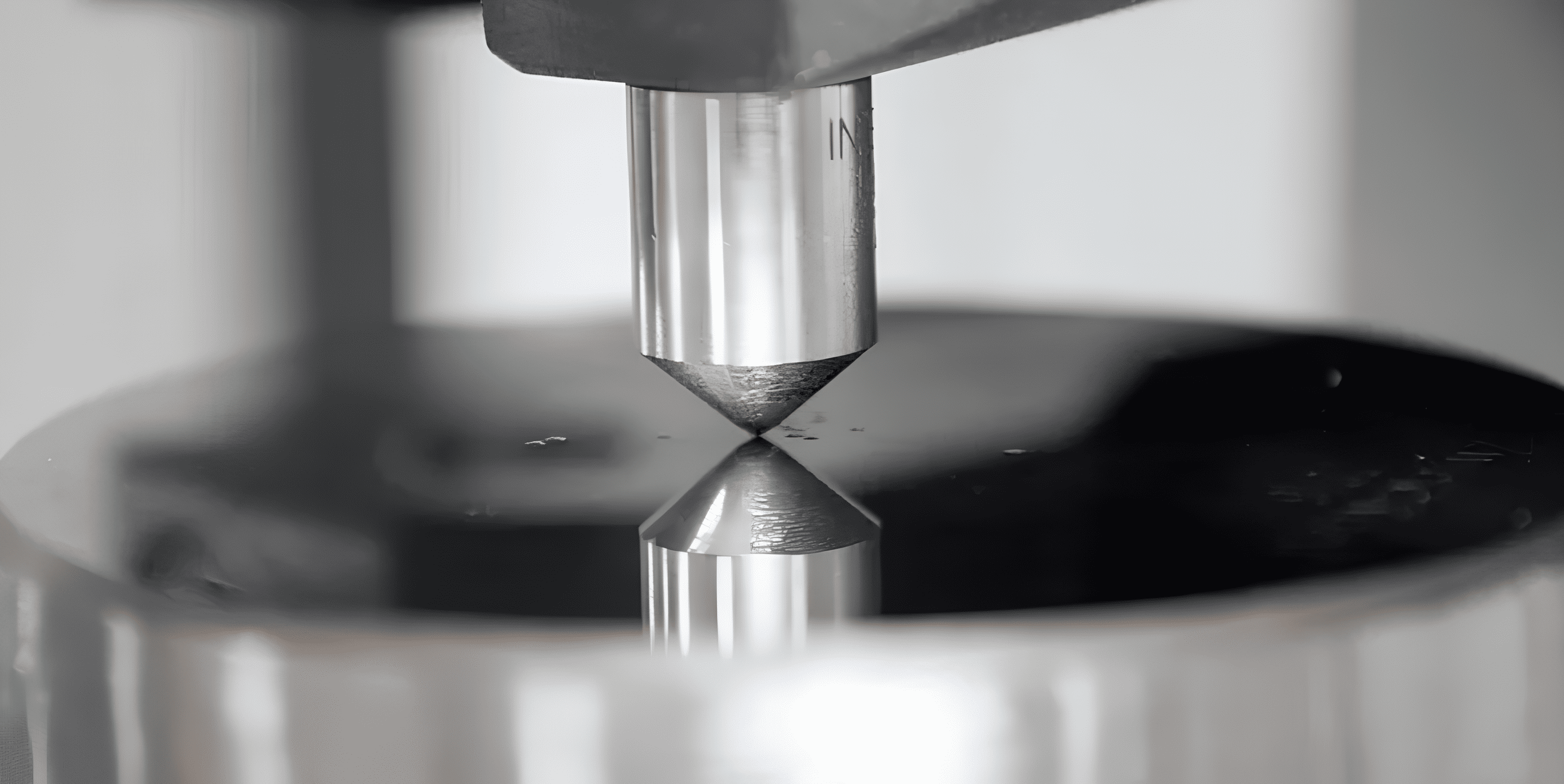
Image Source: WAYKEN
What Does Hardness Mean in 3D Printing?
Hardness refers to a material's resistance to localized surface deformation. In simple terms, it describes how difficult it is to scratch, dent, or indent a material when force is applied.
For 3D printed parts, hardness can influence several performance characteristics, including scratch resistance, surface wear resistance, resistance to dents and impressions, dimensional stability under repeated contact, and surface durability during handling.
For example, a fixture that is repeatedly clamped may require a harder material to reduce surface wear. Likewise, sliding components such as guides or bushings benefit from materials with sufficient hardness to resist abrasion.
It is important to remember that hardness is only one mechanical property. A material with high hardness may still be brittle and crack under impact, while a softer material can sometimes provide better durability because it absorbs energy more effectively. Material selection should always consider the complete set of mechanical and environmental requirements.
Shore Hardness
Shore hardness is the most common hardness scale used for plastics, elastomers, and resins. Instead of measuring permanent indentation with heavy loads, Shore testing measures how deeply a standardized indenter penetrates the material under a controlled spring force.
There are two Shore scales commonly encountered in 3D printing.
Shore A
Shore A is designed for soft and flexible materials. Typical applications include TPU, rubber-like resins, and silicone-like materials. The lower the Shore A value, the softer and more flexible the material.
Examples:
• Shore A 50: very soft
• Shore A 70: medium flexibility
• Shore A 90: firm but still flexible
Shore D
Shore D is used for rigid plastics and engineering polymers. Materials commonly measured with Shore D include standard SLA resin, tough resin, ABS, PLA, nylon, and polycarbonate. Typical Shore D values range from approximately 70 to 90. Materials with higher Shore D ratings generally offer better scratch resistance and improved surface rigidity.
Because Shore A and Shore D use different testing methods, a Shore A value cannot be directly compared with a Shore D value.
Rockwell Hardness
Rockwell hardness is widely used for metals and is one of the most recognized hardness testing methods in manufacturing.
The test measures the depth of indentation created by applying both a minor load and a major load with either a steel ball or a diamond indenter. The resulting value is expressed using different Rockwell scales, such as HRB or HRC, depending on the material.
Rockwell testing is commonly used for metal 3D printed parts made from:
• Stainless Steel 316L
• Stainless Steel 17-4 PH
• Maraging Steel
• Tool Steel
• Titanium alloys
Heat treatment can significantly change Rockwell hardness. For example, a heat-treated 17-4 PH stainless steel component typically achieves much higher hardness than the same material in its as-printed condition.
Rockwell testing is especially useful because it is fast, standardized, and widely accepted across manufacturing industries.
Vickers Hardness
The Vickers hardness test uses a diamond pyramid indenter pressed into the material under a controlled load. The size of the resulting indentation is measured under a microscope to calculate the hardness value.
Unlike Rockwell testing, Vickers testing works well across a wide range of materials, from relatively soft metals to very hard alloys and ceramics.
It offers several advantages:
• High measurement accuracy
• Suitable for thin sections
• Can measure very small features
• Effective for evaluating heat-treated materials
Vickers hardness is commonly used in research laboratories and quality inspection for metal additive manufacturing, particularly when evaluating microstructures or comparing the effects of different heat treatment processes.
Although Vickers testing is more time-consuming than Rockwell testing, it provides highly detailed information for engineering analysis.
Brinell Hardness
Brinell hardness is another widely used method for measuring metals, particularly softer alloys.
The test presses a hardened steel or carbide ball into the material under a heavy load. The diameter of the indentation is then measured to calculate the Brinell Hardness Number (HB or HBW).
Brinell testing is often used for aluminum alloys, copper alloys, cast metals, and large industrial components.
Compared with Rockwell and Vickers testing, Brinell testing creates a larger indentation, making it particularly suitable for materials with coarse grain structures or rougher surfaces.
Although Brinell testing is less common for finished precision 3D printed parts, it remains an important reference when comparing aluminum alloys and other softer engineering metals.
Typical Hardness Ratings of Common 3D Printing Materials
|
Material |
Typical Process |
Hardness Scale |
Typical Rating |
|
Flexible TPU |
FDM |
Shore A |
85–95A |
|
Flexible Resin |
SLA |
Shore A |
50–90A |
|
Standard SLA Resin |
SLA |
Shore D |
80–85D |
|
Tough Resin |
SLA |
Shore D |
75–85D |
|
ABS |
FDM |
Shore D |
75–80D |
|
PLA |
FDM |
Shore D |
80–85D |
|
PA12 Nylon |
SLS / MJF |
Shore D |
75–80D |
|
Carbon Fiber Reinforced Nylon |
SLS / FDM |
Shore D |
80–86D |
|
Polycarbonate (PC) |
SLS / FDM |
Shore D |
80–85D |
|
Aluminum AlSi10Mg |
SLM |
Brinell (HB) |
70–120 HB* |
|
Stainless Steel 316L |
SLM |
Rockwell (HRB) |
75–95 HRB* |
|
Stainless Steel 17-4 PH (Heat Treated) |
SLM |
Rockwell (HRC) |
35–45 HRC* |
|
Titanium Ti6Al4V |
SLM |
Vickers (HV) |
300–380 HV* |
|
Maraging Steel 18Ni300 (Heat Treated) |
SLM |
Rockwell (HRC) |
50–56 HRC* |
*Typical values vary depending on build parameters, heat treatment, and post-processing.
Hardness ratings provide valuable insight into how 3D printing materials resist scratching, indentation, and surface wear, but they should always be interpreted within the correct testing system. Shore hardness is used for plastics and elastomers, while Rockwell, Vickers, and Brinell are primarily applied to metal materials. Since each method uses a different testing procedure, their numerical values are not directly comparable.
When selecting a material for your project, hardness should be considered alongside other important properties such as toughness, tensile strength, impact resistance, heat resistance, and wear performance. By understanding what hardness ratings actually represent, engineers and designers can make more informed material choices and develop 3D printed parts that deliver the right balance of durability, functionality, and long-term performance.
 0
0


COMMENTS
- Be the first to share your thoughts!