 English
  日本語
日本語  Deutsch


Robotic grippers are essential end-of-arm tooling components used to pick, hold, move, and position parts during automated operations. While standard grippers can work for common applications, many manufacturing tasks involve irregularly shaped, delicate, or frequently changing components that require customized gripping solutions.
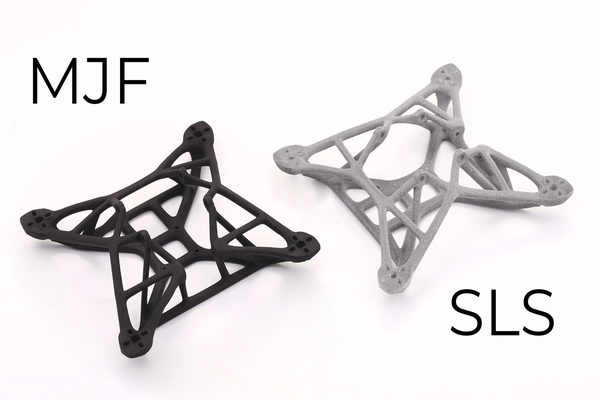
Nylon 3D printing provides a practical way to produce these custom grippers without the long lead times and tooling costs associated with traditional manufacturing. Processes such as Selective Laser Sintering (SLS) and Multi Jet Fusion (MJF) can produce lightweight, complex, and functional nylon components suitable for many robotic handling applications.
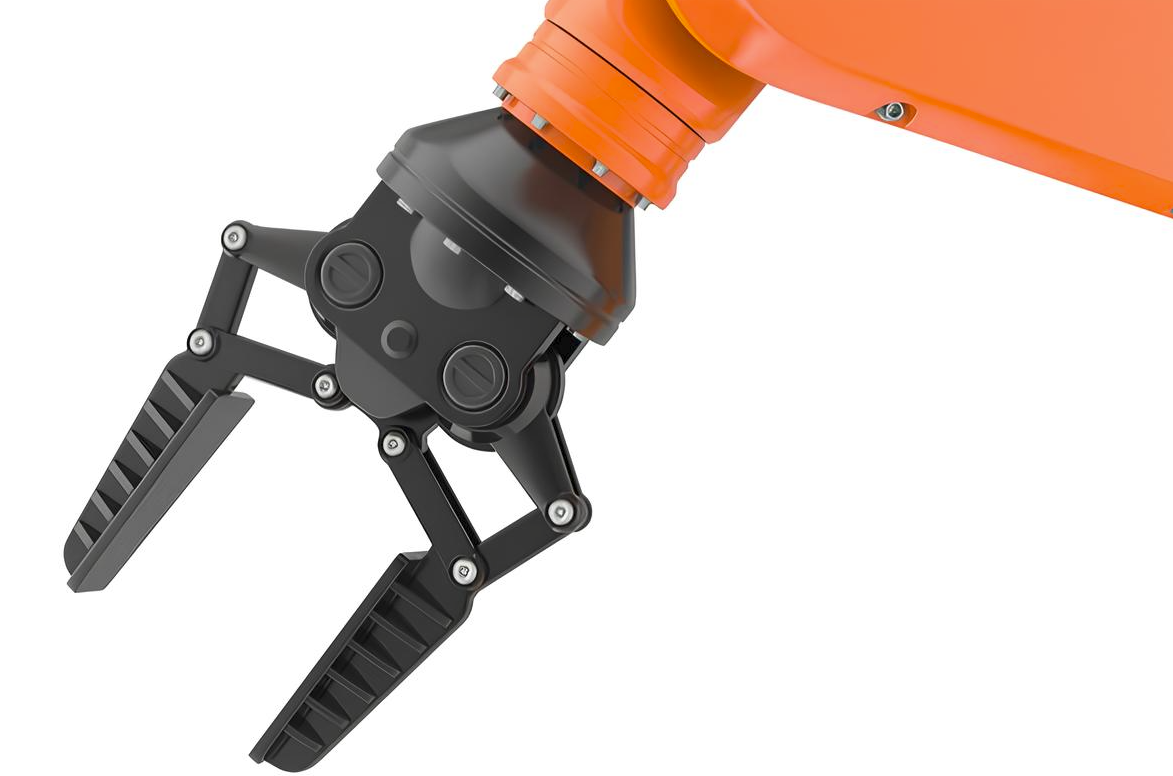
Image Source: Association for Advancing Automation
Nylon 3D Printing for Custom Robotic Grippers
Custom robotic grippers are designed around the specific geometry and handling requirements of a workpiece. Instead of modifying a standard gripper, manufacturers can 3D print custom fingers, jaws, or even complete end-of-arm tooling to match the part being handled.
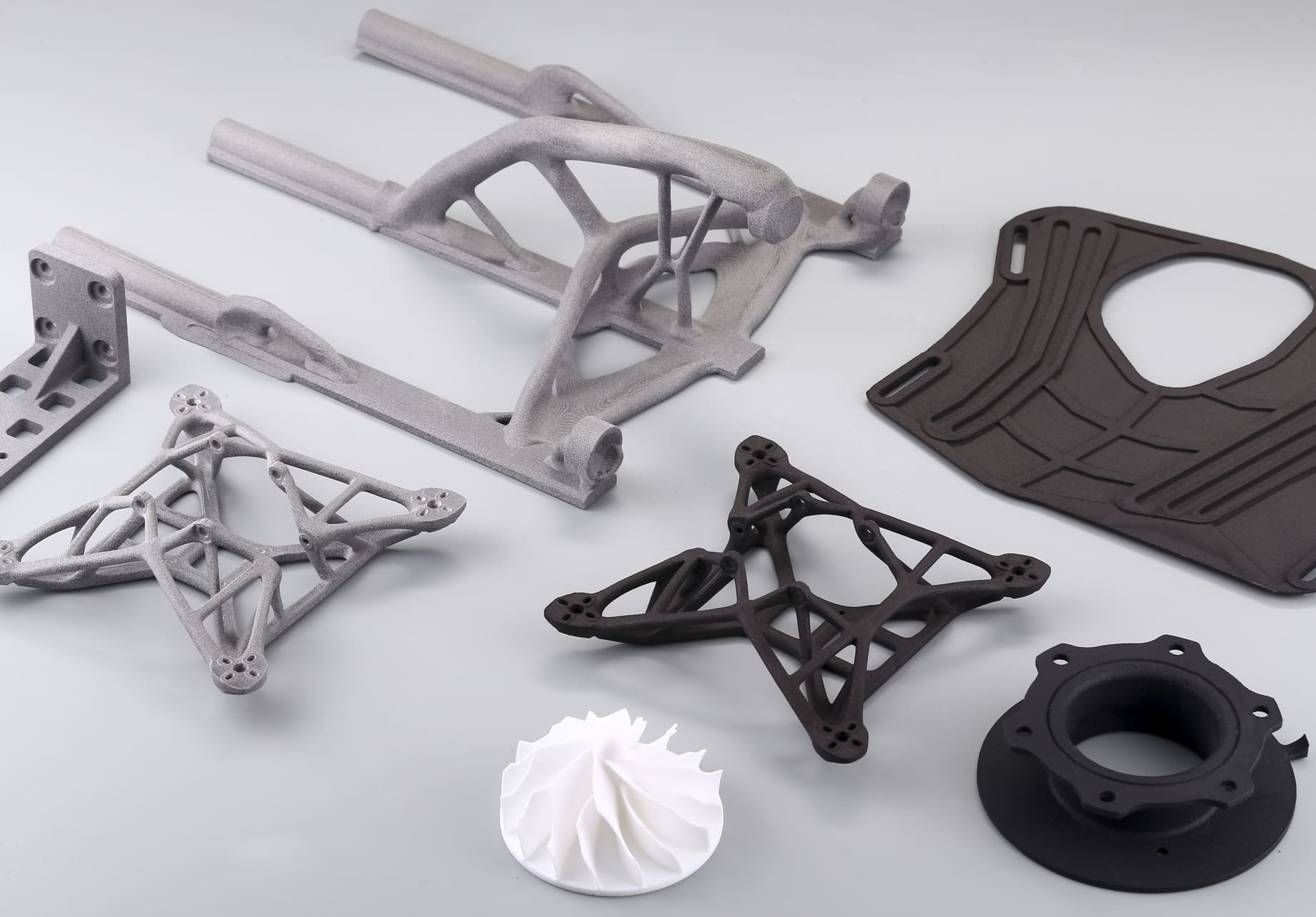
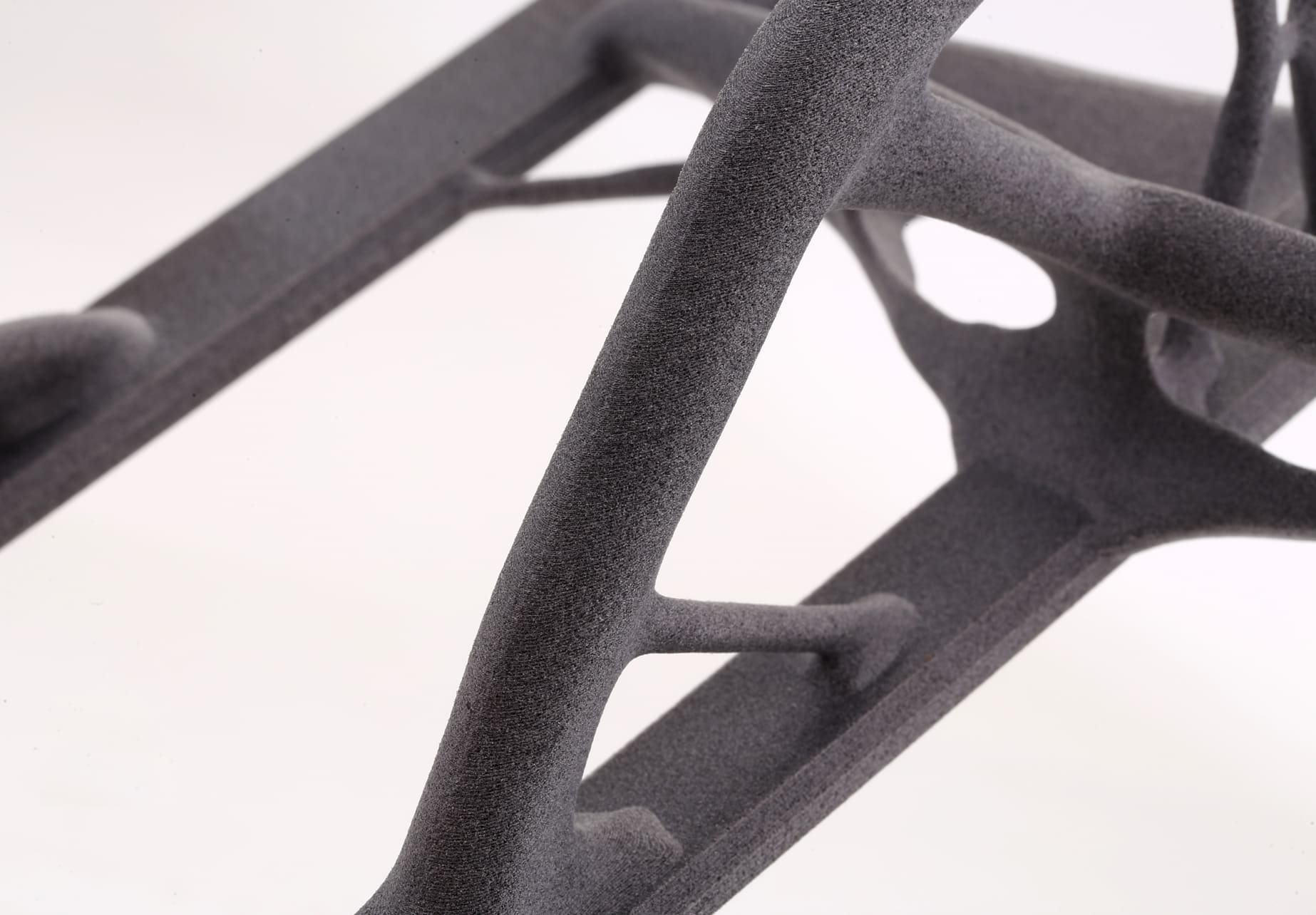
Nylon is particularly suitable for this application because powder-bed 3D printing processes can produce complex geometries without traditional molds or extensive machining. SLS and MJF can create parts with internal features, curved gripping surfaces, lightweight structures, and integrated mounting details.
The typical process starts by defining the workpiece, gripping location, required force, robot interface, and operating environment. The gripper is then modeled around these requirements and printed in nylon. After printing, the part is depowdered or cleaned, inspected, and assembled with any required hardware such as threaded inserts or fasteners.
For prototypes and customized production tooling, this approach can significantly simplify development. A gripper can be modified and reprinted when the workpiece changes, making additive manufacturing especially useful in environments where automation tooling needs frequent adjustment.
Why Use Nylon for Robotic Grippers?
Nylon offers several properties that make it attractive for robotic gripping applications.
Lightweight construction: Nylon is considerably lighter than most metals used for industrial tooling. Reducing gripper weight can lower the payload required from the robot and may make it easier to design compact end-of-arm tooling.
Good mechanical performance: Engineering nylon materials generally offer a useful combination of tensile strength, toughness, and impact resistance. This allows 3D printed grippers to withstand repeated handling operations when properly designed and operated within their material limits.
Design flexibility: Powder-bed printing makes it possible to produce geometries that are difficult or expensive to machine. Gripping fingers can incorporate curved contact surfaces, lattice-like weight reduction features, pockets, or other customized geometry.
Fast customization: A new gripper can be manufactured directly from a digital model without producing dedicated tooling. This is particularly valuable for small production batches, automation trials, and frequently changing products.
Reduced part count: 3D printing can sometimes combine multiple features into a single component. For example, mounting features and customized gripping surfaces may be integrated into one printed structure, reducing assembly requirements.
However, nylon is not automatically the best choice for every application. The specific nylon grade, printing process, design, load, temperature, and cycle requirements must all be considered.
Applications of Nylon 3D Printed Robotic Grippers
Nylon 3D printed grippers are particularly useful when standard tooling does not provide the required gripping geometry.
In pick-and-place automation, customized nylon fingers can conform to the shape of components, helping the robot securely handle parts while minimizing contact with sensitive surfaces.
In assembly operations, grippers can be customized to hold components at specific orientations during insertion, fastening, or positioning. A custom interface can also help maintain repeatable positioning from one cycle to the next.
For irregularly shaped products, 3D printing makes it practical to create gripping surfaces that closely match the workpiece. This can be useful for components with complex contours that would require more machining effort with conventional tooling.
Nylon grippers can also be used in packaging and consumer product handling, where lightweight tooling and rapid customization are often important. When products change frequently, digitally manufactured grippers can reduce the time needed to adapt the automation system.
In automotive and general industrial automation, custom nylon end-of-arm tooling can be used for handling relatively lightweight components, especially during prototyping, process development, and lower-volume production.
Another application is temporary or specialized tooling. A manufacturer may need a dedicated gripper for only one production stage or a limited production run. In such cases, the ability to produce tooling without dedicated molds can make nylon 3D printing economically attractive.
Nylon 3D Printed Grippers vs. Machined Metal Grippers
|
Factor |
Nylon 3D Printed Grippers |
Machined Metal Grippers |
|
Weight |
Lightweight |
Heavier |
|
Customization |
Very high |
High, but generally more machining-intensive |
|
Complex geometry |
Excellent |
More difficult and costly |
|
Tooling requirement |
Minimal |
No mold, but machining setup is required |
|
Lead time |
Often short |
Can be longer depending on complexity |
|
Low-volume cost |
Often economical |
Can be relatively expensive |
|
Rigidity |
Lower than most metals |
Generally higher |
|
Temperature resistance |
Material-dependent and limited compared with many metals |
Generally higher |
|
Wear resistance |
Material-dependent |
Generally better for demanding applications |
|
Best suited for |
Lightweight, customized, lower-volume tooling |
High-load, high-rigidity, high-wear applications |
Benefits and Limitations
The main benefit of nylon 3D printed robotic grippers is the ability to create application-specific tooling quickly and economically. Manufacturers can optimize the gripping geometry for a particular workpiece rather than relying on standardized shapes.
Other benefits include lightweight construction, reduced tooling requirements, complex geometric freedom, and easy design iteration. These characteristics are particularly valuable for prototype automation, low-volume production, and applications involving frequent product changes.
There are also important limitations. Nylon generally provides less stiffness and temperature resistance than metals, so it may not be suitable for heavy-duty or high-temperature gripping applications. Wear can also become a concern when gripper surfaces repeatedly contact abrasive parts. In addition, many nylon materials absorb moisture, which can influence dimensional stability and material properties under certain conditions.
For these reasons, gripper design should consider the actual gripping force, cycle count, temperature, contact conditions, environmental exposure, and required service life. A nylon gripper that performs well in a light-duty application may not be appropriate for continuous heavy-duty production.
Overall, nylon 3D printing is a strong option for custom robotic grippers when manufacturers need lightweight tooling, rapid customization, and complex geometry. By matching the nylon material and printing process to the application's mechanical and environmental requirements, companies can produce functional end-of-arm tooling without the cost and lead time associated with conventional metal manufacturing.
 0
0


COMMENTS
- Be the first to share your thoughts!