English
 日本語
 Deutsch


For years, 3D printing was associated mainly with prototypes and small batches. Its appeal was design flexibility: engineers could produce complex parts without investing in dedicated tooling. That role is expanding as advances in metal powder processing, machine control, finishing, and inspection make additive manufacturing viable for selected end-use components at production scale.
Apple offers a clear example. In November 2025, the company announced that the titanium cases for Apple Watch Ultra 3 and titanium Apple Watch Series 11 were being produced using 3D printing. Apple also uses 3D-printed titanium for the USB-C port enclosure in the iPhone Air. These applications show how additive manufacturing can move beyond prototypes when product design, materials, and production systems are developed together.
From Rapid Prototyping to Mass Production
Rapid prototyping lets designers turn digital models into physical parts, check shape and fit, and revise a design without waiting for molds or specialized tooling, which shortens development and makes it easier to test different options.
Mass production sets a higher bar. Parts must meet consistent dimensional, cosmetic, and performance standards across repeated builds. Manufacturers also need reliable material supply, repeatable processes, predictable lead times, and a cost structure that works at the intended volume.
Apple's titanium components demonstrate this shift. According to Apple's November 2025 announcement, the cases for Apple Watch Ultra 3 and titanium Apple Watch Series 11 are printed with 100 percent recycled aerospace-grade titanium powder. Apple says the process uses about half the raw titanium required by previous generations of these cases. The company estimated that it would save more than 400 metric tons of raw titanium in 2025.
The significance is not simply that a consumer product contains a 3D printed part. The process has been integrated into a system intended to supply identical components at scale. Apple describes years of development, testing, powder and alloy refinement, process optimization, and data collection to meet requirements for appearance, durability, and reliability.
What Makes Mass Production with 3D Printing Possible?
1. Production-Ready Materials and Process Control
Industrial 3D printing depends on controlled materials and operating conditions. In metal powder bed fusion, powder characteristics, oxygen content, layer thickness, laser parameters, and thermal behavior can affect the finished part. A successful sample does not automatically prove that a process is ready for repeat production; parameters must be established and monitored to maintain consistency between builds.
2. Designing for Additive Manufacturing
Mass production becomes more compelling when a component benefits from geometry that is difficult or wasteful to make conventionally. Layer-by-layer manufacturing can create intricate features and near-net-shape components, potentially reducing material removal. Designers may also integrate features or adapt surfaces to improve how parts fit and function together.
3. Automated Finishing and Quality Inspection
Printing is only one stage in the workflow. Metal parts may need excess powder removed, separation from the build plate, machining, polishing, cleaning, or surface treatment. Inspection must confirm critical dimensions and functional requirements; consumer products also have demanding cosmetic standards.
4. A Clear Business Case
Technical feasibility alone does not justify mass production. The economics depend on material use, equipment utilization, labor, finishing, production time, quality yield, and the cost of alternative methods. 3D printing is attractive when it reduces waste, enables valuable design features, or avoids restrictive tooling.
For Apple, the reduction in raw titanium is a measurable benefit. The process also enables design flexibility for components such as the thin titanium USB-C port enclosure in iPhone Air. These advantages matter because they solve specific manufacturing problems, not because 3D printing is automatically the best choice for every part.
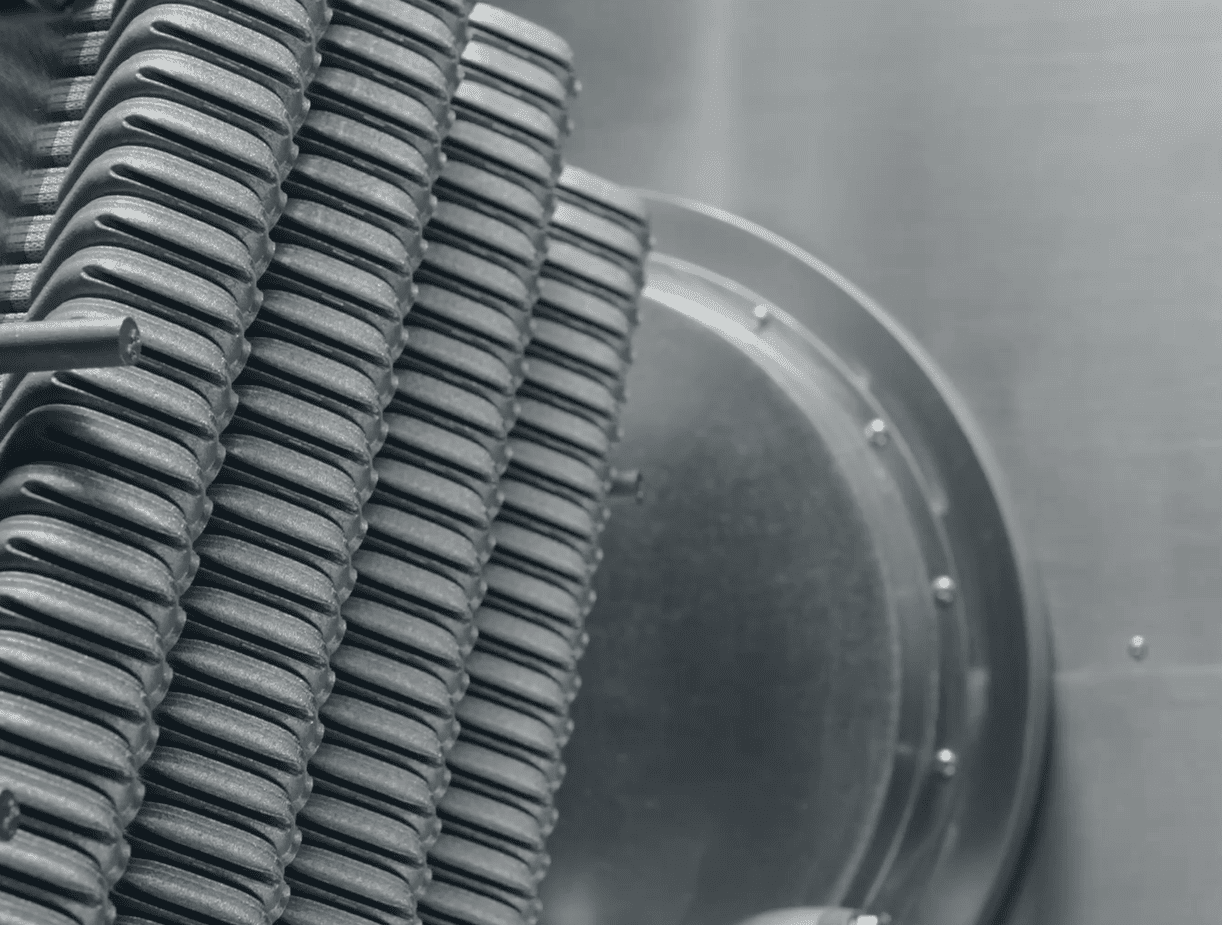
Image Source: Apple
The Challenges of Scaling Up 3D Printing
Build time can limit output because parts are formed layer by layer. Increasing production may require more machines, efficient scheduling, and a carefully managed workflow. Powder preparation, setup, cooling, depowdering, finishing, and inspection all contribute to total throughput.
Consistency is another challenge. Differences in powder condition, machine calibration, thermal history, or part orientation can affect quality. Manufacturers need validated parameters, monitoring, traceability, and inspection plans that match each component's function and risk.
Surface finish and dimensional accuracy may require extra work. Near-net-shape printing can reduce material removal, but it does not always eliminate machining or polishing. Tight interfaces and decorative finishes can add both time and cost. Reusing powder may reduce waste, but it still requires appropriate handling and quality controls.
Finally, economics depend on part geometry and volume. Traditional manufacturing may remain more cost-effective for simple components produced in very high quantities, particularly when existing tooling is already paid for. The comparison must consider the total cost of a finished, qualified part, not just printing time.
Is 3D Printing Ready to Replace Traditional Mass Production?
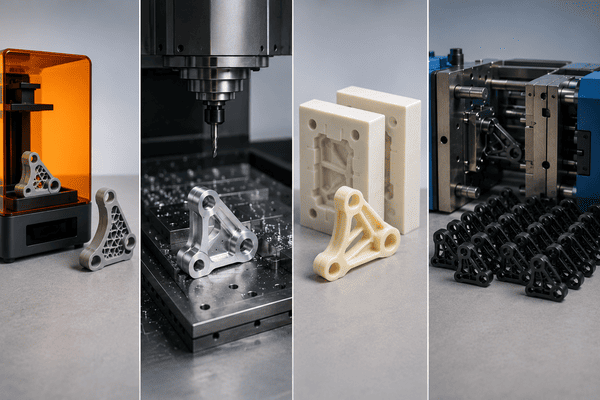
3D printing is not a universal replacement for injection molding, casting, forging, or CNC machining. Conventional processes can offer high throughput and low unit costs for suitable designs and stable, large production runs. Additive manufacturing offers more geometric freedom, can reduce material removal, and can create features that are difficult to produce conventionally.
The key question is where 3D printing creates enough value to justify its costs and process requirements. It is a strong candidate for parts with complex geometry, expensive material waste, restrictive tooling needs, or functional benefits from integrating features. It can also provide a path from prototypes to production components as designs and processes mature.
Apple's titanium enclosures illustrate what is possible when materials, process parameters, downstream operations, and quality requirements are developed together. The lesson is not that every product should be 3D printed. It is that 3D printing is becoming a practical production option for components where design freedom and material efficiency create measurable value.
Manufacturers should evaluate 3D printing as part of the production toolbox, rather than treating it only as a prototyping method. The aim is to select the process that delivers the right combination of performance, quality, material efficiency, lead time, and total cost.
 0


COMMENTS
- Be the first to share your thoughts!