English
 日本語
 Deutsch


Laser cutting and waterjet cutting are two widely used methods for producing sheet metal parts with complex profiles, holes, and slots. Both can process a range of metals, but they differ in cutting mechanisms, production speed, edge characteristics, and material compatibility.
Choosing between them affects not only cutting quality but also dimensional accuracy, secondary processing, lead time, and total manufacturing cost. Understanding these differences helps engineers select the most suitable process for brackets, panels, enclosures, and other fabricated components.
How Laser Cutting Works
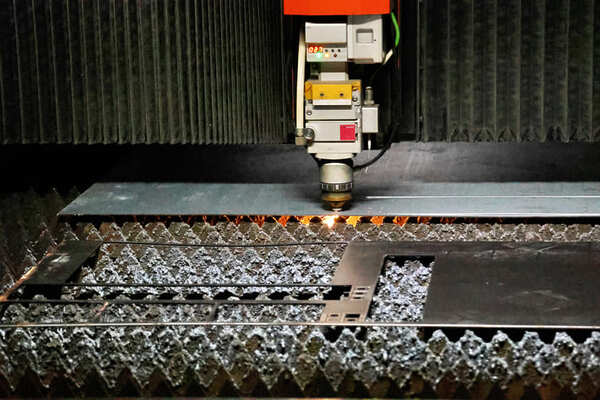
Laser cutting uses a concentrated beam of light to melt, vaporize, or otherwise remove material along a programmed cutting path. Assist gas, such as nitrogen or oxygen, helps remove molten material and influences the resulting edge quality.
The cutting head follows a toolpath generated from a CAD file, allowing the machine to produce intricate contours, narrow slots, and small holes without dedicated cutting dies. Modern fiber laser systems are widely used for sheet metal fabrication because they offer high cutting speeds and efficient automated production.
Key advantages of laser cutting include:
✅ High production efficiency: Laser cutting can process thin and medium-thickness metal sheets quickly, making it suitable for repeat orders and high-volume production.
✅ Fine geometric details: Its narrow kerf supports intricate profiles, closely spaced features, and efficient material nesting.
✅ Consistent repeatability: CNC-controlled cutting paths help maintain consistent geometry across production batches.
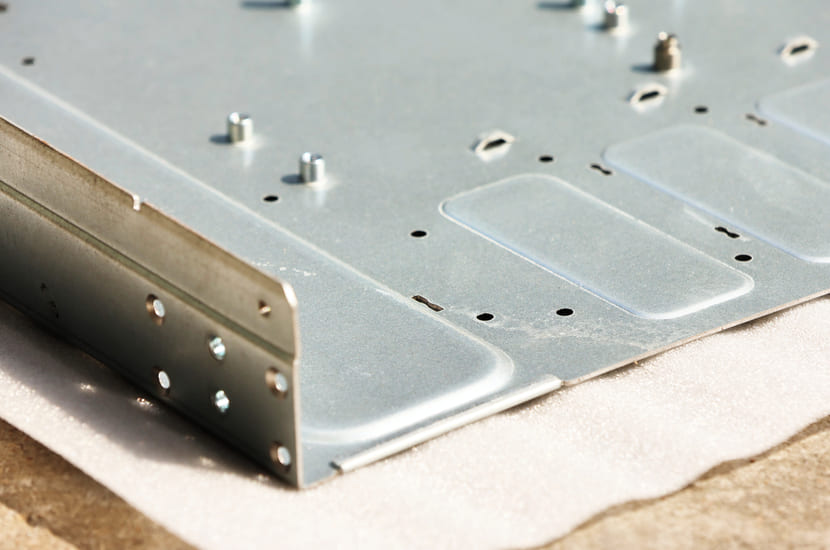
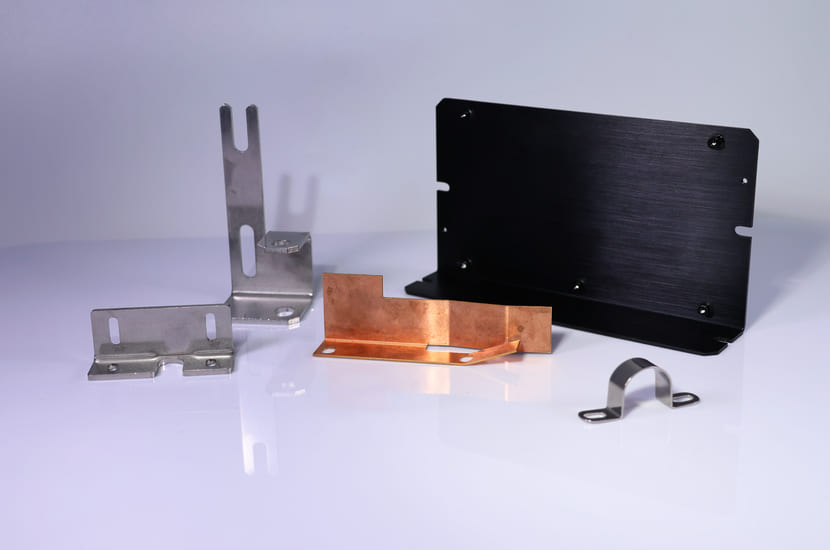
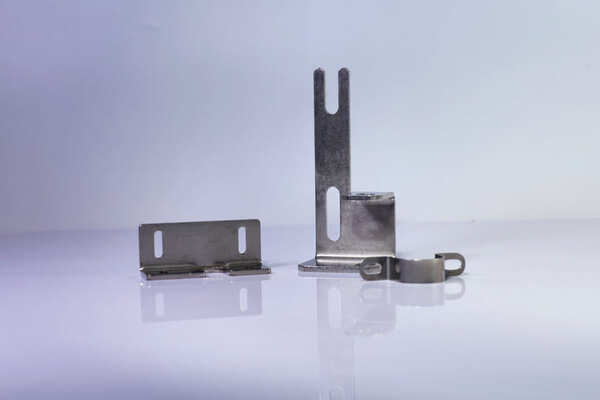
✅ Broad sheet metal applications: Common applications include stainless steel panels, aluminum brackets, mounting plates, and electrical enclosures.
However, laser cutting is a thermal process. Heat can create a localized heat-affected zone (HAZ), edge oxidation, dross, or distortion under certain conditions. The severity depends on the material, thickness, cutting parameters, and assist gas. For applications sensitive to thermal changes, these effects may require additional inspection or processing.
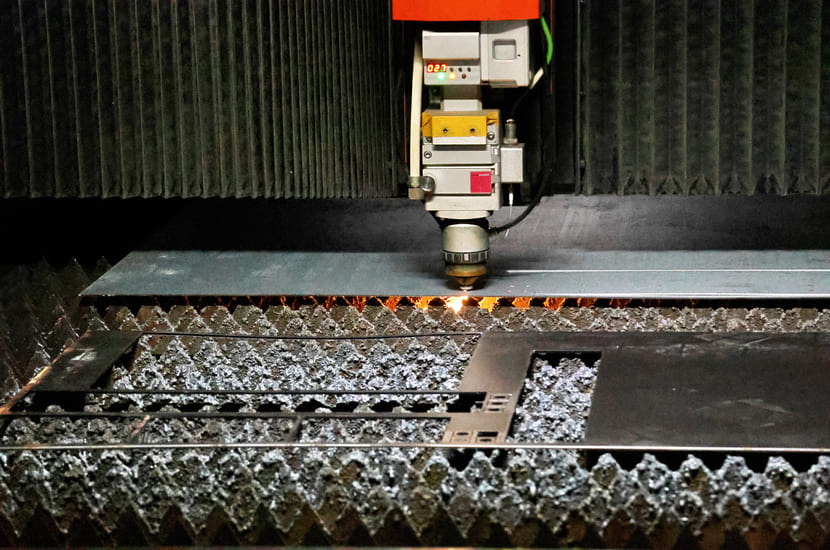
Image Copyright © 3DSPRO. All rights reserved.
How Waterjet Cutting Works
Waterjet cutting removes material using a high-pressure stream of water. For metal cutting, abrasive waterjet systems typically introduce particles such as garnet into the water stream. The abrasive particles erode the material along a programmed path, producing the required geometry.
Unlike laser cutting, abrasive waterjet cutting is a cold-cutting process. It does not generate a thermally induced heat-affected zone at the cut edge, making it useful when preserving the material's local thermal condition is important.
Key advantages of waterjet cutting include:
✅ No thermal heat-affected zone: The cutting process avoids heat-induced changes, edge hardening, and thermal oxidation associated with thermal cutting.
✅ Wide material compatibility: Waterjet systems can cut aluminum, stainless steel, titanium, copper alloys, and many other materials, including certain nonmetals.
✅ Thick-material capability: Depending on the machine and material, waterjets can process thick plates that may be challenging or uneconomical to cut with a laser.
✅ Reduced thermal distortion risk: Because the process does not introduce a comparable heat load, it can help preserve geometry in heat-sensitive applications.
Waterjet cutting also has limitations. It is generally slower than laser cutting when processing thin sheet metal, particularly for intricate profiles with long cutting paths. Abrasive consumption, water management, and equipment operating costs also need to be considered.
Furthermore, waterjet cutting can produce slight taper through the material thickness, along with striations on the cut surface. Cutting speed, abrasive flow, material thickness, and machine capability influence the final edge quality.
Laser Cutting vs. Waterjet Cutting: Key Differences
|
Comparison Factor |
Laser Cutting |
Waterjet Cutting |
|
Cutting mechanism |
Thermal energy |
High-pressure water and abrasive particles |
|
Cutting speed |
Generally faster on thin sheet metal |
Generally slower on thin sheets |
|
Heat-affected zone |
May produce a localized HAZ |
No thermal HAZ |
|
Kerf width |
Typically narrower |
Typically wider |
|
Fine features |
Well suited to intricate contours and small features |
Suitable for many complex profiles, subject to jet capability |
|
Edge characteristics |
May exhibit oxidation, dross, or heat-related effects |
No thermal oxidation; may exhibit striations or taper |
|
Material compatibility |
Depends on laser type, material, reflectivity, and thickness |
Broad compatibility across metals and many nonmetals |
|
Thickness capability |
Strong for thin-to-medium sheets; limits depend on equipment |
Suitable for a broad range of thicknesses, including thick plates |
|
Main cost drivers |
Cutting time, assist gas, setup, and secondary finishing |
Cutting time, abrasive consumption, water management, and finishing |
Cutting Speed and Productivity
Laser cutting typically offers higher throughput for thin and medium-thickness sheet metal. Its speed advantage is particularly valuable when manufacturing numerous parts from standardized sheets.
Waterjet cutting generally removes material more slowly, so long cutting paths can increase cycle time. However, it can be the more practical option when laser processing introduces unacceptable thermal effects or cannot economically accommodate the material thickness.
Heat-Affected Zone and Edge Quality
Laser cutting introduces localized heat that can alter the material near the cut edge. Depending on the application, this may affect edge appearance, microstructure, or subsequent processes such as welding and precision machining.
Waterjet cutting avoids thermal damage at the edge. This is useful for heat-sensitive materials and components with strict edge-integrity requirements. Nevertheless, the absence of a HAZ does not automatically guarantee better dimensional accuracy or a smoother surface. Both processes require appropriate parameter selection and inspection.
Accuracy, Kerf, and Material Compatibility
Laser cutting generally produces a narrower kerf, supporting fine details and close feature spacing. Waterjet cutting can also achieve high accuracy, but the achievable tolerance depends on equipment, material thickness, cutting speed, and jet compensation.
Material compatibility is another important distinction. Laser cutting works effectively with many sheet metals, while highly reflective metals and thick sections may require specialized equipment or make waterjet cutting a more practical alternative. Waterjets also accommodate materials that cannot be processed effectively by a laser.
Total Manufacturing Cost
The lowest cutting cost per hour does not necessarily mean the lowest finished-part cost. Laser cutting may reduce cycle time and labor for high-volume sheet metal production. Waterjet cutting may avoid additional operations related to thermal damage, depending on the application.
A useful cost comparison should include material utilization, setup, cutting time, edge finishing, inspection, and any subsequent bending, welding, or machining.
When to Choose Laser Cutting
Laser cutting is usually the preferred option when production speed, fine features, and efficient processing of sheet metal are the main priorities.
Consider laser cutting for:
High-volume sheet metal production: Panels, brackets, covers, and mounting plates benefit from fast, repeatable cutting.
Intricate profiles and small features: A narrow kerf supports detailed contours and closely spaced holes or slots, within the machine's capabilities.
Cost-sensitive production runs: High cutting speeds and automated nesting can reduce the cost per part.
Parts requiring consistent geometry: CNC-controlled toolpaths support repeatability across batches.
For example, a manufacturer producing hundreds of stainless steel electrical enclosure panels may favor laser cutting because it combines efficient sheet utilization with rapid profile cutting. The resulting parts can then move to bending, welding, and surface finishing.
Before selecting the process, confirm that the material grade and thickness suit the available laser system. Also consider edge oxidation, burrs, and thermal distortion when specifying welding preparation, coating requirements, or critical dimensions.
When to Choose Waterjet Cutting
Waterjet cutting is particularly useful when avoiding thermal effects, accommodating challenging materials, or processing thicker sections is more important than maximum cutting speed.
Consider waterjet cutting for:
Heat-sensitive applications: Choose a cold-cutting process when thermal alteration near the edge is unacceptable.
Materials with challenging laser characteristics: Reflective metals such as copper and certain aluminum alloys may be better suited to waterjet cutting, depending on the laser equipment.
Thick plates and specialty components: Waterjet systems can process thicknesses beyond the economical range of some laser applications.
Parts requiring thermally unaffected edges: This can be valuable when the material's local properties or subsequent machining operations must be preserved.
For example, a thick metal component that requires machining after profiling may benefit from waterjet cutting when a thermally affected edge would need to be removed. The final decision should account for cutting speed, dimensional requirements, and the amount of material available for subsequent machining.
Waterjet cutting is not automatically the better choice for every thick or precision part. Taper, striations, abrasive costs, and the required tolerance must still be evaluated against the production drawing.
Ultimately, laser cutting is generally the stronger choice for fast, efficient production of thin-to-medium sheet metal parts, while waterjet cutting is advantageous when avoiding thermal effects or accommodating particular materials and thicknesses is essential. Evaluating material properties, geometry, edge requirements, downstream operations, and total cost will help identify the right process for each application.
For custom sheet metal fabrication, providing a CAD file, material grade, thickness, critical tolerances, and surface or edge requirements helps determine the most suitable cutting method before production begins.
 0


COMMENTS
- Be the first to share your thoughts!