 English
  日本語
日本語  Deutsch


Why Do 3D Printed Parts Need Support Structures?
Support structures are an important part of many 3D printing processes. They provide temporary reinforcement during printing, helping complex geometries form correctly and preventing failures caused by gravity, heat, or insufficient structural stability.
Unlike traditional manufacturing methods, 3D printing builds parts layer by layer. Each new layer must be supported by the previous layer. When a design includes overhangs, bridges, or downward-facing surfaces, there may not be enough material underneath to support the next layers. In these situations, additional support structures are required.
Common features that may require supports:
• Large overhangs: Areas that extend outward without enough support underneath can deform or collapse during printing.
• Bridges and gaps: Long horizontal sections may need additional support to maintain accuracy.
• Complex geometries: Organic shapes, curved surfaces, and intricate details often require careful support planning.
• Internal features: Certain cavities or channels may require supports depending on the printing technology and orientation.
Support requirements vary significantly depending on the 3D printing process. For example, SLA and DLP resin printing often require supports to hold delicate features and maintain print stability. Metal 3D printing technologies such as SLM usually require supports to manage heat stress and prevent deformation during printing. In contrast, powder-based technologies like SLS and MJF typically do not require traditional support structures because surrounding powder provides natural support.
While supports are essential for successful production, they also introduce additional manufacturing considerations. The more complex or extensive the support structures are, the more they can influence production cost, lead time, and post-processing requirements.
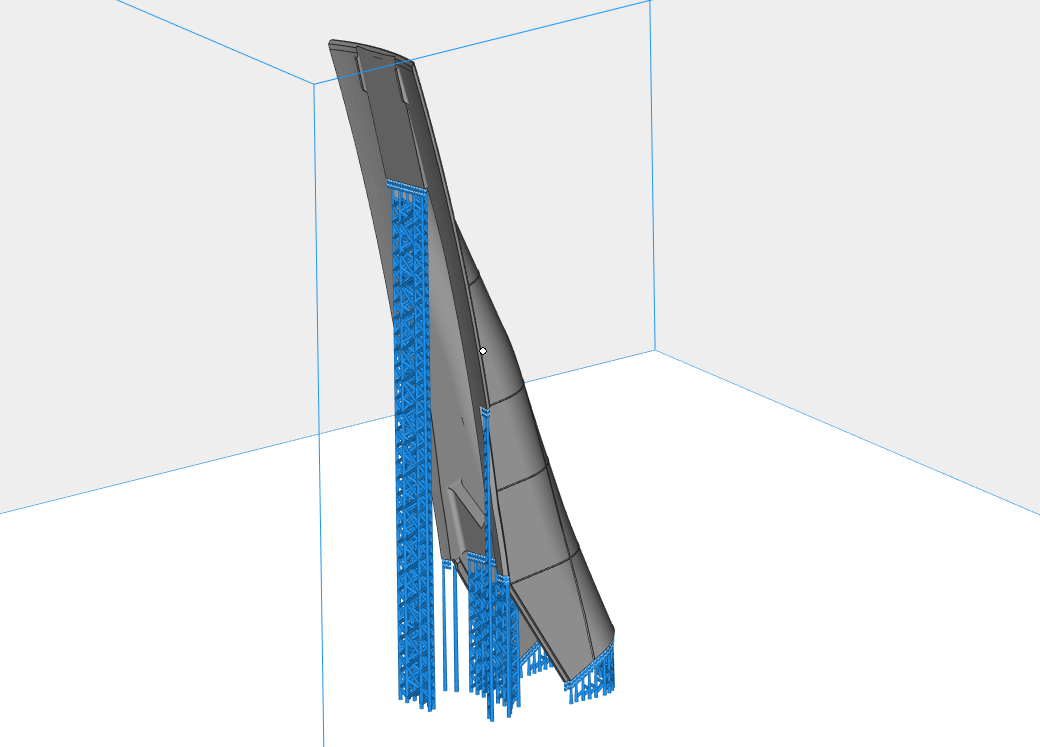
Image Copyright © 3DSPRO. All rights reserved.
How Support Structures Increase 3D Printing Costs
Support structures can affect the overall cost of 3D printed parts in several ways. Although they may appear to be temporary features, they require additional resources throughout the manufacturing process.
Additional Material Consumption
Support structures require extra printing material that does not become part of the final product. Depending on the printing technology, this may include resin, metal powder, or filament.
For example, a metal 3D printed component with complex angles may require a large amount of support material to maintain stability during printing. After production, these supports are removed, meaning the additional material contributes to manufacturing costs without adding functional value to the final part.
The amount of support material depends on factors such as part orientation, geometry complexity, printing technology, support density requirements, and required surface quality. Parts that require extensive support structures may consume significantly more material compared with simpler designs.
Longer Printing Time
3D printing time is calculated based on factors such as part height, volume, and machine operation requirements. Additional support structures increase the total amount of material being printed, which extends production time.
Longer printing cycles can increase machine usage costs, especially for industrial 3D printing technologies where equipment operation represents a significant portion of the production expense.
For metal 3D printing, supports can also affect the preparation and setup process. Engineers must carefully plan support placement and printing orientation to ensure successful production, adding additional preparation time before printing begins.
Increased Post-Processing Labor
After printing, support structures must usually be removed before the part can be delivered. This step requires additional labor and may involve specialized tools or processes.
Depending on the technology and material, support removal may include cutting or breaking away supports, removing residual support material, sanding support marks, repairing surface imperfections, and performing additional finishing operations.
For appearance-focused parts, support contact areas may require extra surface treatment to achieve the desired finish. As a result, extensive supports can increase post-processing time and labor costs.
Additional Surface Finishing Requirements
Support structures are often attached to critical areas of a part. When removed, they may leave visible marks or rough surfaces. If a customer requires a smooth surface finish, additional steps such as sanding, polishing, or coating may be necessary. These extra processes can further increase the total production cost.
When Will Support Structures Affect Your 3D Printing Quote?
Not every part requiring supports will significantly increase the cost. The impact depends on the amount and complexity of the required support structures. During the quoting process, professional 3D printing service providers evaluate several factors related to supports, including:
Support Quantity
A part requiring only a few small supports may have minimal impact on the final price. However, parts with large support volumes or multiple support areas require more material, longer printing time, and additional labor.
Support Complexity
Some supports are easy to access and remove, while others may be located in difficult areas. Complex support structures can require more manual work during post-processing, increasing production costs.
Material and Printing Technology
Different materials and technologies have different support requirements. For example:
• Resin parts may require supports to maintain detailed features.
• Metal parts may require stronger supports to manage thermal stress.
• Powder-based processes may avoid traditional supports but have other considerations related to powder removal.
Surface Finish Requirements
If customers require high-quality cosmetic surfaces, support marks may need additional finishing. A part designed for functional testing may require less finishing compared with a final-use product.
For these reasons, support structures are considered during professional quotation. A 3D printing quote is not only based on the model’s size or material but also on the manufacturing complexity involved in producing a successful part.
How 3DSPRO Handles Parts with Extensive Support Structures
At 3DSPRO, uploaded models are evaluated before production to determine the most suitable manufacturing approach. Support requirements are considered alongside material selection, printing technology, part orientation, and finishing expectations.
When extensive support structures are required, 3DSPRO may consider the following factors:
• The amount of support material needed.
• The complexity of support removal.
• Additional post-processing requirements.
• Customer expectations for surface quality.
For projects involving significant support structures, additional costs may apply depending on the specific manufacturing requirements. In some cases, customers may also request that parts be shipped with supports attached if support removal is not required immediately or if they prefer to handle post-processing themselves.
The goal is to balance manufacturing efficiency with part quality. By analyzing support requirements early, 3DSPRO helps customers understand potential cost factors before production begins.
For customers looking to optimize costs, 3DSPRO can also help evaluate design adjustments, material options, and alternative production methods that may reduce unnecessary support usage while maintaining part performance.
Tips to Reduce Support Structures and Lower 3D Printing Costs
1. Optimize part orientation: Changing the build orientation is one of the most effective ways to reduce supports. A different orientation may place fewer surfaces at challenging angles and minimize the need for additional structures.
2. Reduce unnecessary overhangs: Design modifications that reduce steep overhangs can help improve printability. Small changes to geometry can sometimes eliminate large support areas.
3. Choose the right manufacturing technology: Different 3D printing technologies have different support requirements. For parts with complex geometries, selecting a process that naturally reduces supports may improve cost efficiency. For example, SLS and MJF can be suitable choices for certain complex plastic parts because surrounding powder provides natural support during printing.
4. Consider support requirements during design: Thinking about manufacturing requirements early can prevent unexpected costs later. Designers should consider:
• Where supports may be required
• How easily supports can be removed
• Whether support contact areas affect appearance or function
Working with an experienced 3D printing service provider during the early stages can help identify potential challenges and optimize the production approach.
 0
0


COMMENTS
- Be the first to share your thoughts!