 English
  日本語
日本語  Deutsch


Small Internal Cavities Can Cause Problems in Resin 3D Printing
Unlike an open recess on the outside of a part, an internal cavity can be difficult to access after printing. During SLA and other resin 3D printing processes, liquid photopolymer resin is present throughout the printing process. When a small cavity is enclosed or connected to the outside through only a narrow opening, resin may have difficulty flowing back out.
It is especially common with small pockets created unintentionally by CAD geometry. For example, overlapping surfaces, narrow gaps between walls, or an internal space left between two components can create a cavity that looks harmless in the digital model but becomes difficult to clean in a physical part.
A useful distinction is whether the hollow space has a real purpose. A large cavity designed to reduce weight or create an internal passage may be necessary. A tiny enclosed pocket that exists only because of the model geometry usually provides little practical value.
The smaller and less accessible the cavity is, the more carefully it should be evaluated before printing.
What Happens When Resin Gets Trapped Inside Small Cavities
Liquid Resin May Remain Inside the Part
The most immediate problem is drainage. After printing, liquid resin needs to leave the part before cleaning and curing. A narrow opening or complicated internal path can prevent gravity and normal handling from removing all of the resin. Even when a model appears clean from the outside, uncured resin may remain inside a hidden cavity.
Trapped Resin Can Affect Part Quality
Residual resin can create sticky or wet areas inside the model. If it is not properly removed, the part may continue to contain uncured material after the normal washing process. For hollow or partially enclosed parts, this can also lead to resin leaking from the model later, especially when the part is moved, handled, or exposed to temperature changes. In severe cases, trapped resin may also interfere with subsequent curing.
The problem is not simply aesthetic. Unremoved resin can make a part harder to handle and can undermine the intended performance of a printed component.
Small Cavities Are Difficult to Clean
Cleaning works best when the interior of a part can be reached by washing liquid. A cavity with a very small opening may not allow cleaning liquid to circulate effectively. UV curing presents a similar challenge. Even after liquid resin is removed, the interior of a narrow or enclosed cavity may be difficult to inspect and cure properly.
For this reason, a cavity should not be considered useful simply because it saves a small amount of material. Its effect on post-processing also needs to be considered.
When Should a Small Internal Cavity Be Made Solid?
A small internal cavity should generally be considered for solid filling when it provides no meaningful functional benefit and cannot be cleaned or drained effectively.
The following situations are good examples:
|
Design Situation |
Recommended Approach |
Main Reason |
|
Small cavity with no functional purpose |
Make it solid |
Prevent resin entrapment |
|
Very narrow internal gap |
Make it solid or enlarge it |
Improve resin drainage |
|
Enclosed pocket with no access opening |
Make it solid |
Avoid trapped resin |
|
Functional hollow structure |
Keep hollow |
Preserve intended function |
|
Weight-reduction cavity with adequate openings |
Keep hollow |
Maintain material-saving purpose |
|
Internal channel required for assembly or fluid flow |
Keep hollow and provide access |
Preserve functionality |
A simple rule is to ask four questions before printing: Does the cavity serve a real purpose? Can resin escape from it? Can the inside be cleaned? Can the interior be properly inspected and cured?
If the answer to these questions is mostly no, making the area solid is often the more practical solution.
This is particularly important for decorative models or prototypes where a tiny internal cavity does not contribute to the final product. Eliminating unnecessary voids can simplify post-processing without affecting the visible appearance.
Tips: Redesign Small Cavities for Resin 3D Printing
1. Fill Unnecessary Small Gaps
The easiest solution is often the simplest one. If a tiny internal cavity does not contribute to the design, remove it during CAD modeling and merge the surrounding geometry into a solid structure. This can be especially useful for gaps caused by overlapping surfaces or unnecessary internal shells.
2. Provide a Clear Drainage Path
When a hollow structure is necessary, it should have openings that allow liquid resin to escape. Avoid creating completely enclosed pockets unless the design specifically requires them and the manufacturing process can accommodate them. Drainage openings also make the interior easier to wash after printing.
3. Avoid Long and Narrow Internal Passages
A cavity that is technically open can still be difficult to clean if it is connected through a long, narrow passage. Where possible, increase the opening size, shorten the passage, or simplify the internal geometry. The objective is to make the internal space accessible enough for resin to drain and for post-processing fluids to reach it.
4. Inspect the Model Before Printing
Use section views or other inspection tools in your CAD or mesh software to look inside the model. Do not evaluate the geometry only from its external surface.
Check for isolated pockets, narrow channels, overlapping surfaces, and other hidden areas where resin could become trapped. Reviewing these details before uploading the file is much easier than correcting the problem after printing.
For complex parts, it is also useful to discuss unusual internal structures with your 3D printing provider before production.
Resin 3D Printing Services at 3DSPRO
3DSPRO provides resin 3D printing services for prototypes, product development, models, and custom parts with detailed geometries. When preparing a resin model for production, internal cavities are one of the design details that should be considered together with wall thickness, openings, supports, and post-processing requirements.
For models with small internal spaces, 3DSPRO can help evaluate whether the geometry is suitable for resin 3D printing and whether design adjustments may improve printability and post-processing.
3DSPRO also offers 3D Plus™ surface finishing, providing options such as spray painting, polishing, frosting, and other finishing processes for resin parts. Because the final result depends on both printing and post-processing, considering internal geometry early can help avoid unnecessary production issues.
Resin 3D Printed Solid Airplane Model:
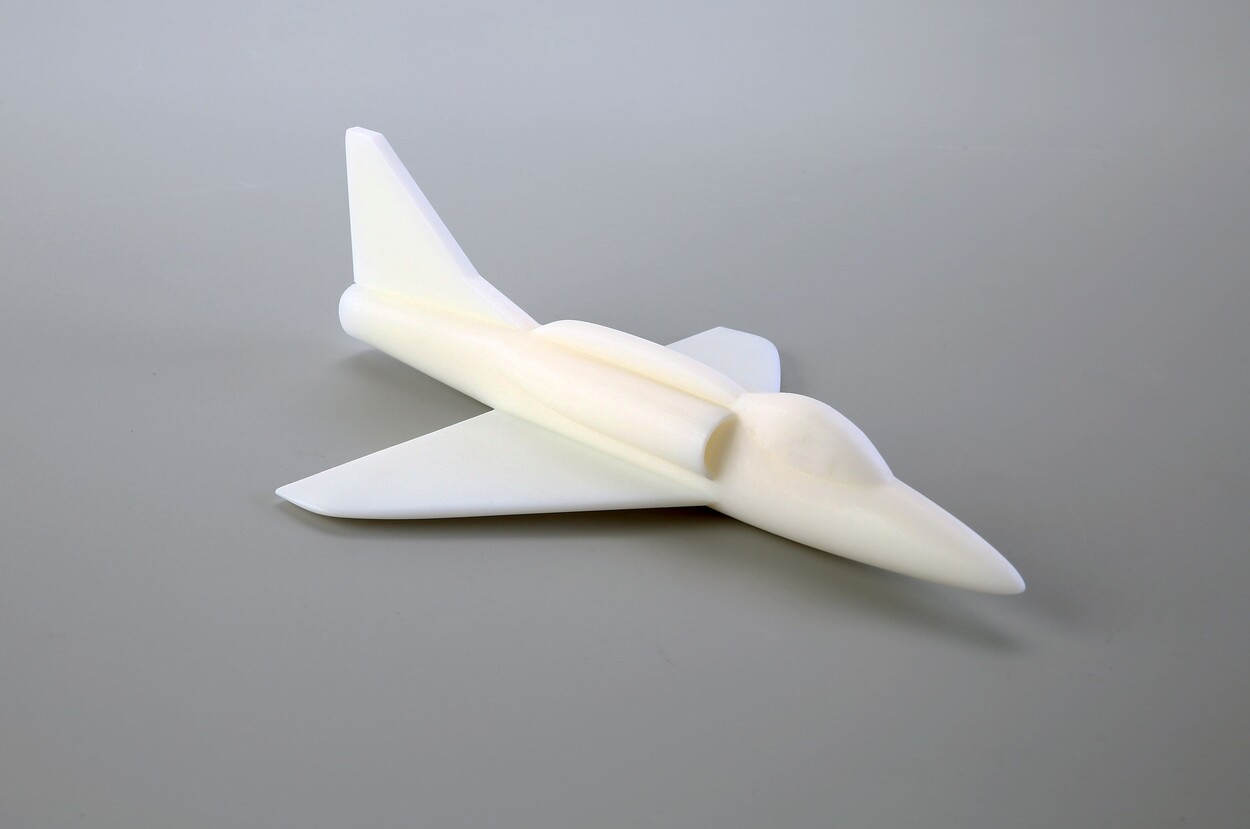
Image Copyright © 3DSPRO. All rights reserved.
Not every cavity needs to stay hollow. When a small internal space has no functional purpose and creates a potential resin-trapping problem, making it solid can be a practical design choice. For functional hollow structures, however, the better approach is to provide adequate drainage and cleaning access rather than simply filling them in.
Good resin 3D printing design is not only about creating complex geometry. It is also about creating geometry that can be printed, cleaned, cured, and finished reliably.
 0
0


COMMENTS
- Be the first to share your thoughts!