 English
  日本語
日本語  Deutsch


When preparing a part for 3D printing, a well-designed CAD model is only the first step toward successful production. Some geometric features that look acceptable on screen may create challenges during manufacturing, affecting part quality, production time, or overall costs.
Unlike traditional manufacturing methods, 3D printing builds parts layer by layer, which means certain geometries require additional consideration. Features such as thin walls, deep cavities, sharp corners, large overhangs, and tight-tolerance areas may need design adjustments before production begins.
Following Design for Manufacturing (DFM) principles helps ensure that parts can be printed reliably while achieving the required performance and appearance. By identifying potential issues early, designers can avoid unexpected design changes, production delays, and additional manufacturing costs.
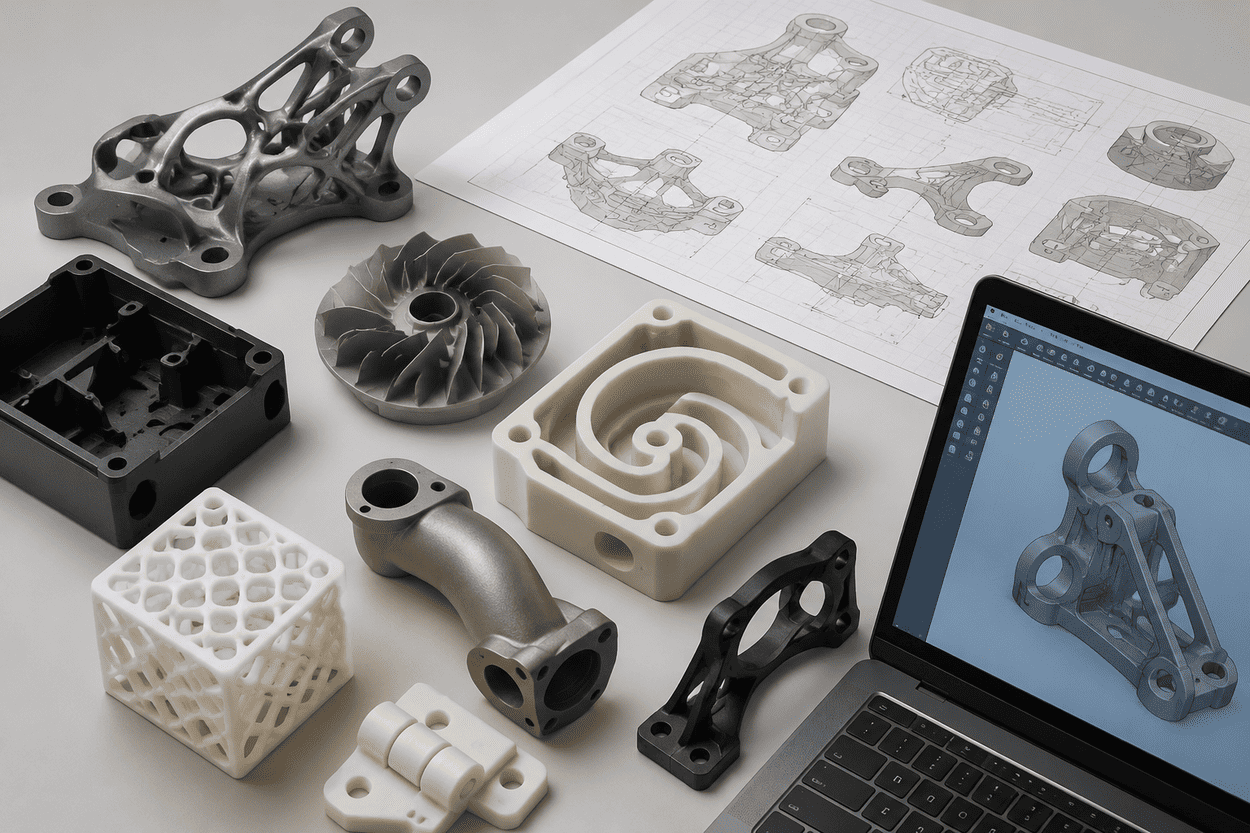
AI Generated Image
Thin Walls and Fragile Features
Thin walls and small, delicate features are common in lightweight part designs, but they can be challenging to manufacture. When walls or features are too thin for the selected 3D printing process and material, the printed part may not achieve the expected strength or accuracy.
Extremely thin sections may result in incomplete printing, deformation, or damage during post-processing. For example, thin ribs, narrow tabs, small hooks, and fragile edges can become weak points in the final part.
The minimum printable wall thickness depends on several factors, including 3D printing technology, material properties, part size and geometry, required mechanical performance, and post-processing requirements.
For example, a thin resin wall may behave differently from a nylon SLS part or a metal SLM component. Designers should consider the capabilities of the selected manufacturing process rather than applying the same wall thickness rules to every material.
Solutions to improve manufacturability:
• Increase wall thickness in areas exposed to stress.
• Add reinforcing ribs to improve strength.
• Avoid long, unsupported thin sections.
• Adjust small features based on material and process limitations.
Making small geometry changes early can significantly improve production success without affecting the overall design intent.
Deep Cavities and Narrow Channels
Internal structures can help reduce weight or improve functionality, but deep cavities and narrow channels may create manufacturing difficulties.
For some 3D printing technologies, internal spaces must allow materials to be removed after printing. For example, powder-based processes such as SLS and MJF require proper openings for unused powder removal. Resin printing may also require drainage paths to prevent trapped liquid resin inside hollow structures.
Common challenging geometries include deep holes with small openings, narrow internal channels, fully enclosed hollow areas, and complex internal structures. These features may lead to several issues, including trapped powder or resin, difficult cleaning, poor surface quality, or limited inspection access.
Solutions to improve these designs:
• Adding drainage or access holes.
• Increasing channel diameter where possible.
• Simplifying internal structures.
• Splitting complex parts into multiple components when necessary.
A design that is easier to clean and inspect will usually have a higher chance of successful production.
Sharp Corners and Sudden Geometry Changes
Sharp corners and sudden changes in geometry may create both manufacturing and performance issues. In many cases, these areas become stress concentration points where cracks or failures are more likely to occur.
From a manufacturing perspective, abrupt transitions between thick and thin sections can also create uneven cooling or shrinkage, which may lead to warping, dimensional changes, or surface defects. Common examples include sharp internal corners, sudden wall thickness changes, large solid sections connected to thin features, and abrupt transitions between different shapes.
Adding fillets or smoother transitions can improve both part strength and print reliability. Rounded corners help distribute stress more evenly and reduce the risk of deformation during manufacturing.
Designers should also avoid unnecessary changes in wall thickness. Gradual transitions allow materials to cool more consistently and help maintain better dimensional accuracy.
Large Overhangs and Unsupported Features
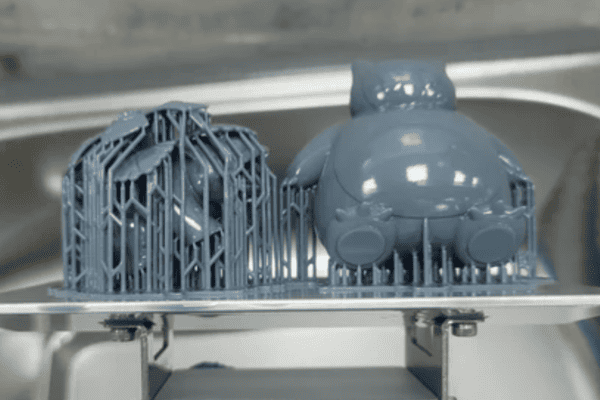
Large overhangs are another common geometry challenge in 3D printing. Since most 3D printing technologies build parts layer by layer, unsupported sections may require additional support structures to prevent failure.
Examples of challenging features include long horizontal surfaces, downward-facing curved areas, large bridges, and overhanging edges.
While support structures can make these geometries possible, they may increase production time, material consumption, and post-processing work. Support removal can also leave surface marks that affect appearance.
Solutions to reduce support requirements:
• Adjust overhang angles.
• Add self-supporting slopes.
• Change part orientation.
• Redesign complex features into simpler geometries.
Optimizing geometry before production can reduce manufacturing complexity and improve surface quality, especially for parts requiring cosmetic finishes.
Features Requiring Tight Tolerances
Some part features require precise dimensions to function correctly, especially components designed for assembly or moving mechanisms. However, achieving tight tolerances in 3D printing requires careful consideration.
Features that often require additional attention include assembly holes, snap-fit connections, threaded features, moving joints, and mating surfaces.
Several factors can affect dimensional accuracy, including material shrinkage, printing orientation, layer thickness, and post-processing methods.
For example, surface finishing processes such as sanding, coating, or electroplating can change final dimensions. If a part is designed for assembly, insufficient clearance may prevent components from fitting properly after finishing.
Solutions to improve results:
• Apply tight tolerances only where necessary.
• Add appropriate assembly clearance.
• Consider the impact of post-processing.
• Discuss critical dimensions before production.
Using realistic tolerances helps balance functionality, cost, and manufacturing feasibility.
How Our Customer Success Team Helps Ensure Production-Ready Designs
Even experienced designers may encounter manufacturing challenges when preparing complex parts. A professional design review before production can help identify potential issues and suggest improvements before they become costly problems.
3DSPRO’s Customer Success Team reviews uploaded CAD files and helps customers evaluate whether their designs are suitable for the selected manufacturing process. We can provide feedback related to geometry optimization, material selection, printing technology selection, support requirements, surface finishing considerations, and assembly requirements.
For example, the team may recommend increasing wall thickness for fragile features, adding clearance for finished parts, adjusting overhangs to reduce supports, or modifying internal structures for easier post-processing.
Early Design Feedback Benefits:
• Improve first-time production success.
• Reduce unnecessary manufacturing costs.
• Avoid delays caused by design issues.
• Achieve better part quality.
A production-ready design is not only about creating a functional model; it is about creating a model that can be manufactured efficiently and consistently. By considering challenging geometric features before production, designers can make better decisions and achieve more reliable 3D printed parts.
 0
0