 English
  日本語
日本語  Deutsch


3D printing plastics are widely used for prototypes, functional parts, and low-volume production. However, standard materials such as PLA and ABS may not perform well when exposed to elevated temperatures. They can soften, deform, lose mechanical strength, or experience dimensional changes under heat.
For applications in industries such as aerospace, automotive, electronics, and industrial manufacturing, engineers often need high-temperature 3D printing plastics that can maintain their performance in demanding environments. These advanced polymers are designed to withstand continuous heat exposure while providing reliable mechanical properties, chemical resistance, and dimensional stability.
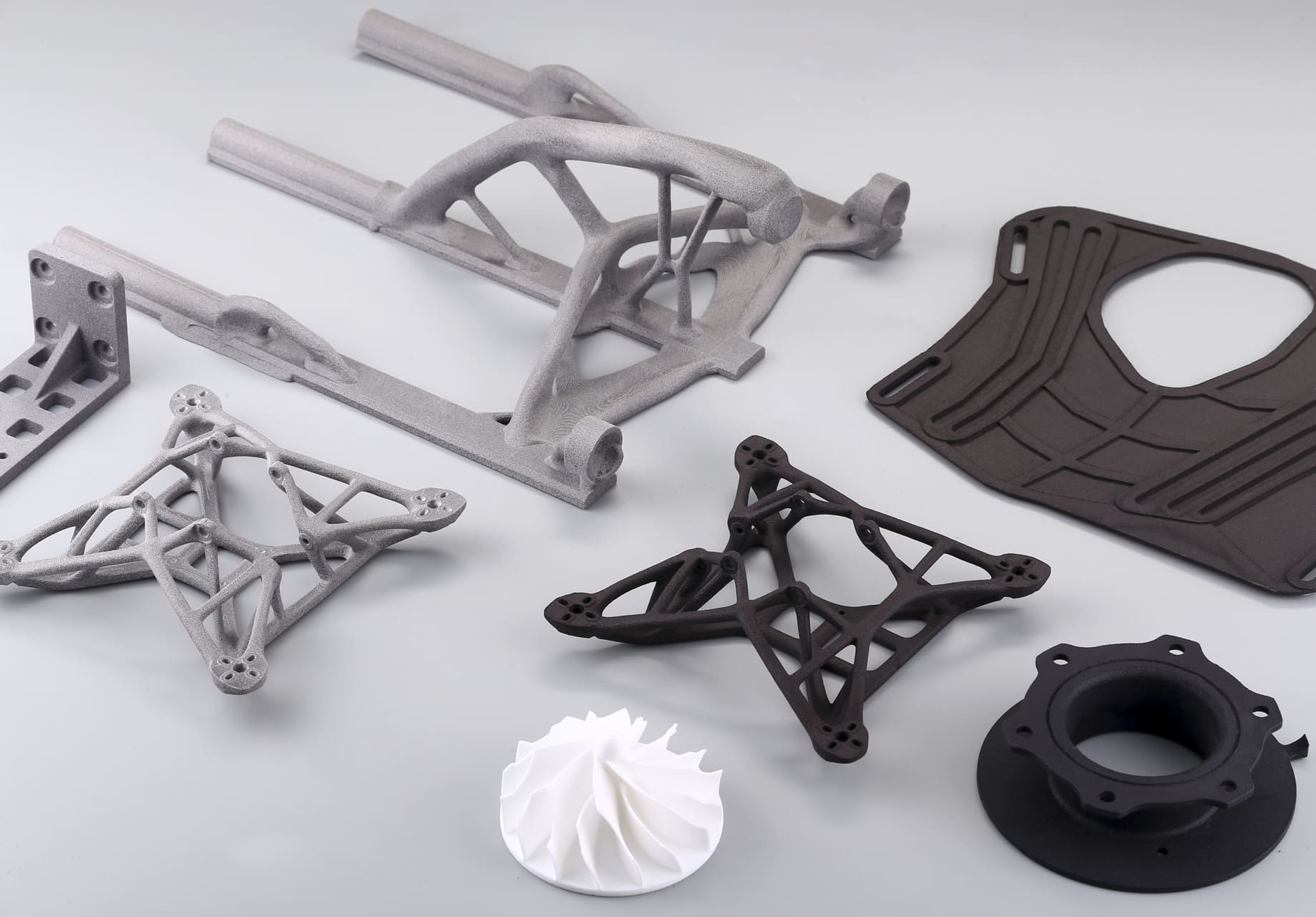
Image Source: Formlabs
What Makes a 3D Printing Plastic Suitable for High-Temperature Applications?
A high-temperature 3D printing plastic must maintain its shape, strength, and function when exposed to heat. Several key material properties determine whether a polymer is suitable for high-temperature applications.
Heat Resistance Beyond Melting Point
When evaluating temperature performance, the melting point of a plastic is not the only factor to consider. A part usually fails long before it reaches its melting temperature.
• Glass Transition Temperature (Tg):
The glass transition temperature is the point where a polymer changes from a rigid state to a softer, more flexible state. If the operating temperature approaches or exceeds the Tg, the part may lose stiffness and dimensional accuracy.
• Heat Deflection Temperature (HDT):
HDT measures the temperature at which a material begins to deform under a specific load. For functional parts exposed to heat and mechanical stress, HDT is often a more practical reference.
A suitable high-temperature material should have a temperature range that comfortably exceeds the actual working environment of the part.
Mechanical Performance at Elevated Temperatures
Heat can significantly reduce the mechanical strength of plastics. A material that performs well at room temperature may become weaker when continuously exposed to high temperatures.
High-temperature polymers are designed to maintain:
• Tensile Strength
• Impact Resistance
• Stiffness
• Creep Resistance
Creep resistance is especially important for parts that experience constant loads over long periods. For example, a mounting bracket inside an engine compartment must resist deformation even after months of thermal exposure.
Chemical and Environmental Resistance
Many high-temperature applications involve harsh environments, including exposure to oils, fuels, solvents, or chemicals. A material that can tolerate heat but reacts poorly with chemicals may still fail in real-world conditions.
High-performance polymers often provide excellent resistance to:
• Automotive Fluids
• Cleaning Chemicals
• Moisture
• Radiation
• Extreme Operating Conditions
This combination of thermal and chemical resistance makes them suitable for demanding industrial applications.
Common High-Temperature 3D Printing Plastics
PEEK: Maximum Performance for Extreme Applications
Polyether Ether Ketone (PEEK) is one of the most advanced thermoplastics available for 3D printing. It offers outstanding temperature resistance, mechanical strength, and chemical stability.
Key advantages include:
• Excellent Continuous Temperature Performance
• High Strength-to-Weight Ratio
• Low Moisture Absorption
• Excellent Chemical Resistance
• Good Wear Resistance
PEEK is commonly used in aerospace components, medical devices, semiconductor equipment, and high-performance industrial parts.
However, PEEK also presents challenges. It requires specialized 3D printers with high-temperature extrusion systems, heated chambers, and precise thermal control. The material cost is also significantly higher than standard engineering plastics.
PEI (Ultem): A High-Performance Alternative
Polyetherimide (PEI), commonly known by the brand name Ultem, provides excellent thermal performance while being slightly easier to process than PEEK.
Its main benefits include:
• High Heat Resistance
• Good Dimensional Stability
• Strong Mechanical Properties
• Flame Resistance
• Lower Cost Compared with PEEK
PEI is widely used for aerospace interior components, electrical housings, manufacturing fixtures, and functional prototypes.
For companies looking for a balance between performance and cost, PEI can be an attractive option.
PPS: Excellent Thermal and Chemical Stability
Polyphenylene sulfide (PPS) is another high-performance polymer known for its excellent resistance to heat and chemicals.
Important characteristics include:
• High Continuous-Use Temperature
• Very Low Moisture Absorption
• Excellent Chemical Resistance
• Stable Dimensions under Heat
PPS is often selected for automotive parts, electrical components, and industrial applications where both temperature and chemical exposure are concerns.
Due to its stiffness and processing requirements, PPS printing requires careful control of printing conditions to achieve reliable results.
Reinforced Nylon: A Practical High-Temperature Solution
For applications that do not require extreme temperature performance, reinforced nylon can provide a cost-effective solution.
Common examples include:
• Glass Fiber Reinforced Nylon
• Carbon Fiber Reinforced Nylon
Adding reinforcement improves:
• Stiffness
• Strength
• Dimensional Stability
• Temperature Resistance
These materials are commonly used for jigs, fixtures, brackets, tooling components, and functional prototypes.
Compared with PEEK or PEI, reinforced nylon is usually easier to process and more affordable. However, designers should consider fiber orientation because mechanical properties can vary depending on the printing direction.
How to Choose the Right High-Temperature 3D Printing Plastic
Consider the Operating Temperature
Start by identifying the temperature conditions the part will experience.
Important questions include:
• Is the part exposed to heat continuously or only temporarily?
• Will the temperature remain stable or fluctuate?
• Is the part exposed to direct heat sources?
A material rated for short-term high temperatures may not be suitable for continuous operation.
Evaluate Mechanical Requirements
Temperature resistance is only one part of material selection. Consider the mechanical demands of the part:
• Will it support heavy loads?
• Does it require impact resistance?
• Must it maintain tight tolerances?
For structural components, materials like PEEK or reinforced polymers may be necessary. For lightweight covers or housings, a lower-cost option may be sufficient.
Consider the Manufacturing Process
High-temperature plastics often require specialized printing equipment.
Factors to evaluate include:
• Maximum nozzle temperature
• Heated build chamber capability
• Printing environment requirements
• Post-processing requirements
For example, PEEK requires significantly more advanced equipment than reinforced nylon. Choosing a material that matches available manufacturing capabilities can reduce production risks.
Balance Performance and Cost
The highest-performing material is not always the best choice.
PEEK provides exceptional performance but comes with higher material and processing costs. PEI offers a balance between performance and affordability, while reinforced nylon can meet many industrial requirements at a lower cost.
The ideal choice depends on whether the application truly requires extreme temperature capability.
High-temperature 3D printing plastics allow engineers to produce functional parts in environments where traditional polymers cannot perform. Materials such as PEEK, PEI, PPS, and reinforced nylon provide different levels of heat resistance, mechanical strength, and chemical stability.
When selecting a material, consider the complete application requirements, including operating temperature, mechanical loads, environmental exposure, and manufacturing limitations. By choosing the right high-temperature polymer, 3D printed parts can achieve better reliability and expand into more demanding industrial applications.
 0
0


COMMENTS
- Be the first to share your thoughts!