 English
  日本語
日本語  Deutsch


Metal 3D printing makes it possible to produce parts with complex geometries, internal channels, lightweight structures, and customized features that can be difficult or impossible to manufacture with conventional methods. However, the as-printed part does not always have the dimensional accuracy, surface finish, or feature quality required for final applications.
This is where post-machining becomes useful. CNC machining can be applied to selected areas of a metal 3D printed part to achieve tighter tolerances and better surface quality while retaining the geometric freedom of 3D printing.
Instead of choosing between metal 3D printing and CNC machining, manufacturers can combine both processes. Metal 3D printing creates the overall geometry, while post-machining refines the critical features, which is particularly useful for precision parts that require both complex geometry and accurate functional surfaces.
Metal 3D Printed Stainless Steel Used Post-Machined Surface:
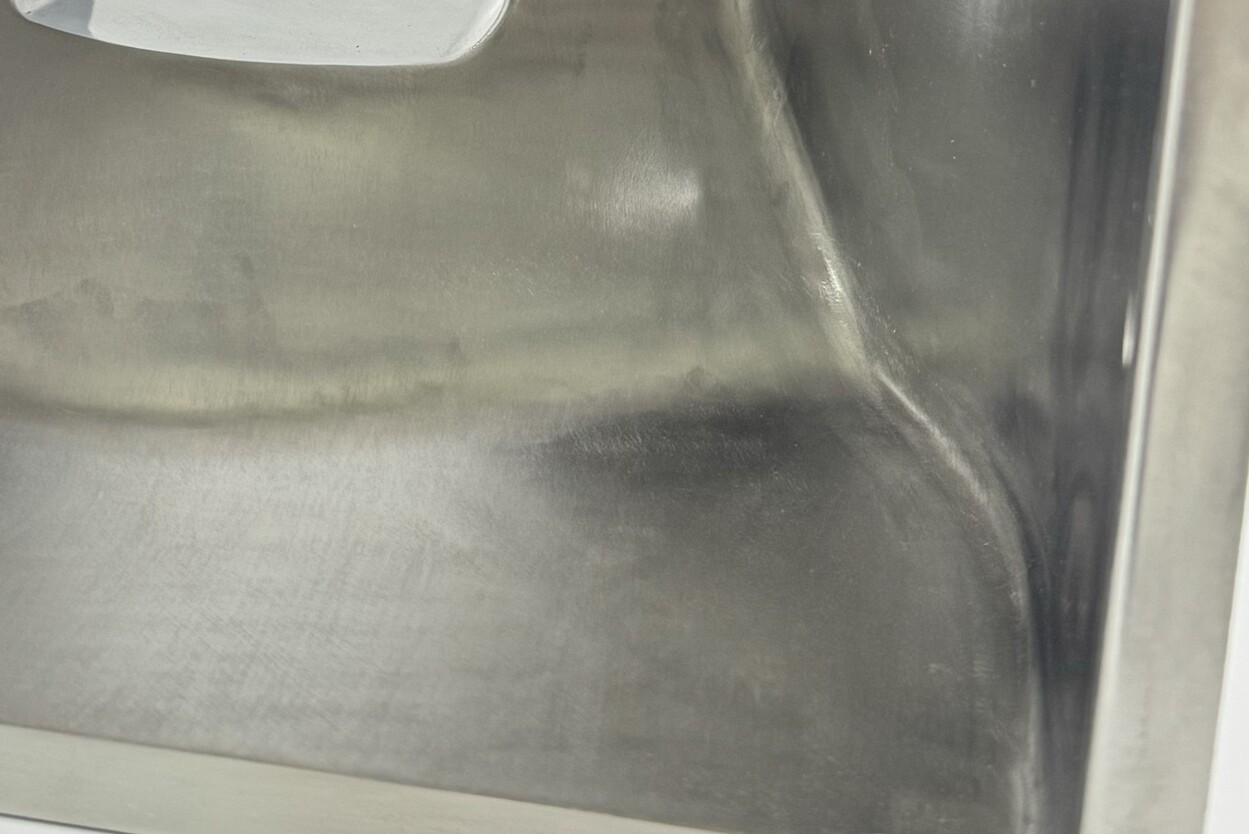
Image Copyright © 3DSPRO. All rights reserved.
Why Metal 3D Printed Parts Need Post-Machining?
Metal 3D printing can achieve good dimensional accuracy, but the printing process still influences the finished part, material, build orientation, and geometry. Some features may therefore require additional machining before the part can be assembled or used.
One common reason is surface roughness. Metal 3D printed surfaces generally have a rougher texture than CNC-machined surfaces, especially on angled or downward-facing areas. If a surface needs to slide, seal, or contact another component, machining may be necessary.
Dimensional tolerance is another factor. A printed feature may be sufficiently accurate for general applications but may not meet the tighter tolerance required for bearing fits, mating components, or precision holes.
Post-machining may also be required for threads, bores, mounting surfaces, and other functional features. These features often need more precise dimensions than metal 3D printing can economically provide directly.
In addition, support structures can leave marks or unwanted material on certain areas. Machining can remove these imperfections when support removal alone does not provide the required result.
What Post-Machining Can Improve?
Post-machining can significantly improve the performance and usability of metal 3D printed parts.
Dimensional accuracy is one of the primary benefits. CNC machining removes material in a controlled manner, allowing critical dimensions to be brought within tighter tolerances.
Surface finish can also be improved. Machined surfaces are smoother than typical as-printed surfaces, making them better suited for sliding, sealing, or mating applications.
Post-machining is especially useful for improving:
• Holes and bores: Drilling, boring, or reaming can produce more accurate diameters.
• Threads: Threaded holes can be machined to provide more consistent engagement with fasteners.
• Flat surfaces: Milling can create accurate mounting or contact surfaces.
• Bearing seats: Precision machining helps achieve the fit required for bearings and rotating components.
• Mating surfaces: Machining can improve the dimensional consistency between components.
• Support-affected areas: Machining can remove support marks or excess material from important functional surfaces.
The key point is that post-machining does not need to be applied to the entire component. Machining only the areas that require tighter control can preserve the advantages of 3D printing while avoiding unnecessary processing.
Which Features Can Be Post-Machined?
Not every feature on a metal 3D printed part is equally suitable for CNC machining. The most suitable features are generally those that are accessible to cutting tools and require higher precision than the printed condition can provide.
Typical examples include:
✅ Precision holes and bores: These can be drilled, reamed, or bored after printing to achieve accurate diameters and better surface finishes.
✅ Threads: Printed threads may be affected by layer characteristics and dimensional variation. Machining can produce more reliable internal or external threads.
✅ Flat mounting surfaces: CNC milling can create flat, accurately positioned surfaces for assembly or installation.
✅ Cylindrical interfaces: Shafts, bearing seats, and other rotational interfaces can be machined to achieve controlled fits.
✅ Sealing surfaces: Components that use gaskets, O-rings, or other sealing systems may require smooth and accurately dimensioned contact surfaces.
✅ Critical mating features: Surfaces that connect directly with another component may need machining to ensure proper alignment and assembly.
However, complex internal passages, lattice structures, and other inaccessible geometries may not be suitable for conventional CNC post-machining. These features are often better produced directly through additive manufacturing.
How to Balance 3D Printing and Post-Machining?
Successful hybrid manufacturing starts with considering both processes before production begins. The part should not be designed for 3D printing alone and then sent to machining as an afterthought.
First, identify which surfaces actually require tight tolerances or smooth finishes. These areas can be designated as machining zones, while less critical surfaces can remain in the as-printed condition.
It is also important to provide a machining allowance. Additional material may need to be intentionally left on selected surfaces so that the CNC process can remove it and achieve the final dimensions.
Build orientation should also be considered. Printing orientation affects surface quality, support requirements, and accessibility during machining. A good orientation can reduce support structures while making critical features easier to access later.
Machining accessibility matters as well. Deep holes, enclosed cavities, and complex internal features may be difficult or impossible for standard CNC tools to reach. When designing the part, manufacturers should consider tool access and how the printed component will be clamped.
The goal is to find the right division of labor: use 3D printing where geometric freedom provides the greatest benefit, and use CNC machining where precision and surface quality matter most.
Some 3D Printed Metals Are Difficult to Post-Machine
Although post-machining is highly effective for many metal 3D printed parts, not every printed metal is equally easy to machine. Material selection can have a major impact on machining difficulty, tool wear, cutting parameters, and overall cost.
Some metal alloys have high hardness, strength, or work-hardening characteristics that make them more challenging to cut. For example, titanium alloys and nickel-based superalloys are commonly used for demanding applications but can require careful machining strategies because of their material properties.
The condition of the printed material also matters. Heat treatment, stress relief, and other post-processing steps can change hardness and machinability. A material that is relatively easy to machine in one condition may become more difficult after heat treatment.
Therefore, the choice of metal 3D printing material should consider not only its mechanical properties and application requirements, but also what post-processing will be performed afterward.
Before production, manufacturers should evaluate the complete process chain: metal 3D printing → heat treatment if required → post-machining → inspection. This helps ensure that the selected material and manufacturing process can achieve the required final specifications without unnecessary machining challenges or costs.
 0
0


COMMENTS
- Be the first to share your thoughts!