English
 日本語
 Deutsch


CNC machining can produce highly accurate parts, but the machine's positioning capability is only one part of the process. The workpiece must also remain securely located while cutting forces act on it. This is the role of a machining fixture. From simple vise setups to custom multi-station systems, different fixtures are designed to accommodate different part geometries, machining operations, and production volumes. Understanding the main types helps manufacturers choose a workholding method that supports accuracy, repeatability, and efficient production.
What Are CNC Machining Fixtures?
A CNC machining fixture is a workholding device that locates, supports, and clamps a workpiece in a defined position on a machine tool. It establishes the relationship between the part's reference surfaces, or datums, and the machine's coordinate system. Once secured, the CNC program controls the movement of the cutting tool.
A fixture generally consists of a body or base, locating elements, supports, and clamping components. Locators establish where the workpiece sits; supports help prevent deflection; and clamps keep it against the locating surfaces during machining. Depending on the application, these components may be built into a dedicated fixture or assembled from reusable parts.
Fixtures are important because cutting forces, vibration, and inadequate support can cause a workpiece to shift or deform. A suitable fixture helps maintain the intended position, improves repeatability between parts, and can reduce setup time. It must also leave enough clearance for the cutting tool, tool holder, and chip removal.
A fixture is different from a jig. Both hold and locate a workpiece, but a jig also guides the cutting tool, typically through a guide bushing. In CNC machining, fixtures are more common because the machine follows a programmed toolpath.
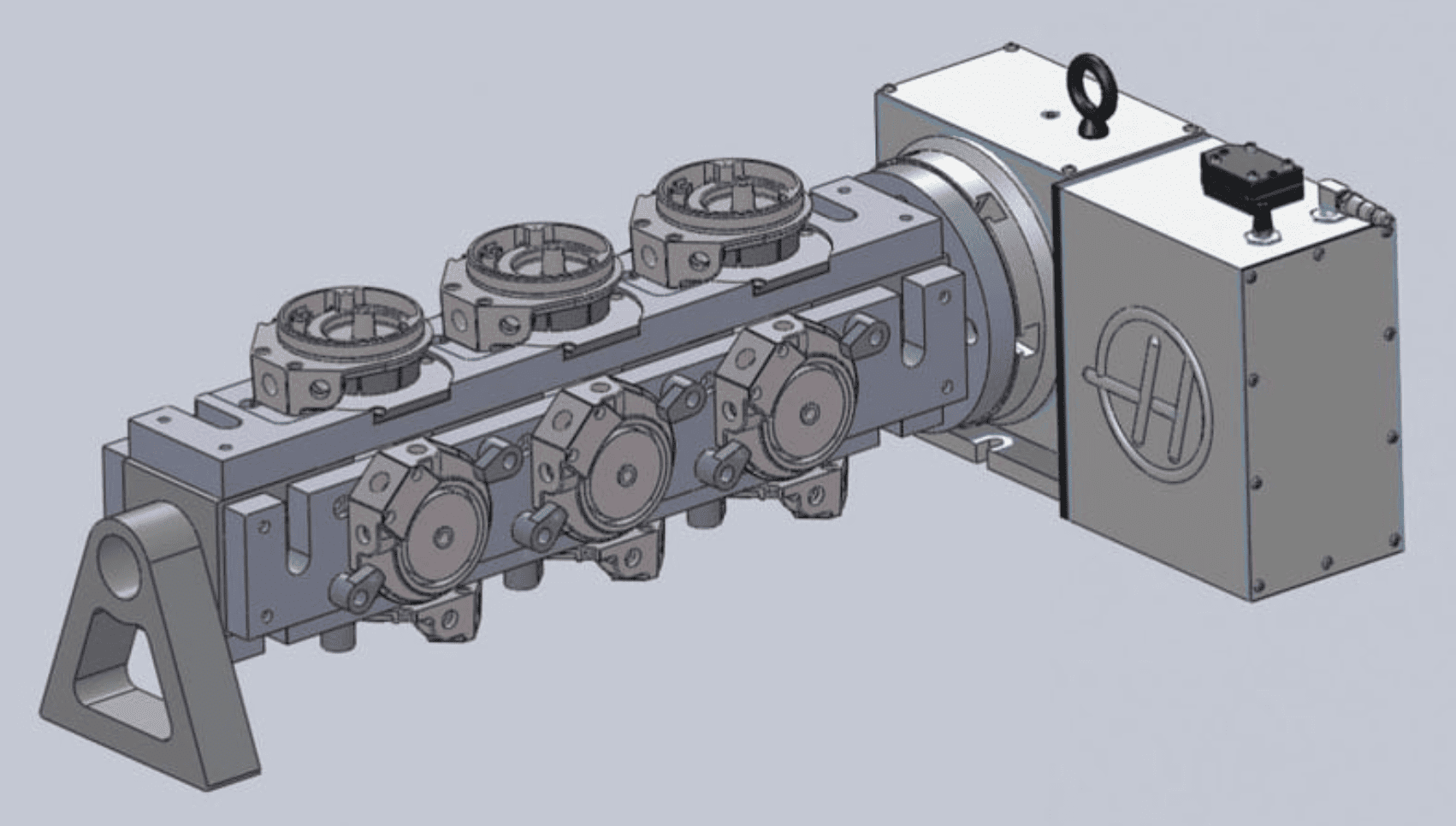
Image Source: CNC Cookbook
Common Types of CNC Machining Fixtures
Fixtures can be classified by their construction, locating method, or production purpose. The following types are commonly used for prismatic parts and milling setups.
|
Fixture Type |
Structure and Typical Applications |
|
Plate Fixtures |
A flat base plate fitted with locating pins, stops, and clamps. The plate mounts to the machine table and provides a stable platform for machining flat or prismatic parts. |
|
Angle-Plate Fixtures |
A workpiece is mounted against a vertical or angled locating face. They help present a side surface or feature to the spindle without relying on an improvised setup. |
|
Vise-Jaw Fixtures |
Standard or custom jaws hold the part in a machine vise. Soft jaws can be machined to match a component's profile, improving contact and reducing the risk of marking or distortion. |
|
Modular Fixtures |
Reusable plates, clamps, locators, and supports can be rearranged for different parts. They are useful for prototypes, low-volume work, and production with frequent design changes. |
|
Dedicated Fixtures |
Custom-built for a particular component or operation. Their locating and clamping features are tailored to the part, making them suitable for repeat production where consistent setup is important. |
|
Indexing Fixtures |
Allow the workpiece to be rotated or repositioned by defined increments. They are useful for machining features at multiple angular positions, such as holes around a circumference. |
|
Multi-Station Fixtures |
Hold several workpieces at once or provide multiple loading positions. They can increase output by allowing several parts to be machined in one cycle or one setup. |
|
Tombstone Fixtures |
A vertical, often multi-sided fixture body mounted on a horizontal machining center. Parts can be mounted on several faces, enabling multi-side machining and better use of machine capacity. |
These categories can overlap. For example, a tombstone may carry modular components or dedicated nests, while an indexing fixture may be built around a base plate. The best choice depends on how the part is accessed, where cutting forces act, and how many setups are needed.
Types of Fixtures by CNC Machining Operation
The machining process also influences fixture design. A fixture for milling must resist cutting forces from a rotating cutter, while turning workholding must secure a part as it rotates with the spindle.
Milling Fixtures
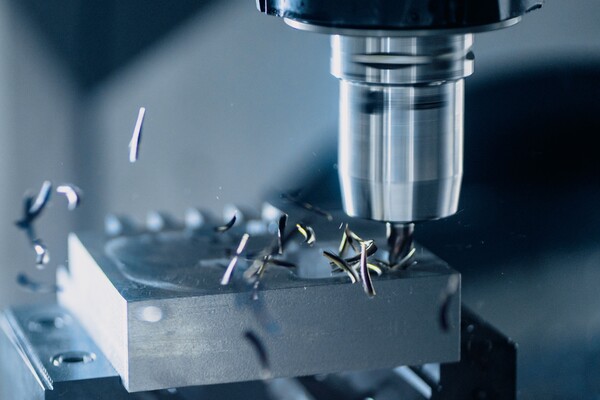
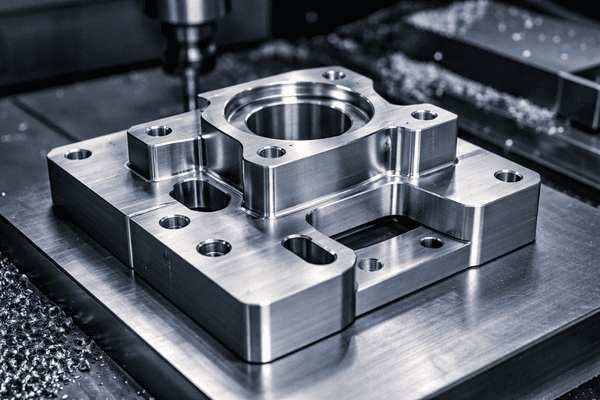
Milling fixtures secure the workpiece to the machine table while the rotating cutter removes material. Common arrangements include machine vises, fixture plates, angle plates, indexing units, and tombstones. The fixture must resist cutting forces in different directions and provide clearance for the cutter and tool holder. For parts with several faces or features, a tombstone or multi-sided fixture can reduce the number of separate setups. Custom soft jaws or locating nests are often used for irregular shapes that cannot be held reliably in a standard vise.
Turning Fixtures
In CNC turning, the workpiece rotates while a relatively stationary cutting tool removes material. Common workholding devices include:
• Chuck Fixtures: Three-jaw chucks are widely used for round or hexagonal stock, while four-jaw chucks allow independent adjustment for irregular or off-center parts.
• Collet Fixtures: Collets grip a workpiece around its diameter and are suited to bar work and smaller components where concentric holding is important.
• Mandrel Fixtures: A mandrel supports and locates a part through an internal bore, allowing its outer diameter or face to be machined.
• Faceplate Fixtures: Clamps or custom mounting features secure large, thin, or irregular workpieces that are not easily held in a standard chuck.
The choice depends on the part's geometry, rigidity, gripping surface, and the forces and speed involved. Clamping pressure must be sufficient to prevent movement without deforming thin-walled components.
Drilling and Boring Fixtures
Drilling fixtures position a workpiece so that holes can be produced at the required locations. On CNC machines, the toolpath controls the drill's position, while the fixture maintains the part's datum orientation and resists drilling forces. Simple plate fixtures, vises, and dedicated nests may be used depending on the part.
Boring operations enlarge or finish an existing hole. The workpiece must be held securely and supported near the area being machined to reduce vibration and maintain alignment. Traditional drill jigs with guide bushings are more associated with manual or non-CNC drilling, where the jig mechanically guides the tool.
Grinding Fixtures
Grinding fixtures hold parts during precision material removal. Depending on the material and geometry, workholding may include magnetic chucks for suitable ferromagnetic parts, precision vises, angle plates, centers, or custom fixtures. The setup must prevent movement while avoiding excessive clamping force, which could distort a thin or delicate workpiece. Clean contact surfaces and secure seating are particularly important because small particles or misalignment can affect the finished surface and dimensions.
CNC machining fixtures range from simple vise jaws and fixture plates to dedicated, indexing, and multi-station systems. Their purpose is to locate and support the workpiece consistently while providing secure clamping and tool access. The right fixture depends on part geometry, machining operation, cutting forces, tolerance requirements, and production volume. Choosing an appropriate workholding solution early in process planning can help reduce setup variation, protect the workpiece, and make CNC machining more efficient.
 0


COMMENTS
- Be the first to share your thoughts!