English
 日本語
 Deutsch


A 3D printed part‘s weight is only one part of its cost. A large, hollow component may use little material but occupy substantial space inside the printer. This is common with square or rectangular frames, whose outer dimensions can be much greater than the amount of solid material.
A lightweight part is not automatically inexpensive to produce. Manufacturers may also account for machine capacity, build layout, printing time, supports, and handling. Some service providers classify parts with unusual proportions or space requirements as special-shaped parts and apply an additional charge. Pricing methods vary by provider and process, but understanding the reasons can help customers plan more accurately.
Low Weight Does Not Always Mean Low 3D Printing Cost
A part’s weight reflects its material content, not the space it occupies or how efficiently it fits into a machine’s build area.
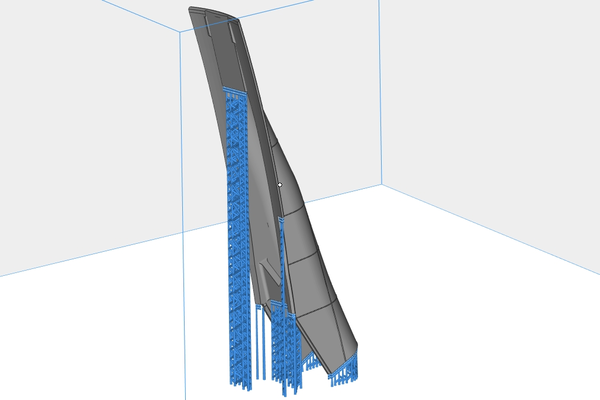
Consider a large rectangular frame. Its four sides may be relatively thin, leaving most of the center open. The finished part can therefore be lightweight, especially when compared with a solid block of the same outer dimensions. However, the printer still needs enough room to accommodate the frame’s full length, width, and height, along with any required clearance or supports.
This matters during build planning. Many compact parts may fit into one production batch, while a wide frame can occupy a large portion of the usable area or prevent other parts from being arranged efficiently. The machine’s capacity is used even though the frame contains little material.
The relationship between size and cost also depends on the process. In material-extrusion printing, a long toolpath can take considerable time even when the part has a low infill percentage. In resin printing, the part's footprint, height, orientation, and support needs can affect build time and post-processing. In powder bed processes, the part’s dimensions and placement influence how the build volume is used, while powder handling and cooling requirements also matter.
A quote therefore reflects more than the grams of material in the finished component. It may also include the production resources needed to make, remove, clean, and inspect it.
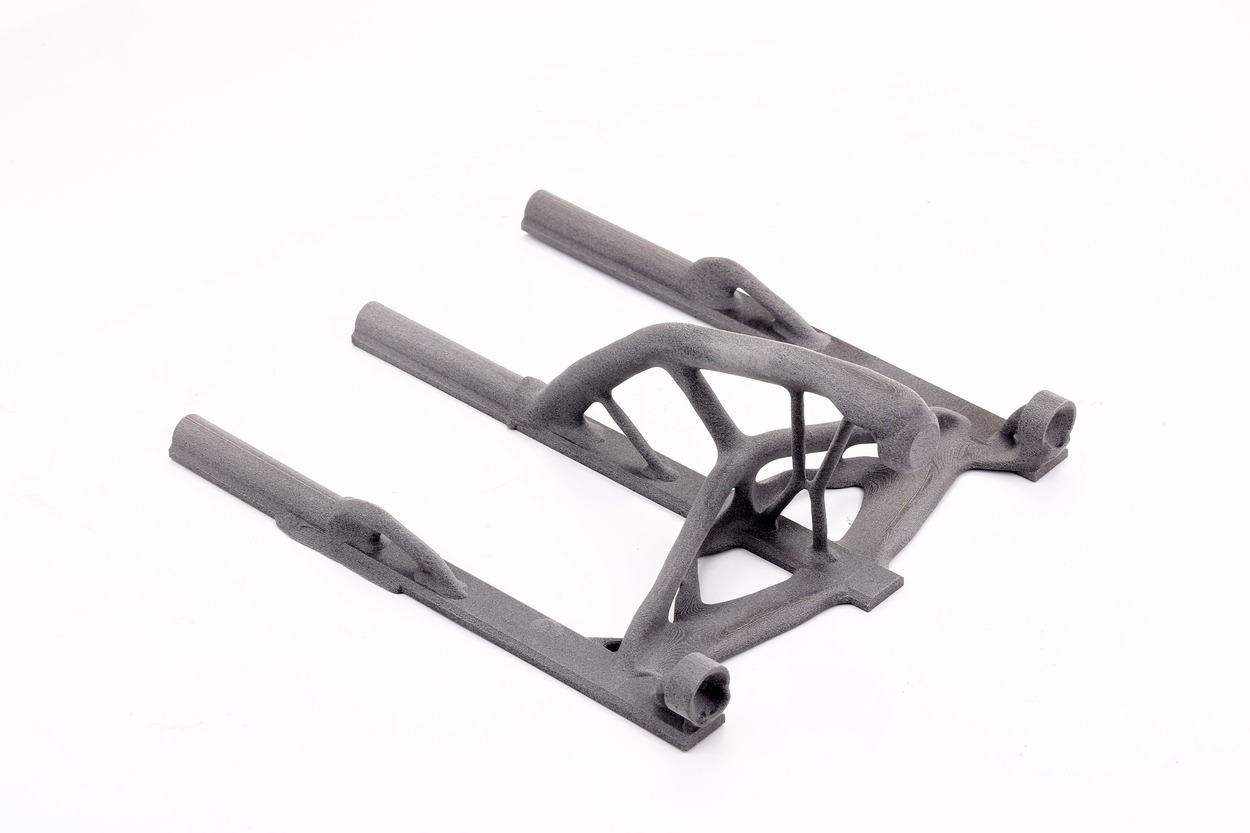
Image Copyright © 3DSPRO. All rights reserved.
Why Large, Lightweight Parts Are Considered Special-Shaped Parts
Special-shaped parts are a pricing or production category used by some manufacturers, rather than a universal technical classification. It may describe parts whose dimensions, proportions, or geometry make them less straightforward to arrange and process than typical compact components.
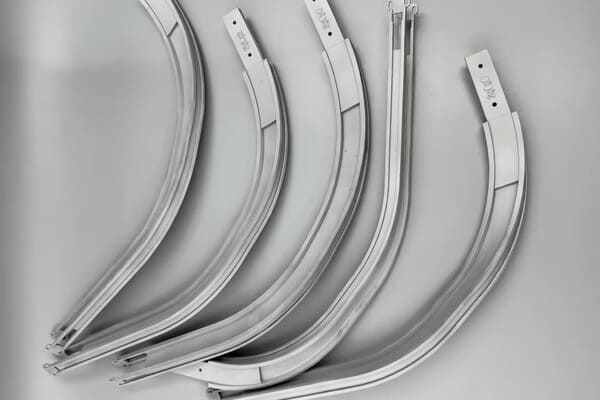
Large open frames are a clear example. A square or rectangular frame may have thin members and a hollow center, but its overall footprint can be large. Other examples include oversized brackets, wide lattice structures, long rails, large rings, and thin-walled housings. These parts can have a low material-to-size ratio: relatively little solid material is distributed across a comparatively large envelope.
Their geometry can create practical constraints. A frame may not fit in the most efficient orientation, and rotating it may increase its height or support requirements. Its open center is not always usable for other parts; this depends on the process, required spacing, build strategy, and removal access.
Large, slender sections may also need careful handling and can be vulnerable to bending, warping, or damage during cleaning and finishing, depending on the material and process.
When these constraints use extra machine capacity or labor, a manufacturer may quote the part differently from a standard component. Customers should ask what the special-shaped part charge covers, since the reason may be build-space consumption, setup, handling, or a combination of factors.
What Factors Lead to Additional 3D Printing Costs?
Build Space Occupancy
A part with large outer dimensions can occupy a significant portion of the usable build area or chamber. The printer may have less room for other orders in the same batch, even if the part uses little material. Some providers account for this capacity through a size-based or special-part charge.
Build Layout Efficiency
Unusual proportions can leave unused gaps around a component. A frame may appear to have plenty of space inside, but that space may not be suitable for nesting other parts. Minimum spacing, orientation limits, support structures, and removal access all affect whether the available volume can be used.
Printing Time
Material weight is not a direct measure of machine time. Long extrusion paths, tall builds, fine layers, or a large printed footprint can extend production. The effect depends on the technology and settings; a lightweight part is not necessarily quick to print.
Support Requirements and Post-Processing
Some geometries need supports to maintain stability or print quality. Removing supports from a large frame can require additional labor, particularly when contact points are difficult to reach or delicate sections must be protected. Cleaning, sanding, and inspection may also take longer.
Handling and Quality Control
Large or thin-walled components may need careful removal, transport, and packaging to avoid distortion or damage. If dimensional checks are important, inspecting a large structure can also take more time. These requirements may add labor even when material consumption is low.
How to Reduce the Cost of Large, Lightweight 3D Printed Parts
The most effective cost reductions usually come from reviewing the design and production plan before ordering. A few practical steps can help:
✅ Check the Overall Dimensions: Confirm that the frame’s external length, width, and height are necessary. Reducing an oversized dimension, where function allows, may make the part easier to position or fit into a build.
✅ Optimize the Structure: Review member thickness, cross-sections, and decorative features. Remove unnecessary material or geometry, but do not reduce wall thickness or structural strength below functional requirements.
✅ Consider Splitting the Part: A large frame may be produced as smaller sections and assembled afterward. This can improve build placement, but the cost of joints, fasteners, adhesive, welding, or alignment must be considered. Splitting is not automatically cheaper.
✅ Discuss Build Orientation: Ask the manufacturer to review possible orientations. A different position may reduce supports or improve layout efficiency, although it can also affect surface finish, strength, and build time.
✅ Confirm the Pricing Basis: Provide the 3D model and specify the intended quantity, material, and functional requirements. Ask whether the quote includes any special-shaped part surcharge and what production constraint causes it. This helps identify the most useful design changes before production begins.
3DSPRO can give better advice from the complete 3D model than from weight alone. Quote Now >>
 0


COMMENTS
- Be the first to share your thoughts!