 English
 日本語
 Deutsch


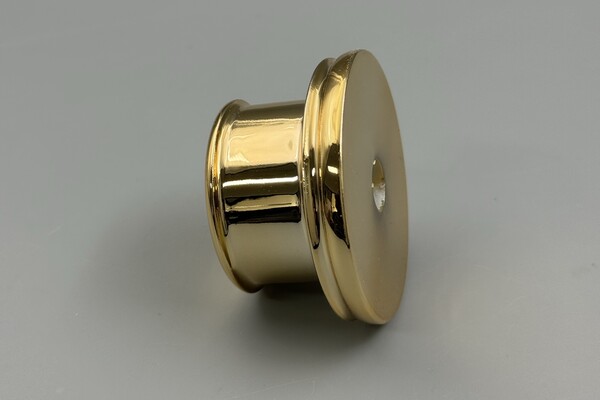
Electroplating is a popular way to give 3D printed plastic parts a metallic finish. It can improve their appearance while adding useful properties such as electrical conductivity, wear resistance, and surface durability. Plating is a practical option for decorative components, product housings, and functional prototypes.
However, not all 3D printing plastics are equally suitable for electroplating. Some materials have well-established plating processes, while others need special surface treatments before metal can be applied. Understanding these differences can help you choose the right material and avoid problems with coating quality and adhesion.
What Makes a 3D Printed Plastic Suitable for Electroplating?
Several factors affect how well a 3D printed plastic part can be electroplated. Material properties matter, but the quality of the printed surface and the preparation process are also important.
Surface Conductivity
Most 3D printing plastics, including ABS, PLA, and PA 12, do not conduct electricity. However, electroplating requires an electrically conductive surface so that metal can be deposited using an electric current. To prepare a plastic part for electroplating, manufacturers first need to add a conductive layer, which can be done with graphite or silver-based coatings, or through a chemical process that deposits a thin metal layer onto the surface.
Coating Adhesion
The metal coating must bond firmly to the plastic surface. Poor adhesion can cause the coating to peel, crack, or separate from the part. Surface cleaning, chemical treatment, and activation help prepare the plastic for better bonding. The treatment must match the material because different plastics respond differently to chemicals.
Surface Quality
The quality of the printed surface directly affects the final metal finish. Layer lines, pores, and uneven areas may remain visible after plating. For this reason, sanding, polishing, or other surface treatments may be necessary before electroplating, especially when a smooth decorative finish is required.
Chemical and Heat Resistance
Plastic parts must also withstand the chemicals and temperatures used during surface preparation and plating. Some materials may soften, swell, or lose their shape when exposed to unsuitable chemicals or excessive heat. The specific filament or resin formulation, printing conditions, and post-curing process can all affect material compatibility.
It is also important to understand the difference between electroless plating and electroplating. Electroless plating deposits a thin metal layer through a chemical reaction without using an external electric current. Electroplating uses an electric current to deposit additional metal onto a conductive surface. For plastic parts, electroless plating is often used to create the initial conductive layer before electroplating begins.

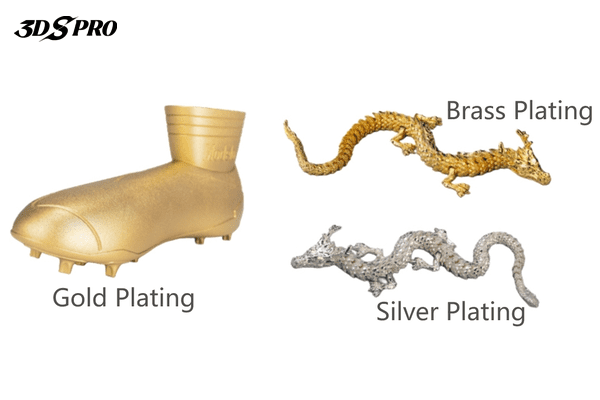
Image Copyright © 3DSPRO. All rights reserved.
Which 3D Printed Plastics Can Be Electroplated?
Different 3D printing plastics require different surface preparation methods. Some are easier to plate than others, so material selection should depend on the intended finish and application.
1. ABS
ABS is one of the most established plastics for electroplating. It is widely used in conventional plastic plating because its surface can be chemically treated to improve metal adhesion. The typical process includes cleaning, chemical etching, surface activation, and electroless metal deposition. Once a conductive layer has formed, additional metals such as copper or nickel can be applied through electroplating.
FDM-printed ABS can also be plated, but the results may differ from those achieved with injection-molded ABS. Layer lines, small gaps, and surface imperfections can affect coating uniformity. Proper surface smoothing and preparation are therefore important, particularly for parts with visible surfaces.
2. SLA Photopolymer Resin
SLA resin is a good option for parts that require fine details and relatively smooth surfaces. These characteristics make it useful for decorative components that need a metallic appearance. SLA-printed resin parts can receive metal coatings through processes such as silver electroless plating. However, not all photopolymer resins are suitable for this treatment.
The resin must withstand the chemicals used during cleaning and surface preparation. Its curing condition also matters, as insufficient post-curing may affect the part's stability. Before production, the specific resin and plating process should be tested for compatibility.
3. Nylon
PA 12, commonly used in SLS and MJF 3D printing, is known for its strength and durability. It is often selected for functional parts, housings, and components with complex geometries. Since PA 12 is electrically insulating, it needs a conductive surface layer before electroplating. One demonstrated approach uses graphite coating to make the surface conductive before depositing copper through electroplating.
The main challenge is surface texture. SLS parts often have a slightly rough or powdery surface, which can affect the quality of the metal coating. Cleaning and surface smoothing can help create a more even base for plating.
4. PLA
PLA is widely used for affordable prototypes and decorative 3D printed parts. However, it is not as easy to electroplate as ABS because conventional ABS chemical etching methods are not directly suitable for PLA. Instead, PLA parts may require a conductive primer, graphite coating, or another specialized surface treatment before metal deposition. These methods can make plating possible, but coating adhesion and consistency need to be carefully checked.
Conductive PLA composites are another option. These filaments contain conductive fillers, such as carbon-based materials, which can help improve electrical conductivity. However, standard PLA and conductive PLA should not be treated as the same material when evaluating electroplating compatibility.
5. PETG and Polycarbonate (PC)
PETG and PC can also be considered for specialized metallization processes. However, both materials require careful surface preparation because their surfaces do not respond to plating treatments in the same way as ABS.
A conductive coating or specially designed activation process may be needed before electroplating. Chemical compatibility and coating adhesion should be tested on the specific filament grade. For these materials, trial parts are particularly useful. They help manufacturers check whether the surface treatment causes damage and whether the metal coating remains firmly attached.
6. Conductive 3D Printing Composites
Conductive composite filaments contain materials such as carbon black, graphite, or metal particles. These fillers can give printed parts some electrical conductivity, depending on their type, amount, and distribution. However, having a conductive material throughout the part does not automatically guarantee successful electroplating. The outer surface must still provide a continuous path for electrical current, and the metal coating must bond properly to the printed material.
Overall, ABS has the most established route for conventional plastic electroplating. SLA resin and PA12 also have demonstrated metallization methods, while PLA, PETG, PC, and conductive composites generally require more specialized preparation.
Electroplating Service for 3D Prints at 3DSPRO
3DSPRO provides electroplating as part of its 3D Plus™ surface finishing services for 3D printed plastic and metal parts. For plastic 3D printed components, resin is the recommended option. Its fine details and relatively smooth surface make it suitable for decorative parts that require a metallic finish, provided the selected resin is compatible with the plating process.
When designing a part for electroplating, it is important to consider more than just the material. Part geometry can also affect the final result. Deep cavities, narrow channels, sharp edges, and small openings may make it harder to achieve even coating coverage. The added metal thickness should also be considered when designing holes, threads, and mating surfaces.
To help maintain coating quality, 3DSPRO checks finished parts for common surface defects, including pits, blisters, rough areas, and uneven coverage. Coating thickness and adhesion are also important inspection factors.
When requesting an electroplating service, provide your 3D model, preferred finish, intended application, and any critical dimensional requirements. The information helps determine whether the material, part design, and finishing process are suitable for the project. Start your projects with 3DSPRO today >>
 0


COMMENTS
- Be the first to share your thoughts!